Heat-resistant compounds
Silicone, FKM and fluorosilicone options selected for the temperature at the sealing point, not just the sump reading.

Heat-resistant sealing range
Radial shaft oil seals built in heat-resistant elastomers for engines, pumps, gearboxes and machinery that runs hot. We match the compound and lip design to your shaft, housing and lubricant — then make the seal to your dimensions.
The basics
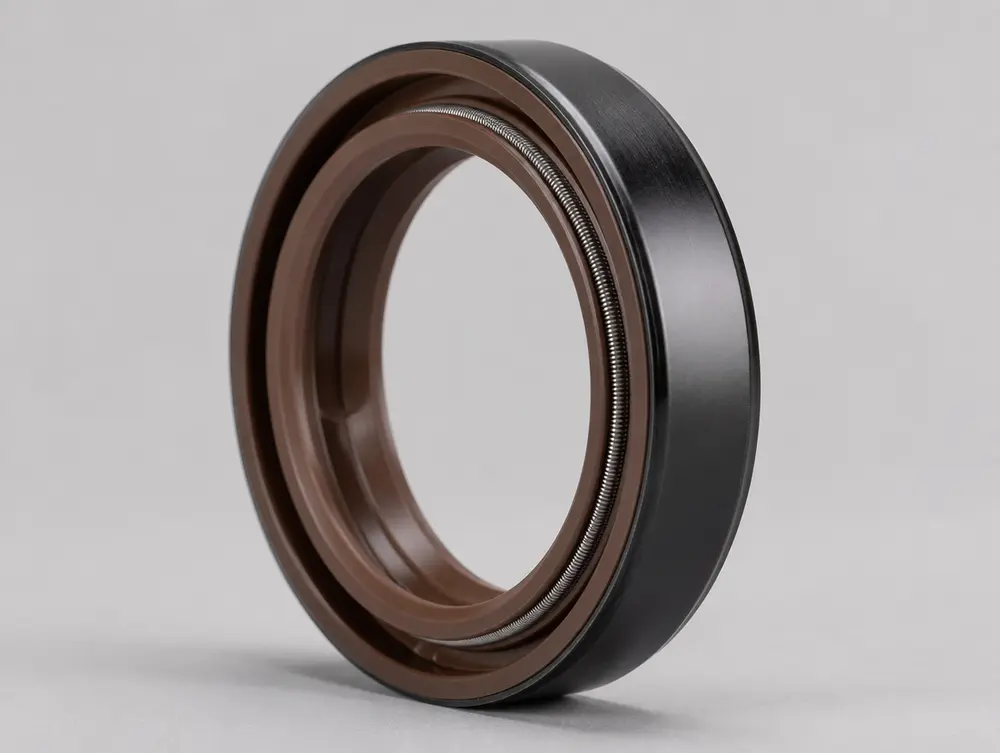
High temperature oil seals are radial shaft seals — also called rotary lip seals — made from rubber compounds that hold their properties when the housing, sump or surrounding air runs hot. Like any oil seal, they close the gap where a rotating shaft leaves a housing: the flexible lip presses against the shaft, keeps lubricating oil inside the bearing chamber, and keeps dust, water and grit out.
The difference is in the compound and the compound's behaviour under heat. A standard nitrile seal that performs well in a cool gearbox can harden, lose elasticity and take a permanent set when the same area runs at elevated temperature. Once the lip stiffens, it stops following the shaft, contact load drops, and oil begins to weep past the sealing edge. Heat-resistant elastomers are chosen so the lip keeps flexing and the seal keeps its grip over a longer service life.
These seals are used wherever hot oil, hot air or heat soak from a nearby process affects the sealing point: engine front and rear covers, pump bearing housings, gearbox shafts, compressor drives, oven and dryer conveyors, and the many oil seals for hot machinery that keep production lines running. For a wider view of profiles and sizes, see our oil seal manufacturing range.
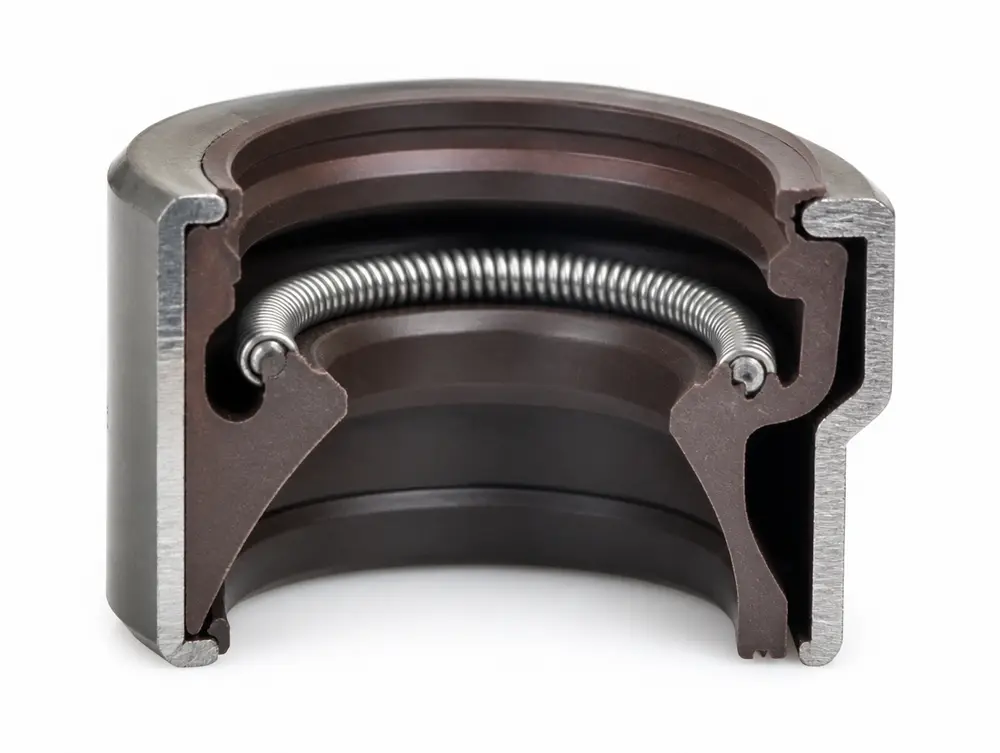
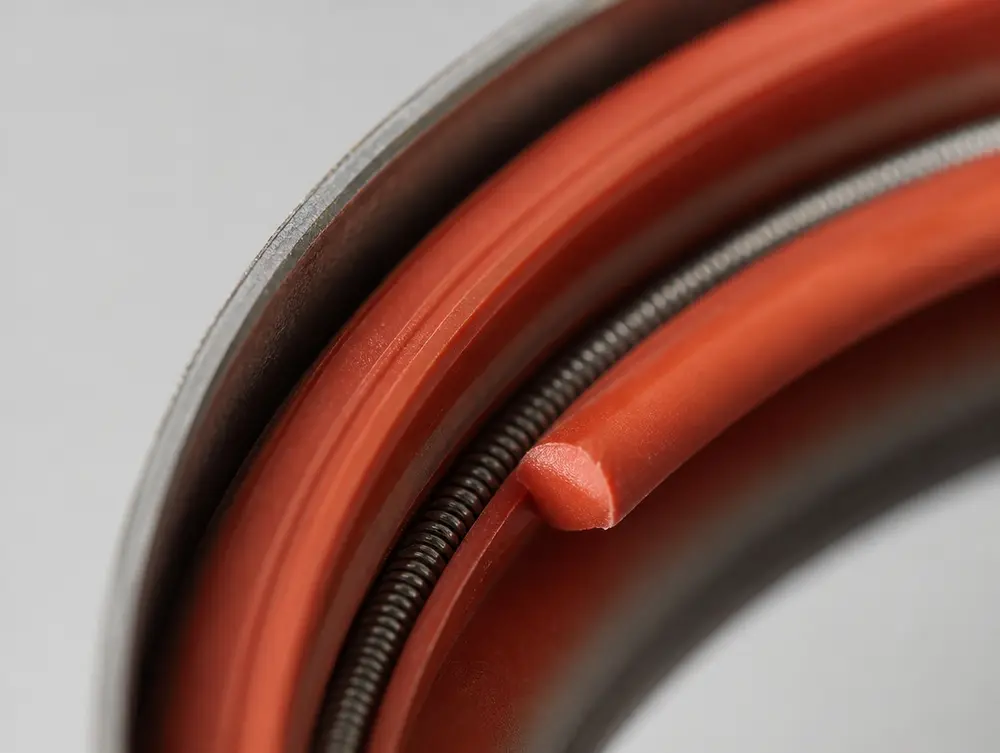
A thin elastomer edge contacts the shaft on a film of oil, sealing without running dry.
A garter spring keeps steady radial pressure on the lip as the rubber relaxes with heat and age.
The metal insert holds the seal square in the bore and keeps the lip aligned to the shaft.
Product features
Every feature below comes back to one job: keeping the sealing lip in contact with the shaft while the surrounding metal expands, the oil thins and the elastomer is asked to stay flexible.
Silicone, FKM and fluorosilicone options selected for the temperature at the sealing point, not just the sump reading.
Lip geometry and spring load are matched to shaft diameter and speed so the seal keeps contact through heat cycles.
Compounds chosen against the actual oil grade, additive package and any fuel or coolant contact in service.
Lip profile and compound toughness help the seal tolerate shaft finish, runout and the fine contamination that reaches it.
The metal case holds the bore diameter and lip position through thermal expansion, keeping the seal square in the housing.
Single-lip, lip-plus-dust-lip and spring-loaded designs in the compound that suits the fluid and temperature.
A seal that keeps its lip load at temperature protects oil fill levels, housekeeping and the cost of top-ups.
Contaminant exclusion and steady lubrication protect bearings and shafts, and help avoid unplanned shutdowns.
Material selection
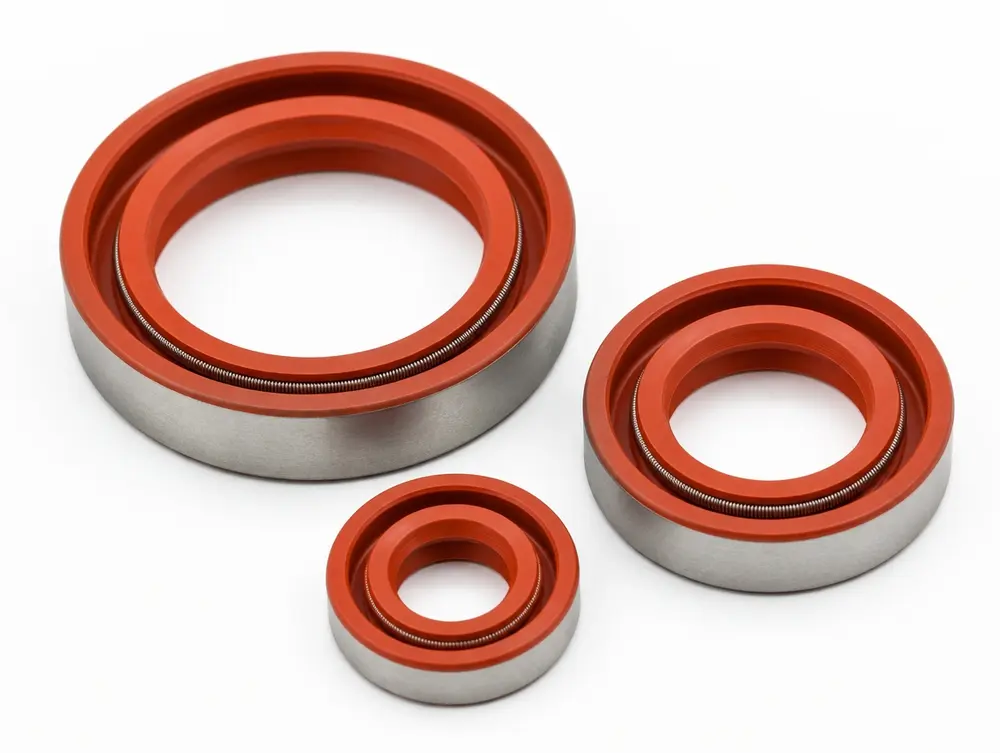
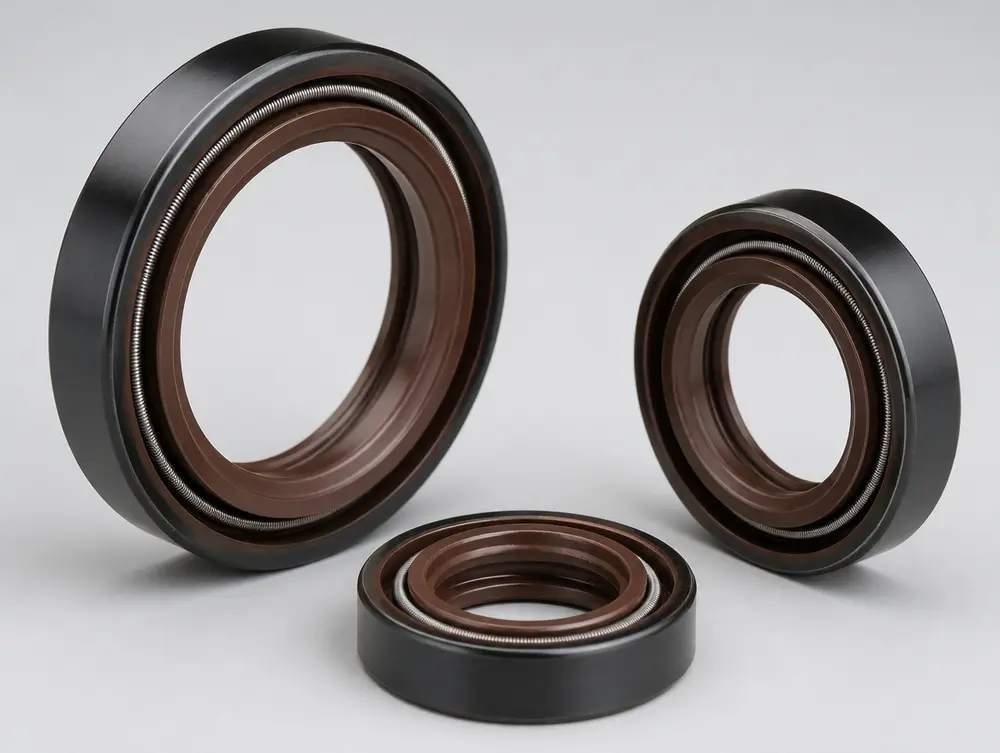
There is no single “best” high-temperature rubber. Each family trades heat capability against oil resistance, low-temperature flexibility, mechanical strength and cost. The right choice follows the application, not the datasheet headline.
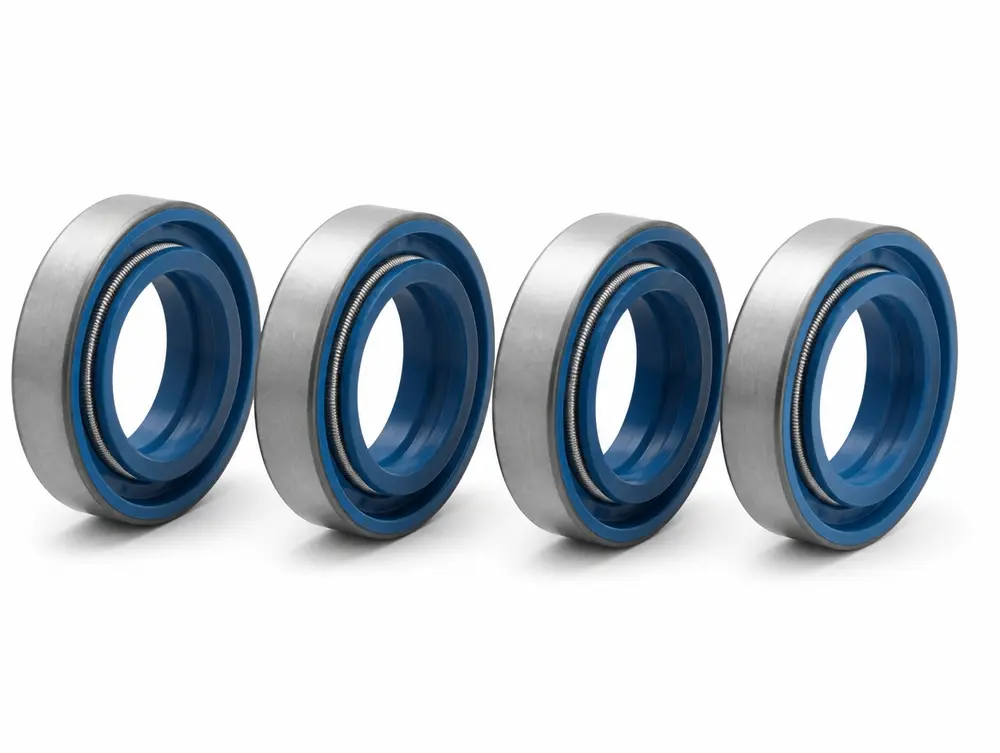
| Property | Silicone (VMQ) | FKM | Fluorosilicone (FVMQ) |
|---|---|---|---|
| Heat capability | Very high — widest general range | High | High |
| Hot oil & fuel resistance | Moderate | Excellent | Good — better than silicone |
| Low-temperature flexibility | Excellent | Limited on standard grades | Excellent |
| Tear & abrasion resistance | Moderate | Good | Moderate |
| Relative cost | Moderate | High | Very high |
| Typical high-temperature use | Dry heat, hot air, motors, ovens | Engines, gearboxes, pumps, hot oil | Fuel contact with cold flex |
The table describes general characteristics of these elastomer families and is intended to guide a conversation, not to confirm a specification. Material grade, hardness, cure system and lip design all affect real performance, and no single material suits every hot-oil application. Final selection is confirmed against your temperature, lubricant, pressure, shaft speed and environment. Other elastomer classes can be discussed where an application calls for them, subject to availability.
Designs
The compound decides how the rubber behaves in heat; the design decides how well the seal holds oil, resists dirt and fits the housing. Most enquiries resolve to one of five starting points.
One sealing lip with a garter spring, running on a film of oil. The simplest and most common radial shaft seal, used where the outside of the housing is clean and the priority is keeping lubricant in.
A main sealing lip plus a secondary lip — often a dust lip — that wipes the shaft ahead of the seal. The extra lip keeps grit, water and slurry away from the primary contact edge, which matters when the seal also runs hot.
The garter spring keeps radial load on the lip as the elastomer relaxes at temperature and over time. Spring-loaded seals are the default for rotating shafts where heat and long service intervals are both present.
Silicone (VMQ) seals for applications that combine high heat with cold-start flexibility, or where the fluid is compatible with silicone. They are not a blanket upgrade for hot petroleum oil — that is where FKM usually earns its cost.
Non-standard outside diameters, widths, lip profiles or housing fits, produced to a drawing or a sample. Custom work starts with the shaft and bore measurements plus the service conditions, so the seal suits the machine rather than the nearest catalogue size.
Availability of a specific design, compound combination or size is confirmed at enquiry stage. Share your drawing or sample and we will tell you what can be supplied before you commit.
Where they are used
Heat rarely arrives alone. In most machines it comes with oil mist, shaft speed, vibration or dust — and the seal has to handle the combination. These are the application areas we discuss most often.
Crankshaft, camshaft and transmission shafts exposed to combustion heat soak and hot engine oil.
Bearing housings, spindles and drive shafts on machines that run continuously and warm up in service.
Ovens, dryers, stenters, conveyors and process lines where radiant or convected heat reaches the seal.
Shaft sealing on hot-oil, thermal-fluid and process pumps, where leakage and product contamination both matter.
Input and output shafts running in hot oil, where the seal must resist additive-rich lubricant and shaft speed.
Tractor and implement shafts working in dust, mud and heat, where a dust lip protects the main sealing edge.
Crushers, steel plant drives, mining and material handling equipment under shock load and high ambient heat.
Textile finishing, food processing, laundry, HVAC motors and any equipment where the seal sits near a heat source.
Application notes above describe general sealing requirements, not a claim that a specific seal is already approved for a named machine. Send the machine details and we will confirm suitability.
Silicone focus
High temperature silicone oil seals use VMQ rubber, which stays flexible across a wider temperature band than most general-purpose seal elastomers. That flexibility is the reason silicone appears in equipment that heats up and cools down repeatedly: the lip can follow the shaft on a cold start and still seal once the housing is hot.
Silicone is also naturally resistant to ozone, weathering and dry heat, and it does not need the same additive package as oil-resistant rubbers to survive air-side ageing. Where the fluid is compatible and the duty is moderate, it can be a practical choice for oil seals for hot machinery — ovens, dryers, fan and motor shafts and similar equipment.
Silicone generally swells in petroleum oils and fuels, has modest tear strength, and is not the material to specify for sustained hot-oil immersion, high shaft speeds with poor lubrication, or abrasive slurry. In those cases FKM, fluorosilicone or another oil-resistant compound is normally the better starting point. Silicone is a temperature material first, an oil material second.
Engine duty
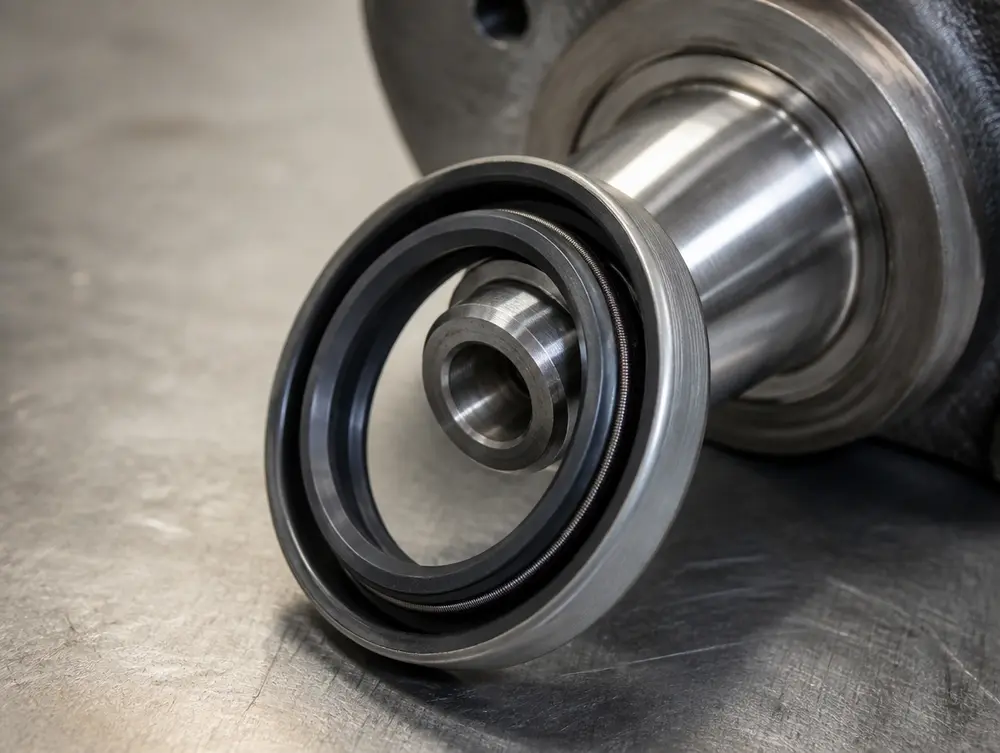
Engine sealing is one of the hardest duty cycles for a rotary shaft seal. The crankshaft and camshaft seals sit close to combustion heat, work in oil that carries detergents and dispersants, and see constant changes in speed and load. Heat soak after shutdown can push the seal area hotter than the oil temperature during running, and the elastomer has to recover from that without taking a permanent set.
High temperature engine oil seals therefore need three things together: a compound that resists hot engine oil, a lip that keeps contact through expansion and runout, and a case that holds the seal square in the cover or housing. FKM is a common starting point for hot oil contact, while silicone is generally reserved for applications where the fluid suits it.
Shaft condition matters as much as the seal. A worn or grooved shaft, a rough finish or excessive runout will shorten the life of any lip, whatever the compound. When you send engine seal requirements, include the shaft diameter, bore, width, oil specification and the running temperature you expect so the recommendation matches the machine.
For sealing outside the engine — gearboxes, pumps, motors and agricultural drives — our industrial oil seal applications page covers the wider range.
Discuss Your Engine SealSpecification
Dimensions and compounds are built around the application, so this table describes what we can discuss and confirm rather than a fixed catalogue range. Nothing here should be read as a guaranteed rating until it is confirmed in writing for your part.
| Parameter | Detail |
|---|---|
| Product type | Radial shaft oil seal (rotary lip seal) for elevated-temperature service |
| Seal design | Single lip, lip with dust lip, spring-loaded; case style matched to the housing |
| Material options | Silicone (VMQ), fluoroelastomer (FKM), fluorosilicone (FVMQ) — other classes discussed on request |
| Operating temperature | Available as per application requirements — confirm with our technical team |
| Shaft diameter | Available as per application requirements |
| Outer diameter | Available as per application requirements |
| Width | Available as per application requirements |
| Fluid compatibility | Checked against the actual lubricant, fuel or process fluid — share the oil grade or datasheet |
| Operating speed | Available as per application requirements — confirm with our technical team |
| Pressure | Standard lip seals are not intended for sustained pressure; discuss the duty before specifying |
| Spring & case | Standard or corrosion-resistant options as per application requirement |
| Customization | Non-standard sizes, lip profiles, compounds and housing fits to drawing or sample |
Temperature capability depends on the compound grade, the fluid, the shaft speed and how long the seal spends at temperature. A figure quoted for a material class is not the same as a rating for a finished seal. We confirm the applicable details for your part before supply, and we do not publish temperature bands, certifications or test results that we cannot stand behind.
Working with us
We are a Delhi-based oil seal manufacturer, and most of our work starts with a measurement, a sample or an old part number rather than a catalogue order. That suits heat-related sealing, where the answer usually depends on details.
Conversations about seals, not generic sales talk. Send the shaft size, fluid and temperature and you get a straight answer on what fits.
We compare silicone, FKM and fluorosilicone against your fluid and heat cycle instead of defaulting to one compound for every enquiry.
Recommendations are based on the machine, the duty cycle and the failure you are trying to fix — not just the nearest available size.
Non-standard bore and shaft combinations, unusual widths and retrofit sizes can be discussed against a drawing or a physical sample.
Oil seals and V belts are what we make. That keeps the conversation practical for maintenance teams and machine builders.
Buyers who need consistent dimensions across batches can discuss their requirement and packing preferences with our team.
Made to requirement
Most heat-related sealing problems are not solved by a standard size. A custom seal lets you specify the bore, the shaft, the compound and the lip design around the machine you already have — including imported equipment where the original part number is no longer available.
Have these ready
A drawing, a photograph with dimensions, or the worn seal itself is usually enough to start. If the shaft is grooved or the housing is damaged, tell us — it may change the recommendation.
Post or courier the old seal and we will work from the actual profile, case and lip geometry instead of guessing.
Machines imported years ago often need a seal that no longer exists in a catalogue. Dimensions can be taken from the housing and shaft directly.
Once a part is agreed, keep the drawing and dimensions on file so repeat orders are matched to the same specification.
More from the range
High temperature sealing is one part of a wider oil seal range. If your machine also needs standard shaft seals, heavy-duty profiles or agricultural seals, start here.
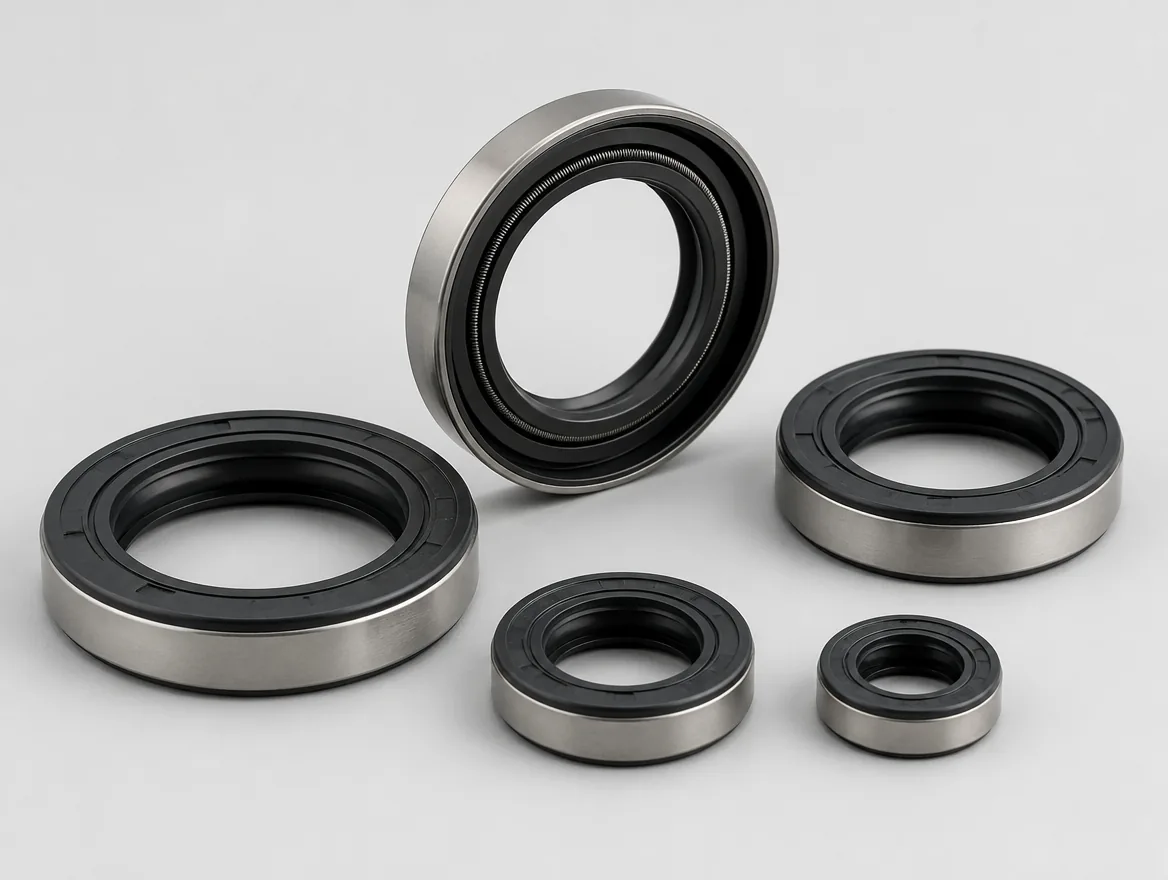
Standard and non-standard lip seals for rotating shafts across industrial machinery.
View range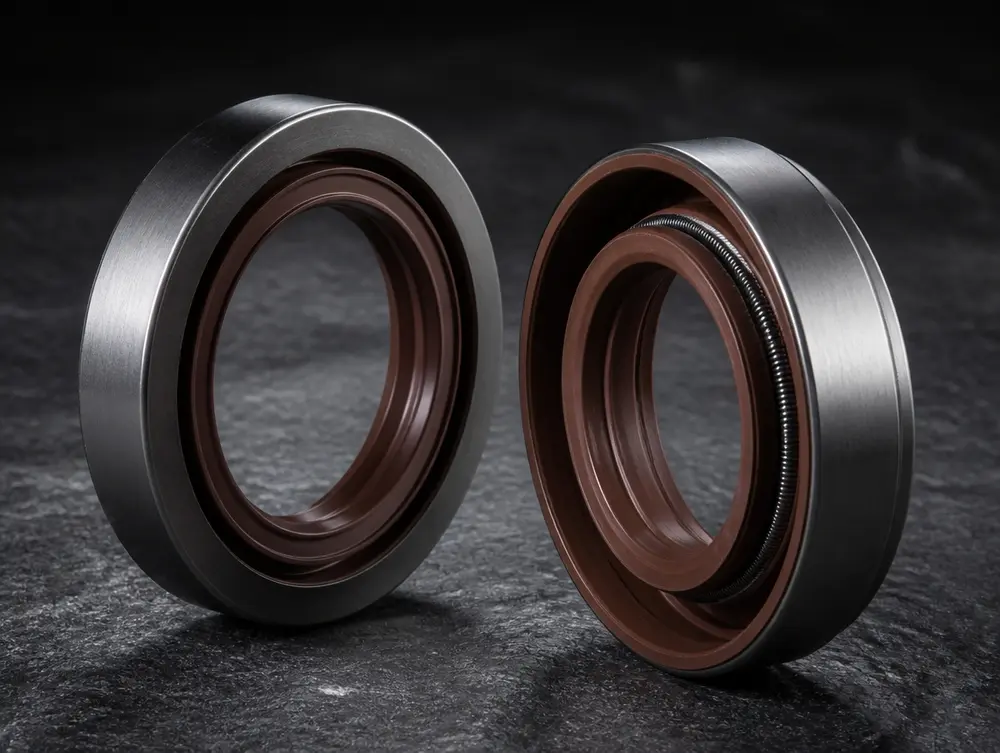
Robust profiles for gearboxes, crushers and equipment under load, dust and heat.
See seal types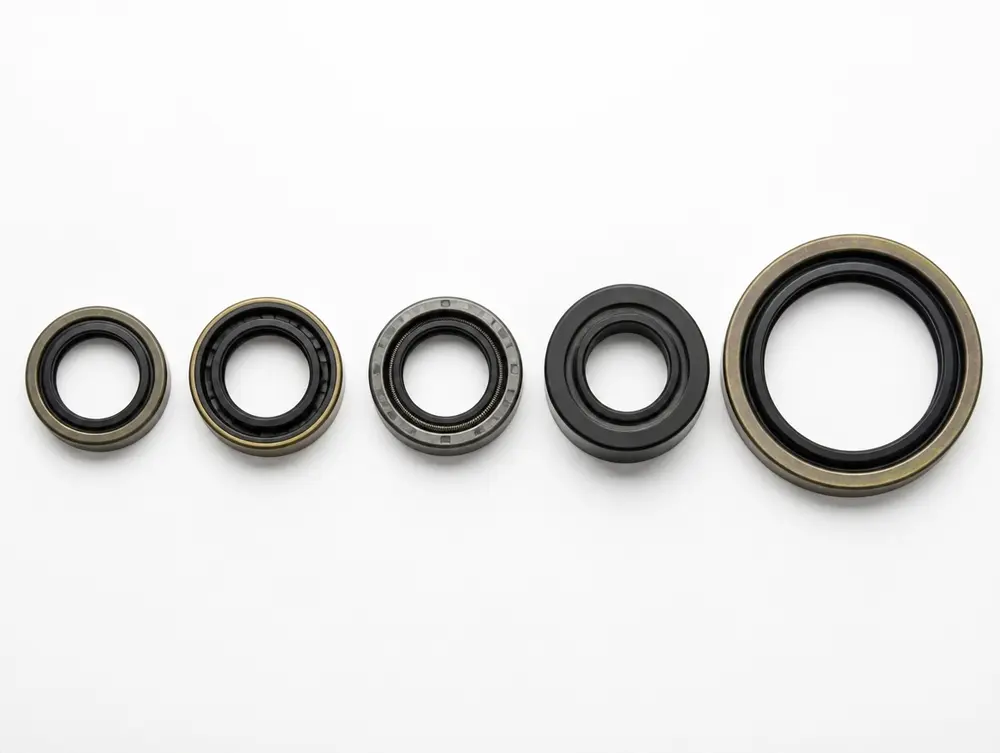
Seals produced to drawing or sample for OEM builds and replacement programmes.
Custom options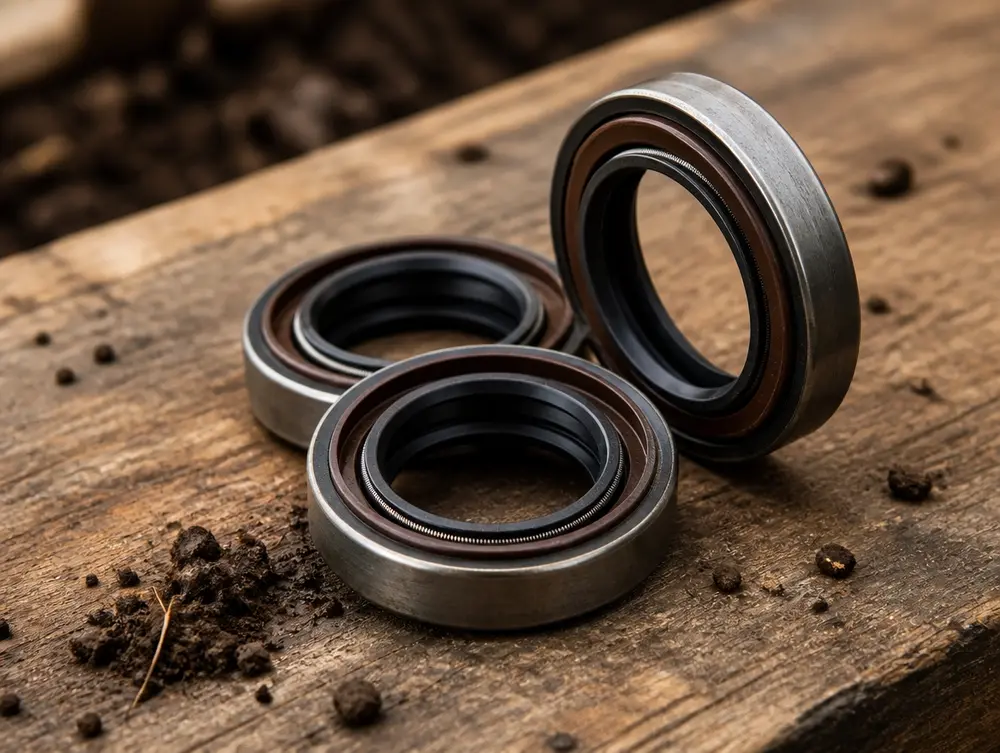
Dust-lip seals for tractor and implement shafts working in grit and heat.
Industry sealsQuestions
High temperature oil seals are radial shaft seals made from heat-resistant rubber compounds. They sit in a housing around a rotating shaft, keep lubricating oil inside and keep dust and water out, and are chosen where the seal area runs hotter than a standard nitrile seal can comfortably handle. The sealing principle is the same as any rotary lip seal; the compound and lip design are what change.
The most common families are silicone (VMQ), fluoroelastomer (FKM) and fluorosilicone (FVMQ). Silicone offers the widest general temperature flexibility but moderate oil resistance; FKM offers excellent hot-oil and fuel resistance with limited low-temperature flex; fluorosilicone sits between the two. Selection depends on the fluid, temperature, speed, pressure and environment — not on temperature alone.
Often yes for heat, but not automatically for hot oil. Silicone stays flexible across a wide temperature band and resists dry heat and weathering well, which suits ovens, dryers, motors and equipment with hot-to-cold cycling. In petroleum oils and fuels, silicone tends to swell and lose strength, so FKM or fluorosilicone is usually a better starting point. Always confirm compatibility with the actual lubricant.
Silicone is the more flexible material across temperature extremes and generally costs less, but it has modest resistance to oils and fuels and lower tear strength. FKM resists hot mineral oils, fuels and many chemicals far better and holds up well in sustained hot-oil service, but standard grades stiffen in cold conditions and it costs more. Choose silicone for heat with compatible fluids; choose FKM for hot oil and engine duty.
Start with five inputs: shaft diameter, housing bore, seal width, the highest temperature the seal will see, and the exact lubricant or fluid. Then add shaft speed, any pressure, runout and contamination. With those details we can narrow the compound and lip design. If you have the old seal, its dimensions and markings are the fastest starting point.
Yes, when the compound suits hot engine oil and the lip is designed for the shaft speed and runout involved. Crankshaft and camshaft seals see heat soak after shutdown as well as running temperature, so heat-ageing resistance matters. FKM is a common starting point for oil contact; the condition of the shaft — finish, grooves and runout — affects life as much as the material does.
Yes. Non-standard outside diameters, widths, lip profiles, dust lips and compound choices can be discussed against a drawing, a sample or measured shaft and bore dimensions. Custom work is common for imported machinery, older equipment and OEM builds where a catalogue size does not fit. Availability of a specific combination is confirmed before quoting.
The temperature at the lip, the fluid and its additives, shaft speed and surface finish, runout, pressure, contamination and installation quality all matter. So does storage: elastomers age, and a seal that has sat in sunlight or ozone for years may not perform like a fresh one. Correct fitting — square in the bore, lip lubricated, no damage to the sealing edge — is often the difference between a long life and a repeat leak.
Look for a supplier who asks about your fluid, temperature and shaft before quoting, explains why one compound is preferred over another, and confirms dimensions in writing. Ask whether they can work from a drawing or sample, and whether repeat orders will match the same specification. A supplier who will not discuss the application is unlikely to solve a heat-related leak.
Send the shaft diameter, housing bore and seal width, the operating temperature, the lubricant or fluid type, the shaft speed and any pressure involved. A drawing, photograph or sample helps. For repeat orders, the earlier part reference or dimensions are enough. Quantity and delivery location come last; the technical details decide whether the seal will work.
Next step
Send your shaft diameter, bore, width, temperature and lubricant. We will come back with a compound and design recommendation — and tell you honestly if a standard seal will do the job.