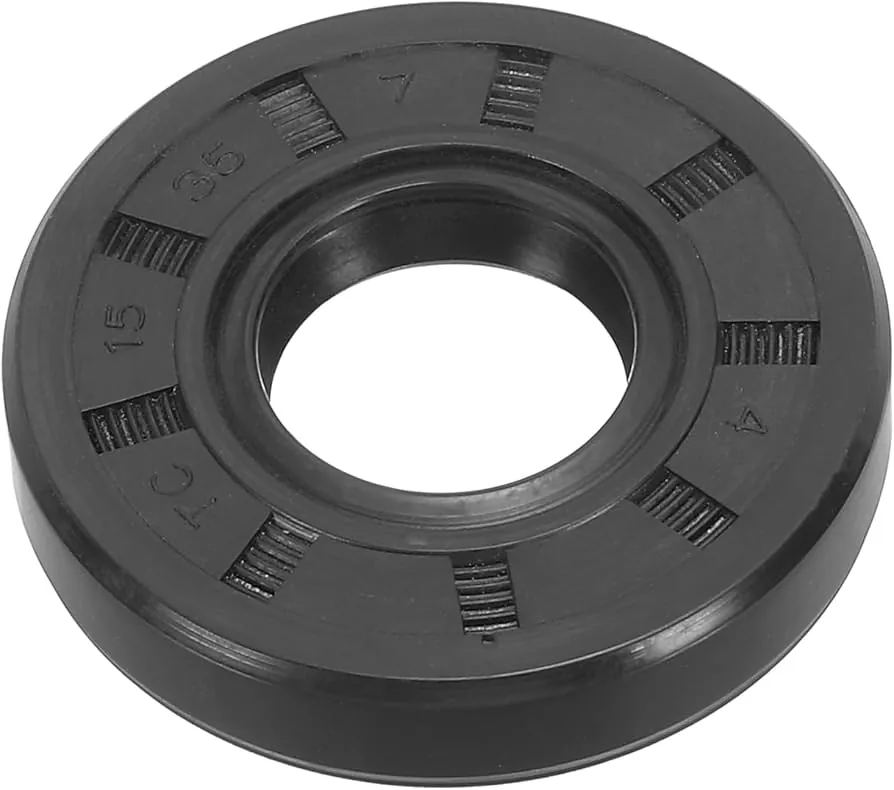
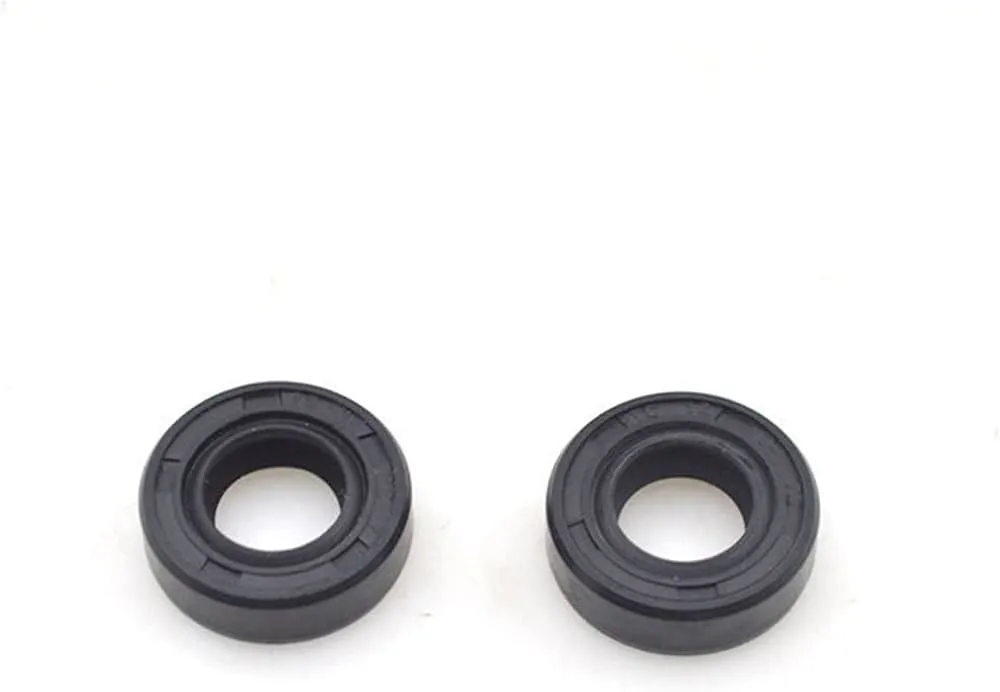
An NBR oil seal is a radial shaft seal whose flexible sealing element is made from nitrile butadiene rubber — usually shortened to NBR or called nitrile rubber. The seal closes the small gap between a rotating shaft and the housing around it, holding lubricating oil or grease inside the bearing or gear chamber and keeping dust, moisture and abrasive particles out.
What NBR stands for
NBR stands for nitrile butadiene rubber, a synthetic elastomer produced by copolymerising acrylonitrile and butadiene. The acrylonitrile content gives the material its resistance to oils and fuels; grades with more acrylonitrile resist oil and heat better, while grades with less stay flexible at lower temperatures. That balance is set in the compound — which is why two “NBR” seals can behave very differently in service.
What the seal does
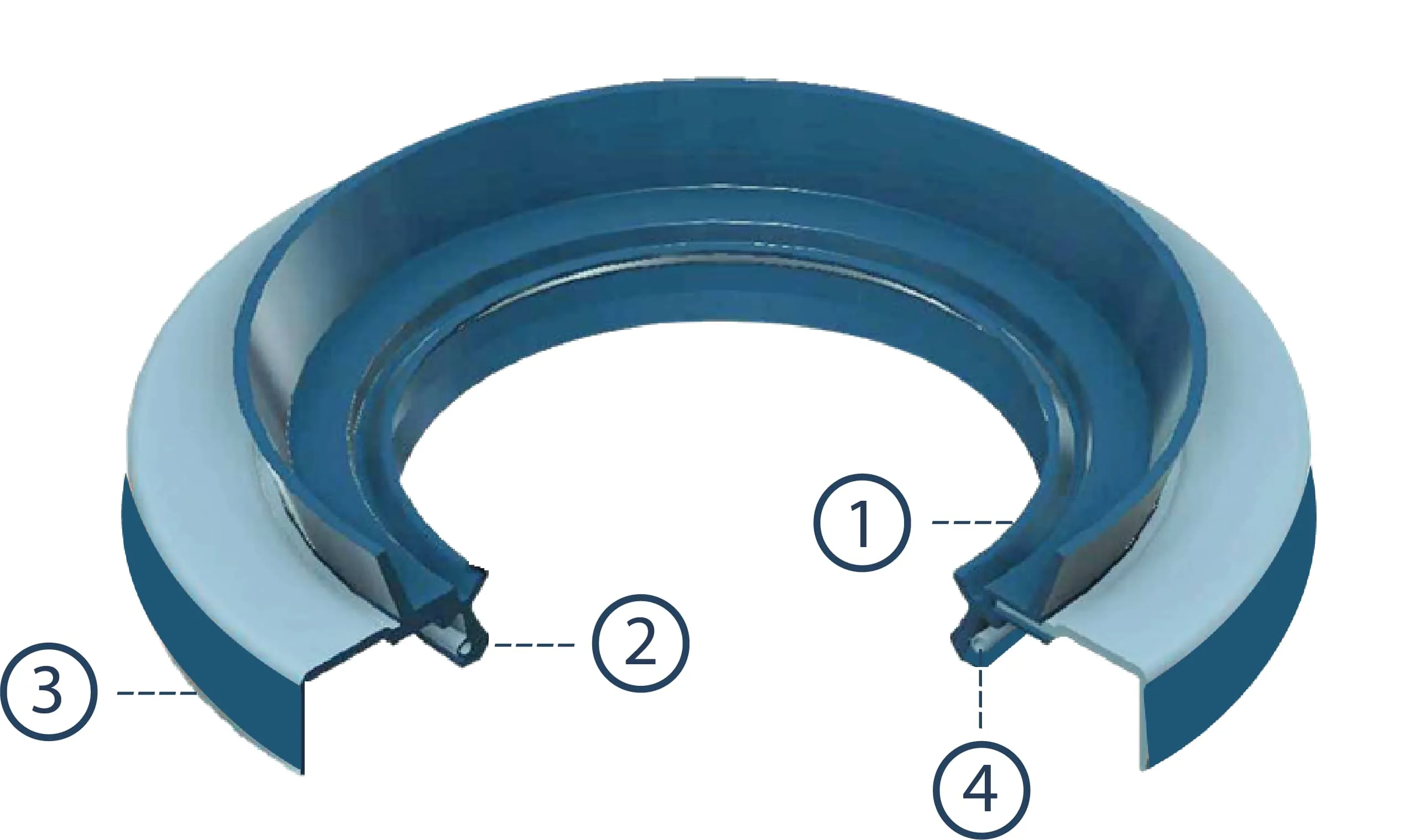
A rotary shaft oil seal has one job with two sides: keep the lubricant in and keep contamination out. Its shaped lip presses against the spinning shaft with a controlled contact force, usually maintained by a small garter spring. The lip carries a thin oil film that lubricates the contact, while the case holds the seal firmly in the housing bore. When the seal is correctly selected, bearings stay lubricated, oil stays off the floor, and the machine keeps its designed service life.
Why the material choice matters
Seals rarely fail because they were badly moulded — they fail because the compound was wrong for the fluid, the temperature or the speed. Nitrile rubber is the most widely used oil-seal material because it resists many petroleum-based oils and greases at a reasonable cost. But no rubber suits every duty: before ordering, the seal material should be matched against the fluid being sealed, the operating temperature, the shaft speed, the pressure and the level of contamination.