Lubricant retention
The sealing lip holds oil or grease inside the housing so bearings and gears stay lubricated between services. Sealing performance here directly affects the reliability of the whole assembly.

Agricultural machinery oil seals protect the rotating shafts that keep farm equipment working — retaining lubricant, holding out dust, mud and moisture, and protecting the bearings behind them through long hours in the field. Ananta Venture supplies replacement and made-to-requirement oil seals for combine harvesters, threshers, tractors and other farm machinery.
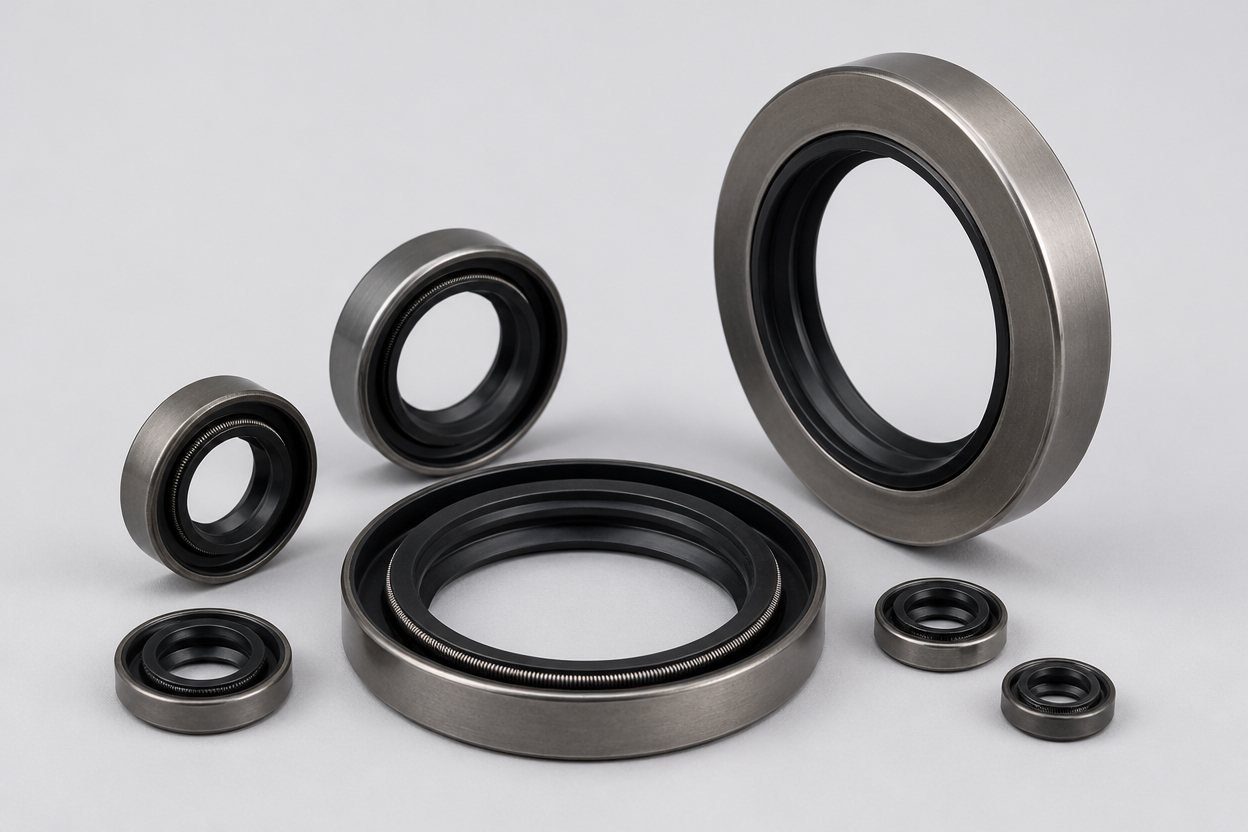
An oil seal — also called a rotary shaft seal or radial lip seal — closes the gap between a rotating shaft and the housing that carries it. A flexible sealing lip is held against the shaft, usually assisted by a small garter spring, while the outer case is pressed into a machined bore. In agricultural machinery oil seals, that simple arrangement has to survive some of the dirtiest working conditions in engineering.
Farm machinery operates in dust, mud, crop residue, moisture and wide temperature swings, often far from a workshop. When a seal fails, lubricant escapes and abrasives enter at the same time, and the bearing or gear behind it begins to wear quietly. Fitting the right agricultural machinery oil seal — correct diameter, correct material, correct lip design — protects the assembly, reduces leakage and supports machinery performance and service life through the season when the machine is needed most.
Ananta Venture supplies oil seals for agricultural machinery, including combine harvesters, threshers, tractors, rotavators, agricultural pumps and other farm equipment, alongside a complete oil seal range for industrial and automotive applications. Enquiries can be raised with a part number, a technical drawing, the dimensions of the old seal or a physical sample.
The sealing lip holds oil or grease inside the housing so bearings and gears stay lubricated between services. Sealing performance here directly affects the reliability of the whole assembly.
On field machinery, abrasive dust and crop residue are often more damaging than oil loss itself. A well-chosen seal — with a dust lip where the position demands it — keeps grit away from the shaft and bearing.
A correctly sized and installed seal reduces lubricant leakage around the machine, keeps drivelines cleaner and supports equipment performance between overhauls — provided the shaft and bore are in sound condition.
Oil seals appear at almost every point where a rotating shaft leaves a lubricated housing on farm equipment. The groups below cover the machines buyers most often enquire about — they describe typical sealing positions, not a claim that one seal design fits every make or model.
A combine harvester oil seal works in one of the most contamination-heavy environments in agriculture. Seals are used at the threshing drum and rotor shafts, reel and unloader auger drives, straw walker and cleaning-shoe bearings, and in transmission and gearbox assemblies. Crop dust and straw residue make lip condition and dust protection critical.
Confirm before orderingPlanning transmission work? See our gearbox oil seals.
Inside a thresher, oil seals protect the bearings of the threshing drum, blower and other rotating shafts from the dust and fibrous residue thrown off during operation. A dependable thresher oil seal keeps grease or oil in the bearing housing while excluding the abrasive material that would otherwise attack the bearing race and shaft surface.
Confirm before orderingAgricultural equipment oil seals are used across tractors at the engine crankshaft, gearbox, axles, wheel hubs, PTO shaft and hydraulic system — each position with its own dimensions, speeds and contamination exposure. Because designs differ from one model to another, these seals are specified by position rather than by machine.
Confirm before orderingFor position-by-position details, see our tractor oil seals page.
Cultivators, rotavators, seed drills, harvesters, agricultural pumps and spraying equipment all use rotary shaft seals at gearboxes, bearings and pump shafts. Sizes and materials differ from one machine to the next — a rotavator gearbox seal is not the same part as a water pump shaft seal, so each requirement is reviewed on its own specification.
Confirm before orderingAlso see rotavator oil seals and water pump oil seals.
Application categories describe typical sealing positions on agricultural machinery. Confirmed availability depends on the dimensions, material and design you specify — share a sample, drawing or part number so the requirement can be checked against the range.
What buyers and maintenance teams can expect from the seals supplied against their requirement.
The elastomer decides how a seal copes with heat, speed, lubricant and abrasion. These are the compounds most often specified for farm machinery sealing positions.
Nitrile rubber (NBR) is the most widely specified material for agricultural machinery oil seals. It offers dependable resistance to mineral-based lubricants, greases and hydraulic oils at moderate temperatures, and suits the majority of gearbox, bearing and pump positions.
Explore NBR oil seals →Fluoroelastomer (FKM) seals are chosen where higher operating temperatures or more aggressive fluids make standard nitrile unsuitable — for example hot engine and hydraulic positions on hard-working equipment.
Explore Viton oil seals →Silicone (VMQ) seals handle a wide temperature span and stay flexible in cold conditions, though their abrasion resistance is lower — better suited to slower or lightly loaded positions than to gritty, high-wear ones.
Explore silicone oil seals →Polyurethane offers outstanding abrasion resistance, which suits dusty, gritty applications and hydraulic duties where the sealing face sees constant sliding contact and wear.
Explore PU oil seals →PTFE seals provide very low friction and broad chemical resistance, and are used in specialist sealing applications — high shaft speeds, aggressive lubricants or demanding temperature limits where elastomers fall short.
Explore PTFE oil seals →Material selection is application-specific. The right compound depends on operating temperature, shaft speed, pressure, shaft condition, lubricant compatibility and the working environment of the machine. If you are unsure which material fits your application, share the operating details and the requirement will be reviewed with you.
Different positions on farm equipment call for different seal constructions. Availability of a specific type depends on the machinery application and the technical specification of the position.
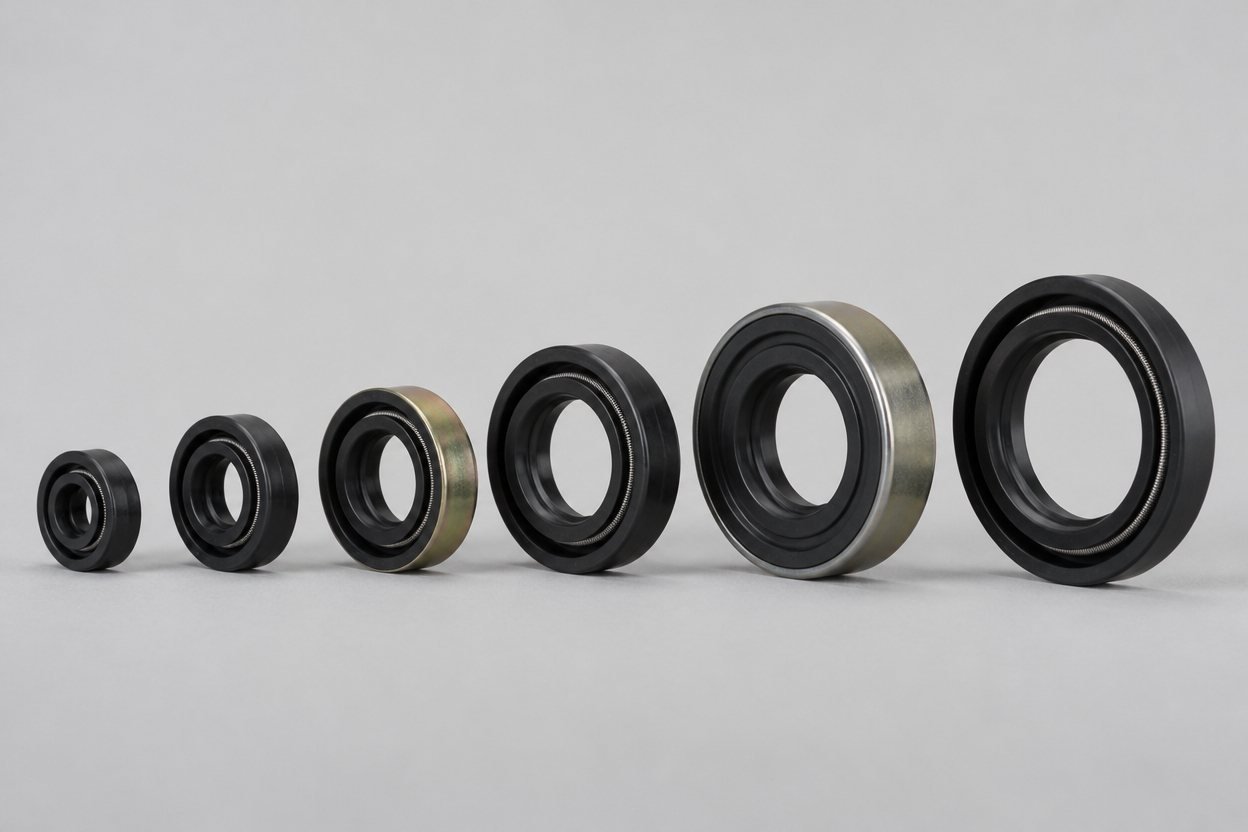
A single sealing lip, usually spring loaded, for positions where lubricant retention is the main requirement and contamination exposure is moderate.
A secondary dust lip runs behind the main lip — the standard choice for combine, thresher and tillage equipment working in dust and crop residue.
A rigid metal case gives accurate press-fit location in the housing bore and dimensional stability in gearbox and bearing housings.
The metal case is fully covered in rubber, helping the seal grip the bore and resist corrosion in wet, humid or fertiliser-exposed service.
A garter spring keeps constant lip contact on the shaft as the lip wears, maintaining sealing performance over long service intervals.
Non-standard widths, lip arrangements and case designs can be reviewed against a drawing, sample or part number, subject to technical feasibility.
Many replacement and OEM requirements fall outside standard catalogue sizes. Custom agricultural oil seals can be discussed against the parameters below — from a single replacement for a machine standing idle to ongoing wholesale quantities for dealers and equipment manufacturers.
Share technical drawings, a sample seal or the measured dimensions — along with the machine and application — and the requirement will be reviewed for feasibility and pricing.
A seal is specified by its position, not by the machine. Working through these factors — or sending them with your enquiry — is the fastest route to a seal that fits and lasts.
Accurate specifications — the three key dimensions plus material and application — are the quickest way to identify suitable replacement oil seals. Where a part number exists, quote it.
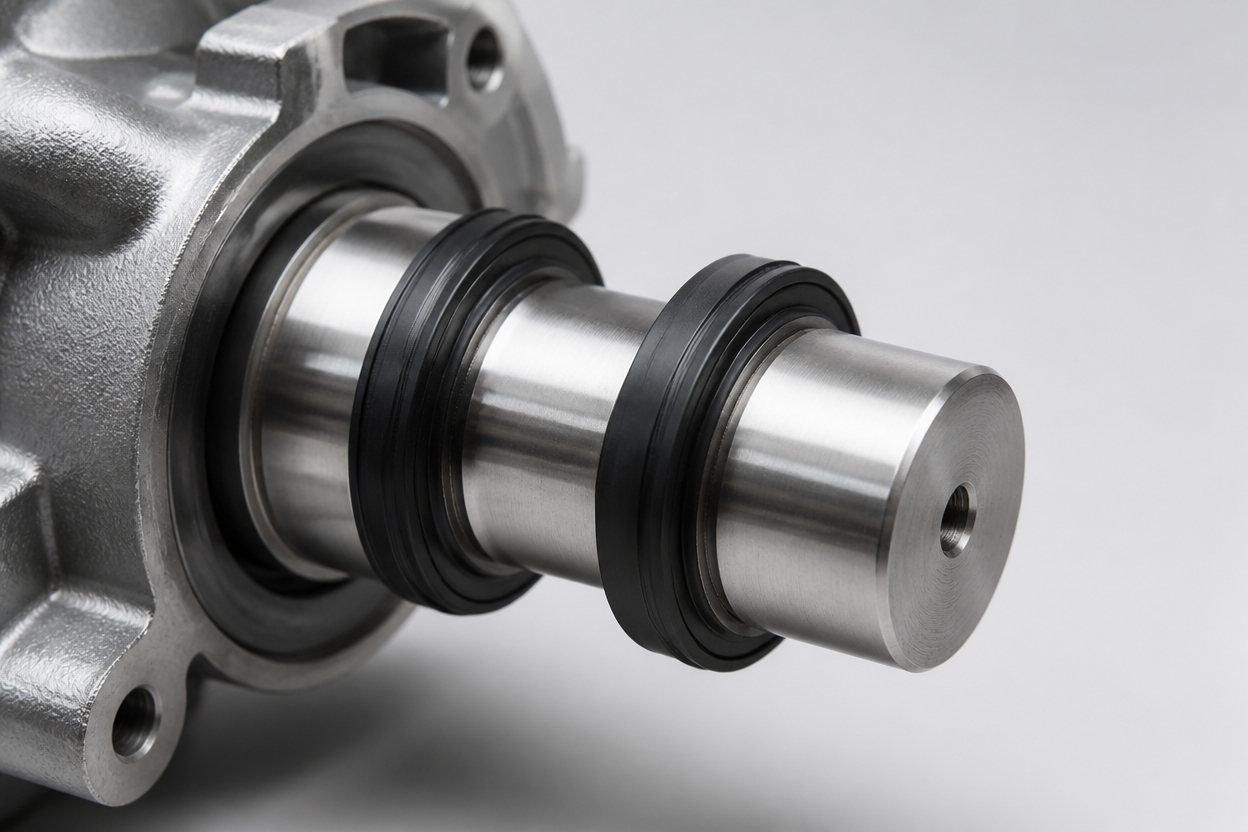
Seals are consumable components — recognising the signs of a worn seal early protects the far more expensive bearings and gears behind it. These are the indicators most often seen on farm machinery.
Visible wetness, drips or an oil film collecting dust on and below the housing is the clearest sign of lip failure.
A lip that has turned brittle, cracked or lost contact no longer follows the shaft and lets lubricant pass.
Worn, scored or misshapen lips — and a loose or corroded garter spring — reduce contact pressure and sealing performance.
Grit and crop residue packed against the lip scratch the shaft surface and accelerate wear on both shaft and seal.
A joint that keeps needing top-ups between services is no longer holding lubricant — the seal has passed its service life.
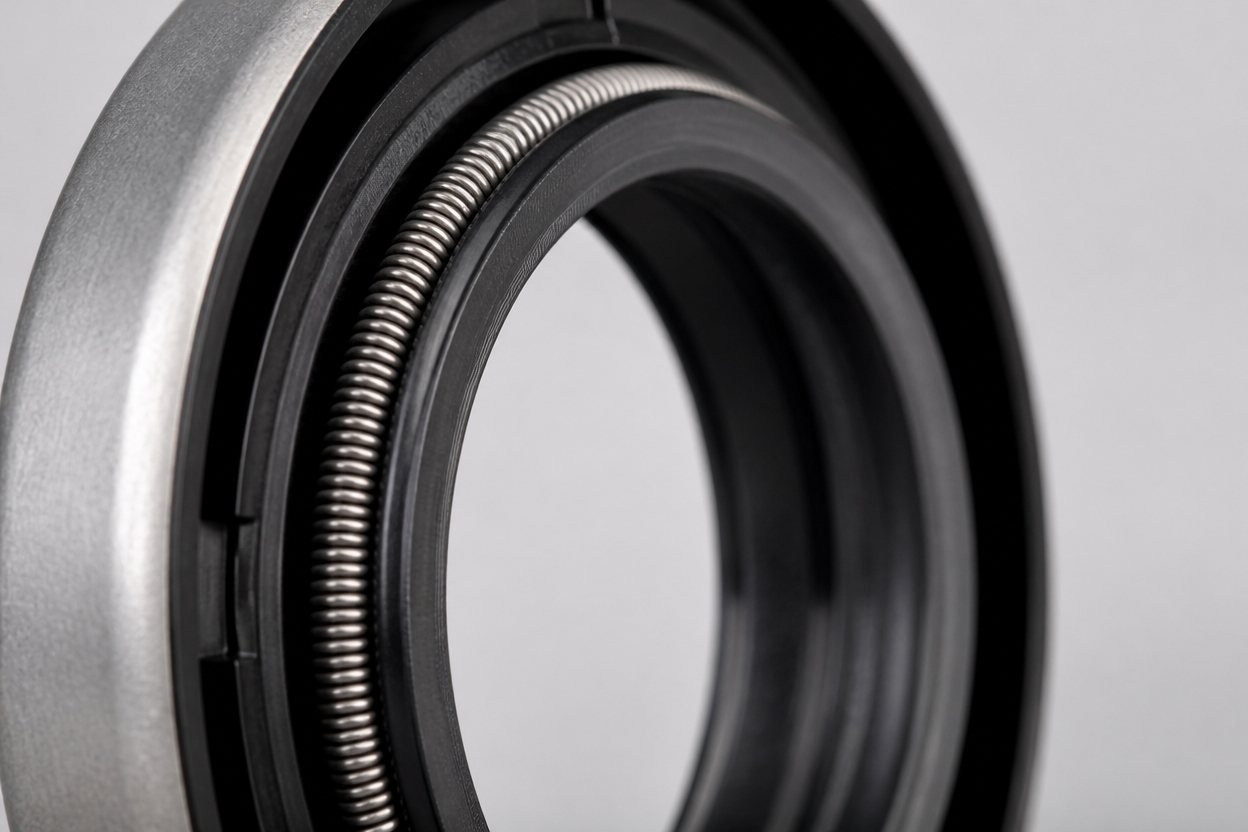
Check the condition of the shaft itself. A worn, scored or misaligned shaft will damage a new seal as quickly as the old one. Measure the shaft at an unworn point, confirm the housing bore and match the seal dimensions — ID × OD × width — before selecting the replacement part.
Ananta Venture supplies agricultural machinery oil seals from Burari, Delhi, for equipment manufacturers, spare-parts dealers, distributors and maintenance teams. Enquiries are welcome from buyers looking for an agricultural oil seal wholesale supplier as well as from workshops needing a single replacement seal for a machine standing idle mid-season.
Help identifying the right sizes and materials from dimensions, part numbers or old seal samples.
Suggestions matched to the machine type, lubricant and working environment of each sealing position.
Non-standard sizes, profiles and materials reviewed against your drawings and samples.
Size-wise quantities and supply schedules for dealers, distributors and OEM buyers.
Support matching worn or unmarked seals to suitable current replacements for farm machinery.
Quotations and follow-ups handled directly by phone, WhatsApp or email — Monday to Sunday.
Tell us the machine, the seal dimensions and the quantity you need. Call, message on WhatsApp or email — enquiries are answered with available options, sizes and pricing.
Prefer the full contact page? See all contact options and directions.
The more specific your requirement, the quicker a suitable seal can be identified and quoted.
Open Monday to Sunday — WhatsApp is the fastest way to reach the team for urgent machine-breakdown requirements.
Practical answers to what buyers, dealers and maintenance teams ask before ordering.
Agricultural machinery oil seals are rotary shaft seals fitted where a rotating shaft passes through a lubricated housing on farm equipment. They retain lubricating oil or grease inside the assembly and limit the entry of dust, mud, crop residue and moisture, protecting the bearings and gears behind the shaft.
Common positions include gearbox input and output shafts, threshing drum and rotor shafts, reel and auger drives, wheel hubs and axles, PTO shafts, hydraulic pumps and motors, and water pump shafts. Each position has its own shaft diameter, housing bore, speed and contamination exposure, so seals are specified per position rather than per machine.
Combine harvesters generally use spring-loaded radial lip seals, with double-lip or dust-lip designs in positions exposed to crop dust and straw residue. Nitrile (NBR) suits most mineral-oil positions, while FKM is preferred where temperatures run higher. The exact size and design depend on the shaft, housing and operating conditions at each position.
A thresher oil seal protects the bearings of the threshing drum, blower and other rotating shafts. It keeps grease or oil inside the bearing housing and excludes the dust and fibrous residue generated during threshing — abrasive material that would otherwise cause rapid bearing wear.
Nitrile rubber (NBR) is the usual choice for general mineral-oil sealing at moderate temperatures. FKM (Viton) is selected for higher heat and more aggressive fluids, silicone for wide temperature ranges, polyurethane for abrasion-heavy duties and PTFE for specialist high-speed or chemical applications. The lubricant, temperature, speed and environment of the position decide the material.
Yes. Custom sizes can be reviewed against the inner diameter, outer diameter, width, profile and material you specify, subject to technical feasibility. Sharing a technical drawing, the old seal or a sample is the most reliable way to have a custom requirement checked.
Start with the three key dimensions — shaft diameter, housing bore and seal width — then confirm the lubricant, operating temperature, shaft speed and contamination exposure. A part number, drawing or the old seal itself is the most reliable reference. Where the shaft is worn, measure an unworn section and mention it in your enquiry.
Replace a seal when oil appears around the shaft, when the lip has hardened, cracked or deformed, or when a joint keeps losing lubricant between services. Because worn shafts, misalignment and blocked breathers can cause the same symptoms, inspect the shaft condition and confirm the seal dimensions before fitting a replacement.
Ananta Venture, based in Burari, Delhi, supplies oil seals for combine harvesters, threshers, tractors and other farm equipment. Call or WhatsApp +91 9211305366, or email [email protected] with your sizes and quantities to receive available options and pricing.
Yes. Bulk and wholesale enquiries from dealers, distributors and equipment manufacturers are welcome. Share the sizes, the quantity required for each size and your expected schedule so availability, packing and commercial terms can be confirmed for your requirement.
Whether you need a single replacement seal for a harvester standing idle or a wholesale quantity across multiple sizes, send the details and the requirement will be reviewed with you directly.