Weathering and ozone resistance
The saturated backbone resists ozone cracking, ultraviolet degradation and general outdoor ageing. That is why EPDM is common on exterior seals, roof and facade gaskets, and equipment that sits in the sun.

Seal material guide · EPDM
EPDM oil seals are rotary shaft seals built with an ethylene propylene diene monomer rubber lip. They are chosen where the sealed medium is water, hot water, low-pressure steam, a glycol-based fluid or a compatible aqueous chemical — and where weather, ozone and ultraviolet exposure would shorten the life of a general-purpose rubber.
EPDM is not a universal oil seal material. It is generally unsuitable for mineral oils, petroleum fuels and hydrocarbon greases, so the fluid has to be confirmed before the compound is specified. We can review your application, dimensions and operating conditions with you.
Indicative material guidance, not a specification for a particular seal. Exact limits depend on the compound, fluid concentration, seal design, surface speed and duty cycle, and must be confirmed for the application.
Material basics · 01
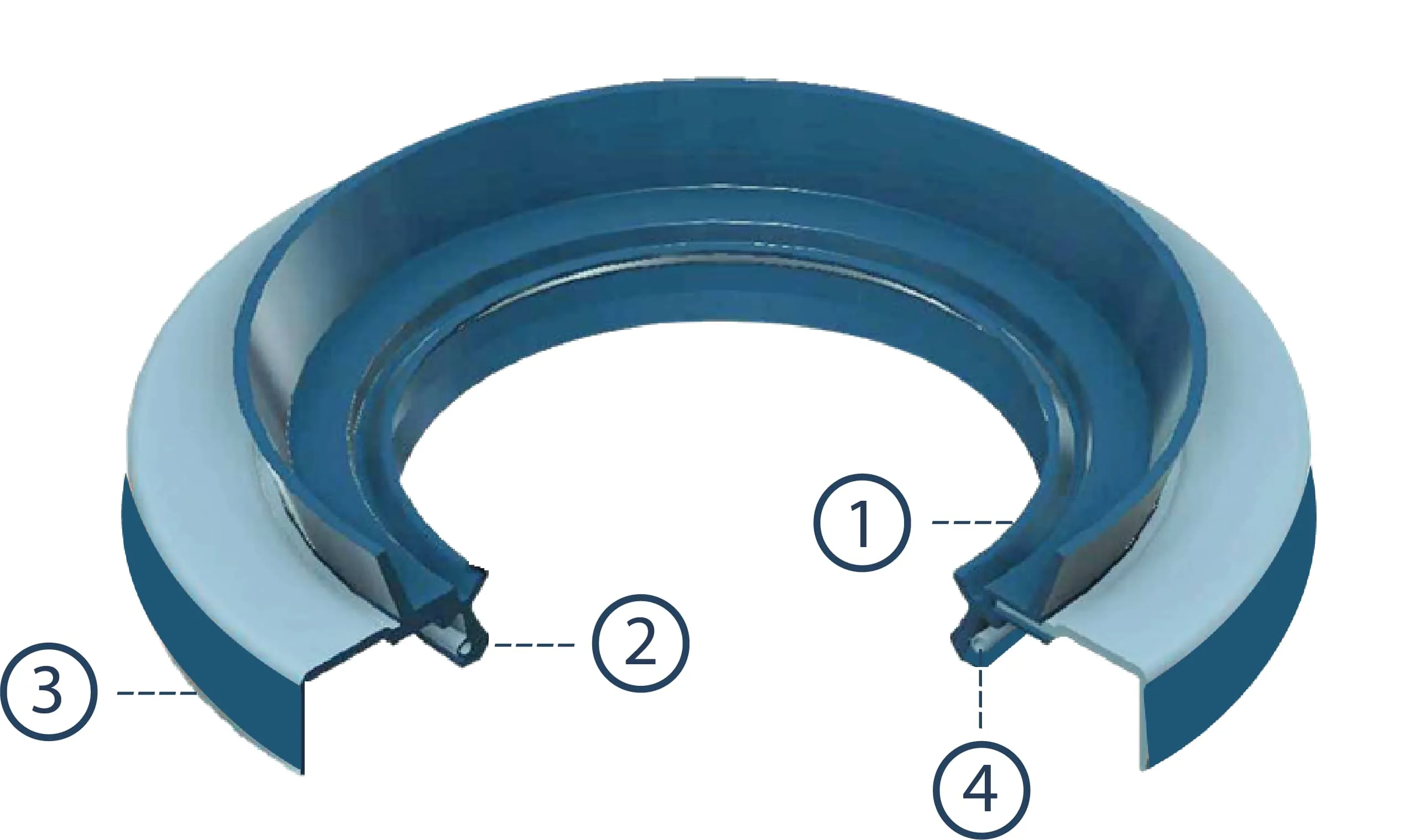
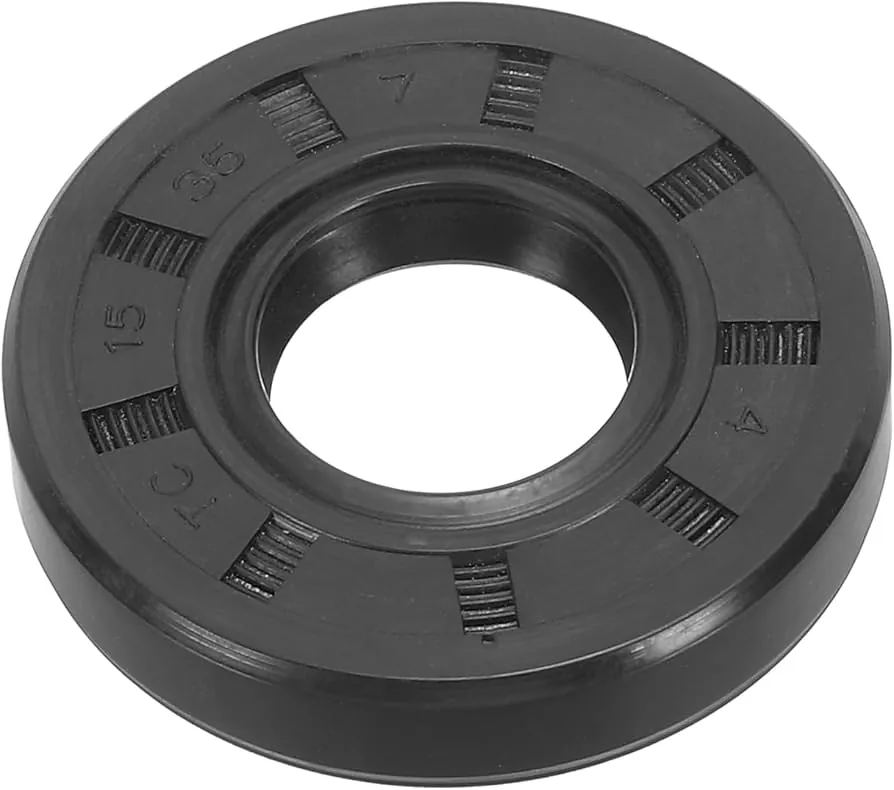
An EPDM oil seal is a radial shaft seal whose elastomer component is made from EPDM rubber. It sits in a housing bore, seals against a rotating shaft and separates the lubricant or process fluid inside from dust, water and grit outside. In catalogues the same component often appears as EPDM rubber oil seals or EPDM rotary shaft seals; the construction is a shaft lip seal either way.
EPDM stands for ethylene propylene diene monomer, an M-class synthetic elastomer. In a seal, it forms the flexible lip and body that contact the shaft and housing. EPDM is selected for resistance to water, hot water, steam, weathering, ozone and many polar fluids — and it is generally not recommended for mineral oils, petroleum fuels or hydrocarbon greases.
EPDM is built on a saturated ethylene–propylene backbone with a small amount of diene monomer that provides the cross-linking sites. A saturated backbone is the reason the material shrugs off ozone, ultraviolet light and outdoor ageing that attack unsaturated rubbers such as NBR or neoprene. The same chemistry explains its weakness: EPDM has little resistance to non-polar hydrocarbons, so mineral oil and fuel cause swelling, softening and loss of lip load.
That single trade-off decides most EPDM seal selection. The material is a strong performer in water and weather, and a poor choice in oil — the opposite of what most people expect from a component called an oil seal.
There is no separate mechanical family called an “EPDM oil seal”. The seal type is a rotary shaft lip seal, normally a single-lip or double-lip design with a metal or rubberised outer case and a garter spring loading the lip. EPDM describes the compound used for the sealing element, and sometimes for the whole rubber body in a rubber-covered design.
That distinction matters when you buy. Two seals with the same dimensions can behave very differently because one uses an EPDM compound and the other uses NBR, FKM or silicone. Dimensions decide whether the seal fits; the compound decides whether it survives.
Four variables drive seal life more than the material name on its own: temperature, fluid exposure, pressure and movement. Heat accelerates chemical attack and compression set. A fluid that is harmless in a static gasket may attack a dynamically flexing lip. Pressure pushes the lip against the shaft and raises friction. Surface speed and shaft finish decide how much heat the contact line generates.
For that reason, an EPDM compound that performs well in a cold-water pump is not automatically suitable for a 140 °C steam line or a glycol circuit running at high shaft speed. Each case needs its own confirmation.
Material properties · 02
These are properties of the EPDM family, not a promise for every compound. Formulation, hardness, filler system and cure package all shift the numbers, which is why a compound datasheet should accompany any critical selection.
The saturated backbone resists ozone cracking, ultraviolet degradation and general outdoor ageing. That is why EPDM is common on exterior seals, roof and facade gaskets, and equipment that sits in the sun.
EPDM absorbs very little water and holds its properties in cold water, hot water and many water-based process fluids. It is a natural starting point for pumps, water treatment and washdown equipment.
Suitable EPDM compounds are used in low-pressure steam and hot-water service. Steam is demanding: temperature, condensate and cycle frequency all affect life, so the compound and the seal design both need review.
EPDM stays flexible at low temperatures and retains useful properties at elevated ones. The practical window is wide but compound-specific; it should never be taken from a generic table for a critical seal.
EPDM is an effective electrical insulator and tracks well across surfaces. Where a seal also has to isolate a component electrically, that property can be as useful as its sealing behaviour.
Many dilute acids, alkalis, alcohols, ketones and glycol ethers are handled well. Concentration and temperature decide the outcome, so a chemical that is fine at 5 % and 20 °C may not be fine at 30 % and 80 °C.
Compound choice, hardness, cure system and the presence of fillers or plasticisers all change these properties. Two EPDM seals from different suppliers are not interchangeable until both compounds have been checked against the duty. Where a property is critical, ask for the compound datasheet and test data rather than relying on the material family name.
Where it works · 03
EPDM seal applications cluster around water-handling, cooling, weather-exposed and compatible chemical duties. The list below is about the medium and the environment, not a claim that every item uses a rotary shaft seal.
Circulation, transfer and booster pumps handling clean or process water. Lip speed, water temperature and the presence of suspended solids decide the seal design.
Filtration, dosing and distribution equipment where the medium is aqueous and the seal also has to tolerate cleaning chemicals and outdoor installation.
Chilled-water and condenser-water systems, cooling towers and air-handling equipment exposed to weather, condensate and glycol-based antifreeze blends.
Coolant-side components and glycol-ether brake systems suit EPDM compounds. Note that engine oil, gear oil and fuel circuits do not — those are NBR or FKM territory.
Agricultural, construction and site equipment where sunlight, ozone and washdown attack the elastomer before the fluid does.
Dilute acid, alkali, alcohol and ketone service where the compound has been checked against concentration and temperature. Aggressive solvents and hydrocarbons are not suitable.
Mixers, agitators, blowers and small gearboxes where the sealed medium is water-based or the seal is protecting a dry, weather-exposed bearing chamber.
Technical data · 04
The table gives indicative EPDM material guidance and the commercial parameters that surround a seal order. It is not a published specification for an Ananta Venture part: dimensions, compound and tolerances are confirmed against each requirement.
| Parameter | Indicative guidance | What to confirm |
|---|---|---|
| Material | EPDM (ethylene propylene diene monomer), M-class elastomer per ASTM D1418 designation | The actual compound, its hardness and its fluid compatibility data |
| Typical hardness | 50–90 Shore A, with 70–80 Shore A common for shaft seal lips | Hardness specified for your pressure, speed and lip load |
| Temperature range | Approx. −50 °C to +150 °C continuous, compound dependent | Continuous and peak temperatures at the lip, not just the fluid bulk |
| Chemical compatibility | Water, steam, glycols, many polar fluids; not mineral oils or fuels | Concentration, temperature and exposure time for the exact medium |
| Seal profiles | Single-lip and double-lip radial shaft seals, with metal or rubber-covered case, subject to availability | Which profile suits your housing and contamination level |
| Dimensional customisation | Inside diameter, outside diameter and width matched to shaft and bore | Measured shaft and housing dimensions, tolerance and eccentricity |
| Operating environment | Indoor or outdoor, wet or dry, dusty or washdown duty | Contaminants, cleaning agents and UV exposure at the seal location |
| Dynamic service | Suitable for rotating shafts within the compound's surface-speed limit | Shaft speed, surface finish, runout, lubrication and duty cycle |
| Pressure | Standard lip seals are intended for low differential pressure unless a pressure-rated design is used | Working and peak pressure, and whether a support ring or special profile is needed |
| Standards and documentation | Dimensional conventions follow common metric and imperial shaft-seal practice | Any standard, inspection or certificate your quality system requires before ordering |
Temperature and hardness figures above describe the EPDM material family in general terms. They are not a guarantee for a finished seal, and they do not replace a compound datasheet or an application review. Where a specification is not published for a specific part, the exact values must be confirmed for the intended application.
Compatibility · 05
Chemical compatibility is the single most important EPDM selection question, because the material's strength and its weakness sit close together. The categories below are a starting point, not a clearance to install.
| Fluid or chemical category | General EPDM compatibility | Important considerations |
|---|---|---|
| Water | Generally suitable | Low water absorption. Chlorinated or heavily treated water can affect some compounds; check with the water chemistry. |
| Hot water and low-pressure steam | Condition dependent | Widely used in these duties, but steam quality, pressure and cycle frequency shorten life. Compound and cure system matter. |
| Glycol-based fluids | Generally suitable | Common in coolant and antifreeze circuits. Confirm the inhibitor package and the glycol concentration, and the operating temperature. |
| Dilute acids | Condition dependent | Many dilute mineral and organic acids are handled. Oxidising acids and high concentrations are not. |
| Alkalis | Condition dependent | Dilute caustic solutions are often acceptable; concentration and temperature decide the outcome. |
| Alcohols and ketones | Generally suitable | Polar solvents are usually tolerated. Low-molecular-weight ketones and continuous immersion still need compound confirmation. |
| Phosphate-ester fluids | Generally suitable | A recognised EPDM application in hydraulic and aviation fluids. Confirm the specific fluid specification. |
| Mineral oils and lubricating oils | Generally unsuitable | Swelling and loss of strength. Use NBR for mineral-oil duty, or FKM where temperature or additives demand it. |
| Petroleum fuels and diesel | Generally unsuitable | Hydrocarbon fuels attack EPDM. Fuel-system seals normally use NBR, FKM or a specialty compound. |
| Hydrocarbon greases and solvents | Generally unsuitable | Grease bases and aromatic or aliphatic solvents cause swelling. Check the base oil, not just the product name. |
| Brake fluid (glycol ether) | Generally suitable | EPDM is the conventional choice for DOT 3 and DOT 4 glycol-ether systems, not for silicone or mineral-oil brake fluids. |
A category entry cannot capture every product in that category. Two mineral oils with different additive packages, or two dilute acids at different concentrations, are not interchangeable. The reliable route is a compound-specific compatibility assessment against the actual fluid, its concentration, the operating temperature and the exposure time — especially where a leak carries safety or environmental consequences.
Material comparison · 06
This is the comparison that decides most seal enquiries. EPDM and NBR are not rivals in the same duty — they cover opposite sides of the fluid map, and choosing between them starts with what the seal has to hold.
| Property | EPDM | NBR (nitrile) |
|---|---|---|
| Base elastomer | Ethylene propylene diene monomer, saturated backbone | Nitrile butadiene rubber, unsaturated backbone with acrylonitrile content |
| Water and aqueous fluids | Excellent Low swell in water, hot water and many aqueous fluids | Moderate Serviceable but not the strength of the material |
| Weathering and ozone | Excellent Very resistant to UV, ozone and outdoor ageing | Limited Needs protective formulation for outdoor exposure |
| Mineral and lubricating oils | Poor Swells and degrades | Good The standard choice for oil retention |
| Petroleum fuels | Poor Not suitable | Fair to good Depends on acrylonitrile content and fuel blend |
| Glycols and polar fluids | Excellent Coolants, brake fluid and glycol circuits | Variable Check the specific fluid and formulation |
| Temperature capability | Approx. −50 to +150 °C, compound dependent | Approx. −40 to +120 °C, compound dependent |
| Typical application | Water pumps, cooling circuits, steam, weather-exposed equipment, brake systems | Gearboxes, engines, hydraulic units, oil-lubricated bearings and general machinery |
| Common selection issue | Installed in oil service because the dimensions matched | Installed outdoors or in water where ozone and swell shorten life |
Start with the fluid. If it is mineral oil, lubricating oil, diesel, petrol or a hydrocarbon grease, NBR is the default and EPDM should be ruled out. If it is water, hot water, steam, a glycol coolant or a glycol-ether brake fluid, EPDM is the stronger candidate and NBR becomes the compromise.
Then add temperature. NBR hardens and loses elasticity above roughly 120 °C, so a hot-water or steam duty that stays inside EPDM's range is another point for EPDM. Above EPDM's practical ceiling, or where aggressive additives are present, FKM or another high-performance material enters the discussion.
Finally check the mechanical duty. High shaft speed, pressure and poor shaft finish punish every elastomer, and they can make a chemically correct choice fail mechanically. The material decision is only sound once the seal design matches the hardware.
Send the fluid, its concentration, the temperature range and the shaft speed. We will tell you which material family is realistic before you commit to a size.
Discuss your applicationMaterial comparison · 07
Neoprene — chloroprene rubber, or CR — is the older general-purpose elastomer that many buyers still specify by habit. It overlaps with EPDM on weather resistance and water, but the two are not interchangeable, and neoprene rotary shaft seals behave differently from EPDM ones in oil and low-temperature service.
| Property | EPDM | Neoprene (CR) |
|---|---|---|
| Weathering and ozone | Excellent Long-term outdoor stability | Good Better than NBR, below EPDM in severe exposure |
| Water and aqueous fluids | Excellent Low swell, broad temperature tolerance | Good Serviceable in water, with more swell than EPDM |
| Oil and fuel compatibility | Poor Not for mineral oils or fuels | Fair Tolerates light oil contact, not a substitute for NBR in oil duty |
| Low-temperature flexibility | Approx. −50 °C, compound dependent | Approx. −40 °C, with crystallisation risk on prolonged cold soak |
| High-temperature capability | Approx. +150 °C, compound dependent | Approx. +120 °C, compound dependent |
| General-purpose sealing | Specialised: best where water, weather or polar fluids dominate | Broad: a compromise material for mixed exposure |
| Operating environment | Outdoor, wet, steam and chemically compatible aqueous duty | Outdoor and general mechanical duty with incidental oil contact |
| Compound selection | Wide hardness range; cure and filler systems vary significantly | Formulation strongly affects oil and low-temperature performance |
If the seal sees continuous water, steam or glycol and sits outdoors, EPDM is the better-engineered answer: lower swell, wider temperature capability and stronger ozone resistance. If the seal sees occasional oil mist plus weather, neoprene may be the more forgiving general-purpose choice — but it is a compromise, not an equivalent.
The mistake to avoid is specifying neoprene because it is familiar, or EPDM because it is described as weather-resistant, without checking the fluid. A neoprene rotary shaft seal in sustained mineral-oil service will swell and soften; an EPDM seal in the same place will do so faster.
Where the medium is genuinely mixed — water with oil carry-over, for example — neither material can be chosen from a table. The ratio, temperature and exposure pattern have to be reviewed, and a sample may need to be tested before a compound is committed.
Made to requirement · 08
A non-standard seal is only as good as the information supplied with it. Dimensions alone tell a supplier what will fit; the application tells them what will last. The checklist below covers what to send for a specific answer.
A seal that fits is not necessarily a seal that lasts. The application details let us confirm whether an EPDM compound is realistic before a drawing or tooling discussion begins.
Custom availability, tooling and minimum quantities depend on the specific profile and compound. Nothing on this page should be read as a confirmation that every dimension, formulation or certification can be supplied — suitability and availability are confirmed against the actual requirement.
Sourcing · 09
Ananta Venture is a Delhi-based manufacturer of rubber oil seals and V belts, working with industrial, automotive, agricultural and heavy-machinery customers from Burari, Delhi and across India. EPDM compound availability is confirmed against each requirement rather than published as a fixed catalogue range.
The practical question for a buyer is not whether a supplier lists EPDM, but whether they can hold the compound, the dimensions and the documentation together on the same order. A seal that is chemically correct but dimensionally loose will leak; one that fits perfectly in the wrong compound will swell within weeks. Buyers looking for an EPDM seal supplier in India usually need three things confirmed together: compound suitability, dimensional accuracy and a realistic lead time.
Use the factors below to compare suppliers on the points that actually decide performance. They apply whether you are sourcing a standard size or a custom profile.
Ask which compound is proposed and on what basis. A supplier who answers only “EPDM” has not answered the compatibility question.
Inside diameter, outside diameter, width and roundness tolerances matter as much as the material. Ask how they are checked.
The ability to say “EPDM is wrong here” is worth more than a fast quotation on the wrong material.
Repeat orders should behave like the first one. Batch-to-batch compound consistency is a real sourcing risk.
If your quality system needs a dimensional report or material certificate, confirm it before the order, not after.
Custom profiles carry tooling and minimum-quantity implications. Ask early so the plan is realistic.
Ananta Venture moulds and supplies rubber oil seals; an EPDM compound is offered subject to availability for your size and duty. We would rather confirm that first than let a purchase order discover it.
Company details on this page are limited to what is published on anantaventure.com. No certification, export market, production capacity or client relationship is claimed here that the website does not confirm.
Commercial · 10
There is no single price for an EPDM oil seal, because the same nominal size can be built in several compounds, tolerances and quantities. Any figure quoted without your dimensions and duty would be a guess.
Send these and the reply can carry a real figure, a lead time and a compound recommendation instead of a range.
Request a quotationNo prices, discounts, minimum order quantities, free-sample offers or delivery commitments are published on this page. Commercial terms are confirmed in a quotation against your specific requirement.
Selection · 11
Work through the seven steps in order. Most sealing failures can be traced to a step that was skipped — usually the first one, where the fluid was assumed rather than confirmed.
Record the actual medium, its concentration, and any additives, inhibitors or cleaning agents that reach the seal. “Water” is not specific enough if the circuit carries glycol, chlorine or a caustic wash.
Check the compound against that fluid at the real operating temperature. Use the chemical resistance section above as a starting point, then verify with a compound datasheet or supplier assessment.
Establish minimum start-up, normal running and peak temperature at the seal location. The lip runs hotter than the fluid bulk, especially at high surface speed.
A static gasket, an O-ring and a rotating lip seal place different demands on the same elastomer. Dynamic service adds friction, wear and heat to the compatibility question.
Measure shaft diameter, housing bore and seal width. Check bore condition, shaft finish, concentricity and the installation direction, including whether the lip must face in or out.
Surface speed, differential pressure, runout, vibration, dust and washdown all influence the design. A pressure-rated profile or a support ring may be needed where a standard lip seal would lift.
Put the fluid, temperature, dimensions and duty in front of the supplier and get the compound, profile and tolerances confirmed in writing before the order.
Questions · 13
Short answers to the questions engineers and buyers ask most about EPDM sealing materials.
EPDM oil seals are radial shaft seals built with an ethylene propylene diene monomer rubber lip, usually combined with a metal case and a garter spring. They retain a compatible fluid around a rotating shaft and keep dust, water and grit out of the housing. The name describes the sealing function; the EPDM compound is chosen for its resistance to water, steam, weathering, ozone and many polar fluids, not for mineral oil or fuel.
Generally no. EPDM swells and degrades in mineral oils, petroleum-based lubricants, hydrocarbon greases and fuels. For those media, NBR is the usual starting point, with FKM considered where temperatures or specific aggressive fluids demand it. EPDM should only be used with petroleum products when a specific compound has been validated for that exact fluid, concentration and temperature.
As an indicative material range, EPDM compounds are commonly rated from about −50 °C to +150 °C, with some formulations allowing brief excursions higher. These are general material figures rather than a guarantee for a particular seal: continuous limits depend on the compound, the fluid, the seal design and the duty cycle, and must be confirmed with the supplier.
EPDM generally handles water, hot water, low-pressure steam, glycol-based fluids, many dilute acids and alkalis, alcohols, ketones and phosphate-ester fluids well. It is generally unsuitable for mineral oils, petroleum fuels, hydrocarbon solvents and greases. Compatibility is specific to concentration, temperature, exposure time and compound, so a category-level answer is only a starting point.
The difference is the elastomer and therefore the fluid it tolerates. NBR is a nitrile rubber selected for mineral oils, lubricating oils and many petroleum-based fluids. EPDM is an ethylene propylene diene monomer rubber selected for water, steam, glycol and weather-exposed duties, and it resists ozone and ultraviolet exposure better. Neither material is universally better; the fluid, temperature and duty decide.
Custom sizes and profiles can be discussed against your drawing, sample or part reference. Availability depends on the dimensions, compound, quantity and tooling position, so it has to be confirmed for each requirement rather than assumed. Send the shaft and housing dimensions, fluid, temperature, speed and quantity for a specific answer.
Price depends mainly on size and profile, compound and hardness, tolerances, order quantity, any custom tooling, testing or documentation requirements, and delivery location. Small quantity requirements of an unusual size cost more per piece than a standard size in volume. A quotation based on your actual dimensions and quantity is the only reliable figure.
Provide the fluid or chemical being sealed and its concentration, the minimum and maximum operating temperatures, whether the duty is static or dynamic, the shaft and housing dimensions, shaft speed, pressure or differential pressure, the seal type expected, and a drawing, sample or part number if one exists. Quantity and delivery expectations complete the picture.
Yes, when the fluid, temperature and surface speed suit the compound. A rotary shaft seal adds requirements that a static gasket does not: lip geometry, shaft hardness and finish, eccentricity, lubrication of the lip and heat build-up at the contact line. EPDM is a reasonable candidate for water, glycol and compatible aqueous duties, but the complete operating condition must be reviewed before it is selected.
Contact Ananta Venture in Burari, Delhi by phone or WhatsApp on +91 9211305366, by email at [email protected], or through the enquiry form on the contact page. Share the dimensions, fluid, temperature, duty and quantity so the team can confirm compound and profile availability before quoting.
Next step
Tell us the fluid, the temperature, the dimensions and the quantity. We will confirm whether an EPDM compound suits the duty, whether the profile is available, and what the realistic lead time looks like — before you place an order.
Open Monday to Sunday · Burari, Delhi · Serving customers across India