Single-lip shaft seals
One sealing lip running on the shaft. Compact, simple to fit and the usual starting point for a motor end shield that sees normal factory conditions.
Single lip

Rotary shaft seals · Delhi, India
Radial lip seals that close the gap where an electric motor shaft leaves its housing — holding bearing lubricant in, keeping dust and moisture out, and protecting the shaft and bearings that carry the rotor. Sized to your shaft diameter, bore and seal width, in NBR, FKM, silicone or EPDM.
The basics
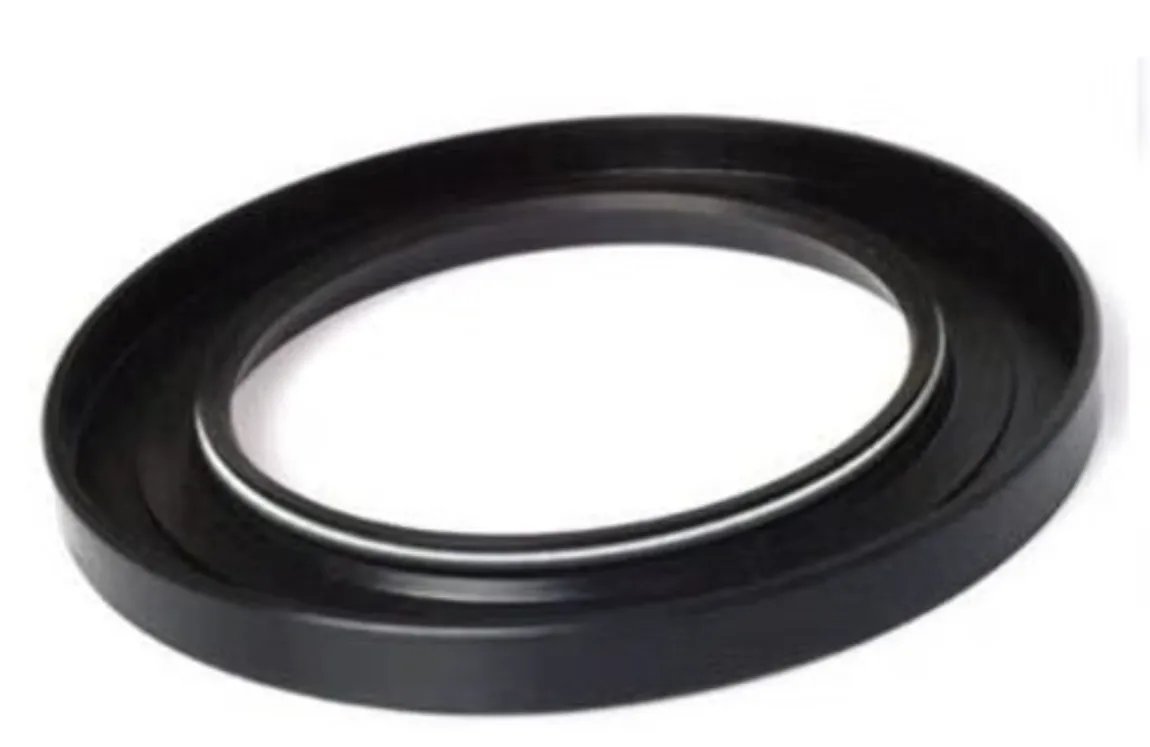
An electric motor shaft seal — also called a rotary shaft seal, radial lip seal or oil seal — is a ring-shaped sealing element fitted into the bore where the shaft passes through the motor housing or end shield. Its outer diameter is held in the bore; its flexible inner lip runs against the rotating shaft.
That contact does two jobs at once. It helps keep the bearing lubricant — oil or grease — where it belongs, and it limits the entry of dust, moisture, coolant mist and other contaminants along the shaft. On a motor that runs for long hours in a foundry, a flour mill, a laundry or an outdoor pump house, that boundary is what separates a bearing that lasts from one that fails early.
A seal is a system, not just a ring that fits a hole. The same nominal size can behave very differently depending on shaft hardness and surface finish, shaft runout, operating speed and temperature, the lubricant in contact with the elastomer, and how squarely the seal is pressed in. Correct dimensions are the starting point, not the whole specification.
This page sets out the design options, materials and information needed to identify a suitable electric motor shaft seal. Where a value depends on your machine rather than on a catalogue, it is marked as application-specific instead of being presented as a fixed figure.
Sealing principle
The lip is pressed lightly against the shaft by the elasticity of the elastomer and, in most industrial designs, by a garter spring. The aim is a controlled contact band with a thin film of lubricant between lip and shaft — not dry friction against bare metal.
Scroll the diagram sideways to read all callouts →
Construction is not identical across every seal. Some designs use a rubber-covered outer diameter instead of an exposed metal case, some rely on the elastomer alone without a spring, and some add hydrodynamic features to help return oil to the sump. The actual construction should be confirmed against the seal you are replacing or the drawing for your application.
Design options
The right construction follows from the housing, the shaft and the environment — not from the widest available range. These are the design directions normally considered for electric motor shafts.
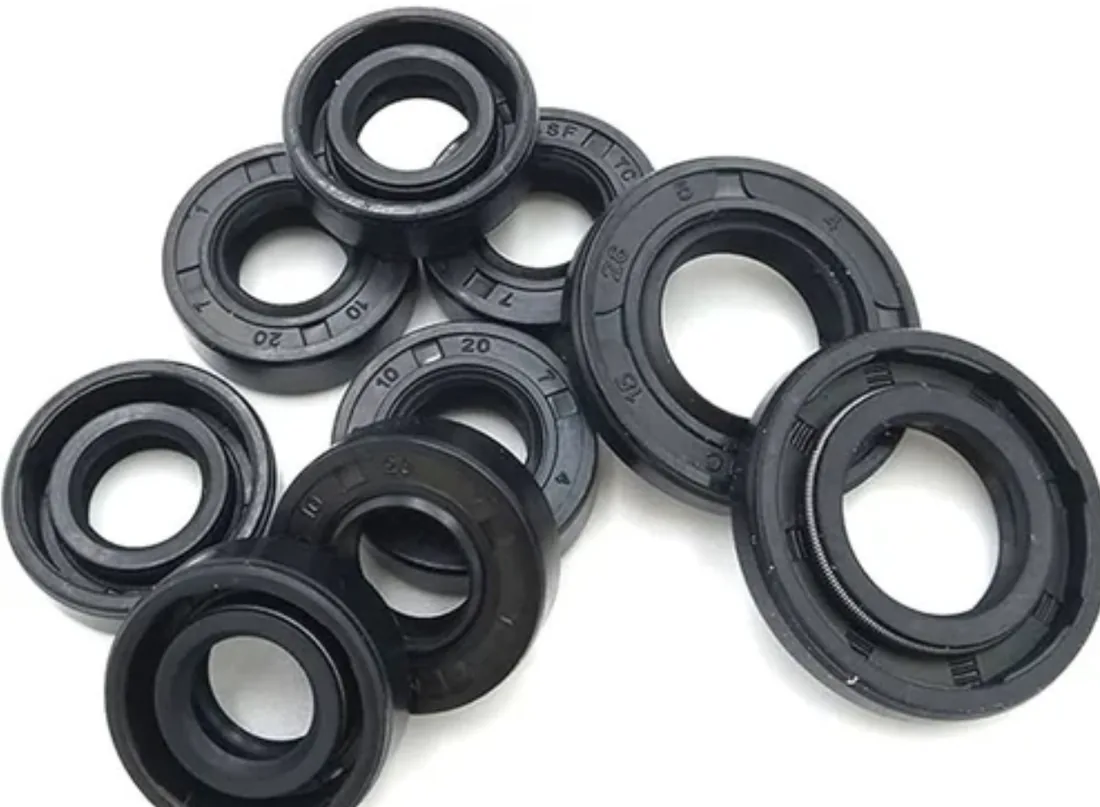
One sealing lip running on the shaft. Compact, simple to fit and the usual starting point for a motor end shield that sees normal factory conditions.
Single lip
A primary sealing lip plus a secondary dust lip. The extra lip helps where grit, coolant mist or washdown water reaches the shaft exit. The dust lip excludes contaminants; it does not add pressure capability.
Lip + dust lip
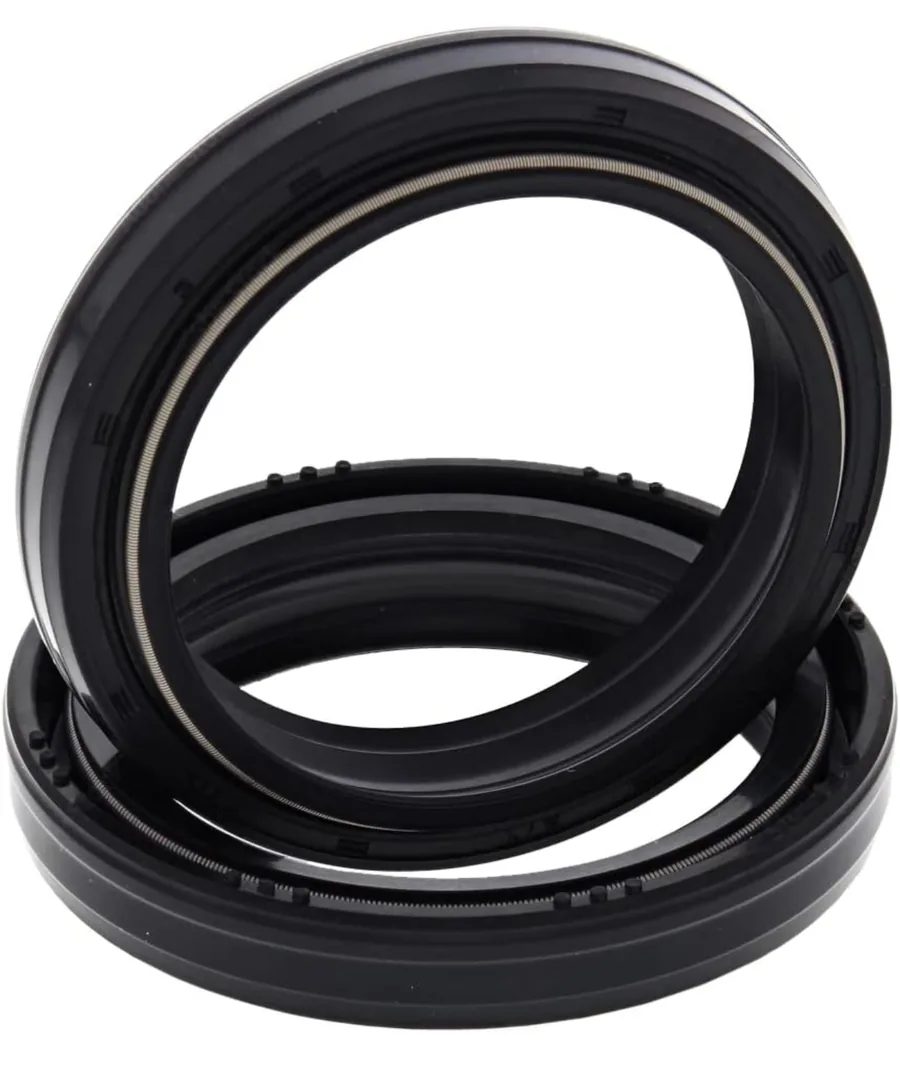
A garter spring keeps radial load on the lip as the elastomer relaxes in service. Common where a motor runs continuously at sustained shaft speed with oil lubrication.
Spring loaded
The rubber outside diameter seals against the housing bore and can tolerate slight bore imperfection better than metal. Often chosen for softer end-shield materials.
Rubber covered
A rigid metal case gives a firm, accurate press fit in a machined bore and holds the seal square under installation load.
Metal cased
Where an existing housing or shaft cannot be changed, a non-standard section, width or lip arrangement may be workable. Each case is assessed for feasibility before supply is confirmed.
Assessed on request
Elastomer selection
The compound has to survive the lubricant it seals and the temperature it runs at, while keeping enough elasticity to follow the shaft. There is no universally best material — only a suitable one for a given duty.
The general-purpose choice for mineral oils and greases in normal industrial conditions, with good resistance to abrasion and tearing.
Chosen where operating temperature or chemical exposure is beyond what nitrile handles comfortably, including many synthetic lubricants.
Keeps its flexibility across a wide temperature span and in dry heat, but has lower mechanical strength than nitrile or FKM.
Strong resistance to water, steam, glycol-based fluids and weathering, which makes it useful around washdown or coolant-exposed shafts.
Temperature limits, hardness and fluid compatibility vary by compound and supplier data sheet, so they are not quoted here as fixed figures. Where a specific lubricant, cleaning agent or process fluid is involved, share its details and the compound can be checked against it.
Selection guide
Use this as a framework for the enquiry. It describes what has to be established before a seal can be supplied — not a fixed stock specification.
| Specification | Details |
|---|---|
| Product | Electric motor shaft seals (radial lip / rotary shaft seals) |
| Seal type | Based on application and selected design — single lip, double lip, spring-loaded, rubber-covered or metal-cased |
| Material | Subject to product availability and requirements — NBR, FKM, silicone or EPDM, confirmed against the lubricant and temperature |
| Shaft diameter | Confirm required dimension from the shaft or drawing |
| Bore or housing diameter | Confirm required dimension from the housing bore |
| Seal width | Confirm required dimension from the old seal, housing depth or drawing |
| Operating speed | Application-specific — taken from the motor rating and shaft speed at the seal |
| Operating temperature | Dependent on material and operating conditions; confirm the working range at the seal position |
| Lubricant compatibility | Must be verified for the application — share the oil or grease grade in use |
| Shaft condition | Surface finish, hardness, runout and wear at the lip track all affect sealing and should be checked |
| Special requirements | Custom specifications, subject to feasibility |
Scroll the table sideways to see both columns →
A seal can only be matched when the geometry and the duty are both known. The three basic dimensions identify the size; the remaining details decide whether that size will actually last.
If the old seal is available, a photograph of it — including any moulded markings — is often faster than measuring a worn part. If the shaft is scored or the bore is damaged, say so; a seal alone may not restore the joint.
Where they are used
Any motor that has a shaft leaving its housing has a sealing point. Suitability still depends on the equipment design and the conditions around it, so these are typical uses rather than fixed recommendations.
Horizontal and vertical motors in continuous duty, where the seal protects the bearing cavity at the shaft exit and keeps lubricant off the windings and surroundings.
Sealing point: drive-end and non-drive-end shaft exitPump sets, blowers and fan motors where moisture, process dust or outdoor air is present around the shaft.
Sealing point: shaft entry to the bearing housingThe motor shaft interface and the gearbox input or output shaft, where a motor and a gearbox meet and both need sealing. Related: gearbox oil seals.
Sealing point: motor-to-gearbox shaft jointMotors on machining centres, conveyors and production lines, where coolant spray and metal fines are common around rotating shafts.
Sealing point: shaft exit near coolant or swarfMotors on equipment working in dust, mud and weather, where exclusion matters as much as lubricant retention.
Sealing point: exposed shaft ends and fan-side exitsFan and blower motors in air-handling equipment and general industrial machinery, including humid or washdown areas.
Sealing point: shaft pass-through on the end shieldPractical value
A seal is a low-cost part with a high cost of getting wrong. These are the practical outcomes of matching the seal to the shaft and the duty — not performance guarantees.
When the lip, shaft and bore are correctly matched, lubricant stays in the bearing cavity instead of escaping along the shaft.
A dust lip or a suitable compound helps limit the grit, moisture and coolant that reach the bearing.
Clean lubricant and a protected bearing help the motor keep its duty without unplanned stoppages.
Seals failing early are often the wrong compound or a lip running on a worn track — both avoidable at selection stage.
Speed, temperature and lubricant are considered together, so the seal suits the machine rather than the shelf.
Correct sizing and a consistent material make repeat replacement straightforward when a seal is eventually changed.
No seal offers zero leakage or an indefinite service life. Performance depends on installation quality, shaft condition, lubricant and the operating environment as much as on the seal itself.
Application-specific work
Standard sizes cover a great many motors, but not all of them. Where a shaft has been reworked, an end shield has limited depth, or the motor runs in conditions the original seal was never chosen for, an application-specific seal may be the practical route.
Custom work starts with the constraint. Sometimes the answer is a different profile in an existing bore; sometimes it is a change of compound; occasionally it is a new size altogether. What is feasible depends on the dimensions, the profile and the quantity involved.
Feasibility first: every custom requirement is reviewed before a supply option is confirmed. Send the drawing, sample or old part and the application details to start that review.
About the supplier
Ananta Venture is a Delhi-based manufacturer of rubber oil seals and V belts, supplying industrial, automotive, agricultural and heavy machinery customers across Delhi NCR and the rest of India.
Seals are a core product line, not an add-on — including rotary shaft, rubber, metal-cased, NBR, FKM, silicone, EPDM and heavy-duty types.
Enquiries are worked from the shaft, bore, width and duty rather than from a size alone, so the seal suits the machine.
Photos of the old seal, its markings or the worn part are welcome — often the fastest way to identify a replacement.
Oil seals and V belts come from the same team, which helps when a machine needs sealing and drive parts in one requirement.
The team is contactable by call, WhatsApp or email, Monday to Sunday, for sizes, samples and quotation requests.
Customers are served across Delhi NCR and the rest of India, with dispatch details shared with each order.
Common questions
Short answers to the questions buyers and maintenance teams ask before specifying a seal.
They are radial lip seals fitted into the bore where a motor shaft leaves the housing or end shield. The outer diameter seals against the bore while a flexible lip runs on the rotating shaft, helping to retain bearing lubricant and limit the entry of dust, moisture and other contaminants.
Start with the shaft diameter, housing bore and seal width, then check shaft speed, running temperature, lubricant type, shaft surface condition and the surrounding environment. Seal design and elastomer follow from those conditions — a seal is selected for the application, not only for the bore size.
NBR is the common general-purpose choice for mineral oils and greases. FKM is used where temperature or chemical exposure is higher, silicone where a wide temperature range matters more than mechanical strength, and EPDM where water, steam or glycol-based fluids are present. Compatibility should be confirmed against the actual lubricant and compound data.
Shaft diameter, housing bore diameter and seal width are the three basic dimensions. A photo of the old seal with its markings, a part number, or a sample also helps, together with the motor or equipment details and where the seal sits.
Non-standard dimensions, alternative elastomers, different lip arrangements and application-specific profiles can be assessed on request. Feasibility depends on the size, the profile and the quantity required, so each requirement is reviewed before a supply option is confirmed.
Shaft surface finish and hardness, shaft runout and misalignment, operating speed and temperature, lubricant compatibility, contamination and the quality of installation all influence seal life. A seal that is correctly sized but badly fitted, or run on a worn shaft, can fail early.
Sometimes the same size and construction is suitable, but it should not be assumed. Shaft dimensions, speed, lubricant, temperature, pressure conditions, contamination and the seal design all differ between a motor and a gearbox or transmission, so suitability is confirmed for each application.
Call or message our team on +91 9211305366, write to [email protected], or use the contact page. Sharing the shaft diameter, bore, width, material preference, quantity and application details helps us respond with a suitable option.
Share your application details and required dimensions with our team to discuss a suitable electric motor shaft sealing solution.