Silicone Rubber (VMQ) Sealing · Made to Requirement

Silicone Oil Seals

Silicone oil seals are rotary shaft and static seals moulded from VMQ silicone rubber, chosen for duties where heat, cold starts or outdoor weathering would harden or crack an ordinary nitrile seal. As a silicone oil seal manufacturer and supplier based in Delhi, Ananta Venture supplies high temperature silicone oil seals and custom silicone rubber shaft seals to your dimensions, hardness and compound requirement — with honest guidance on where silicone earns its place and where another rubber will serve you better.

  • Typical service: −60 °C to +200 °C*
  • 30–80 Shore A
  • Standard & custom sizes
  • To drawing or sample

*Typical published range for general-purpose VMQ. The usable limit depends on the selected compound, the fluid and the application — confirmed against the datasheet before supply.

Silicone oil seals in multiple diameters moulded from red VMQ rubber
Moulded silicone rubber oil seals, supplied to standard size or drawing. Compound and hardness are agreed per application.

Material

Silicone rubber (VMQ)

Hardness

30–80 Shore A

Service band

−60 °C to +200 °C*

Weather / ozone

Excellent

Sizes

ID × OD × W, mm

Custom work

Drawing / sample

01 · Product overview

What Are Silicone Oil Seals?

A silicone oil seal is a sealing component moulded from silicone rubber — in practice, a VMQ compound — that closes the gap around a rotating shaft or between two static faces, holding lubricant in while keeping dust, water and grit out. In the trade, “oil seal” usually means the rotary shaft lip seal pressed into a housing around a spinning shaft; the same silicone material family is also moulded into O-rings, sealing rings and gaskets for static joints.

The construction follows the familiar radial shaft seal pattern: an outer body that grips the housing bore, a flexible sealing lip that runs on the shaft with a controlled interference fit, and — in most rotary designs — a garter spring that keeps lip pressure even around the circumference. Cased versions carry a metal insert for rigidity; all-rubber versions trade some rigidity for simpler moulding and better bore conformity.

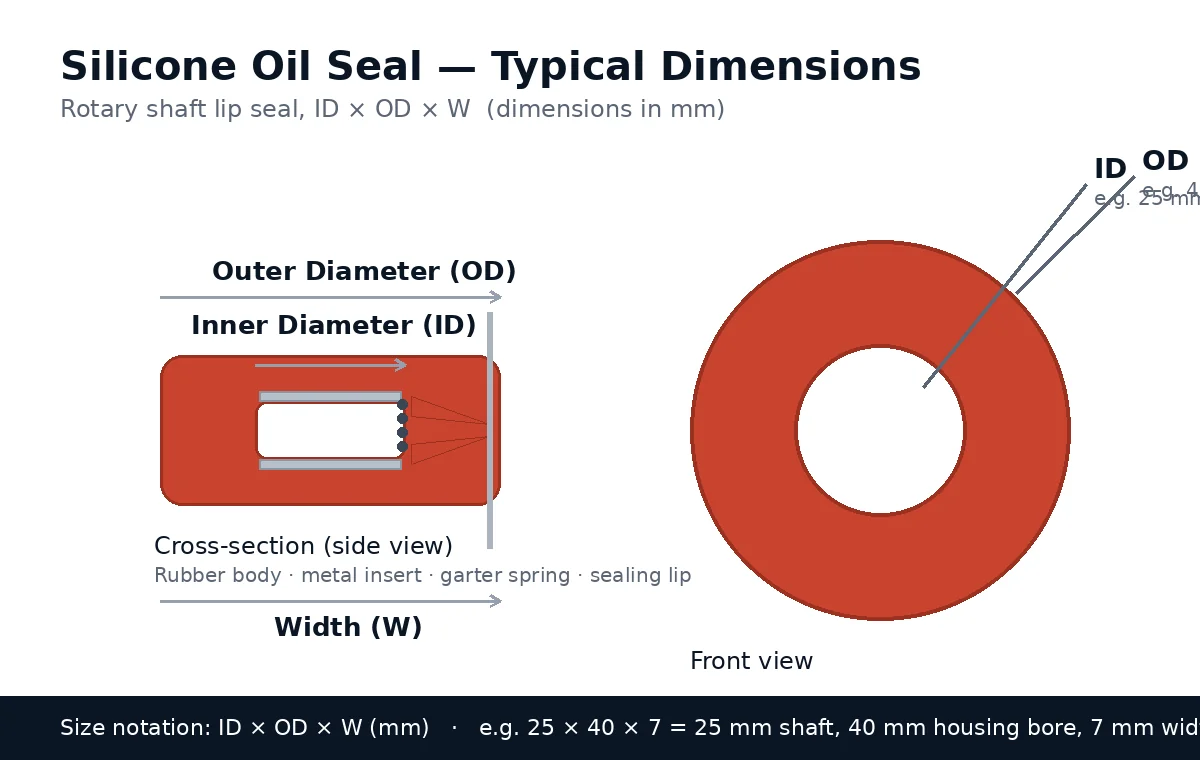
Seal size is written as ID × OD × W — the shaft diameter the seal runs on, the housing bore it presses into, and its width. A 25 × 40 × 7 seal fits a 25 mm shaft in a 40 mm bore and occupies 7 mm of housing length. Once those three numbers change, everything about the seal — lip load, spring, case — is re-selected around them.

Buyers reach for silicone for one of three reasons: the assembly runs hot, it must start reliably in deep cold, or it lives outdoors where ozone and sunlight destroy general-purpose rubber. If your duty is a hot mineral-oil sump instead, the industrial oil seals range in NBR, FKM and EPDM is usually the better starting point.

Silicone oil seal dimensions diagram showing inner diameter, outer diameter and width
Typical silicone rubber shaft seal, cross-section and front view. Seals are ordered as ID × OD × W in millimetres.

02 · Material benefits

Key Features and Benefits of Silicone Oil Seals

Silicone rubber earns its selection on a specific set of properties. These are the characteristics that matter to a machine builder or maintenance buyer — and the honest limits that come with them.

°C

Wide temperature flexibility

General-purpose VMQ compounds stay serviceable from roughly −60 °C to +200 °C, so the same material family covers deep-cold starts and continuous heat that would harden nitrile. The exact band depends on the compound and the fluid in contact.

☀

Weather, ozone and UV resistance

Silicone resists ozone cracking and sunlight ageing far better than most general-purpose rubbers. Outdoor cabinets, agricultural equipment and anything that sits in the open keep sealing without protective covers.

❄

Cold-temperature flexibility

Where a seal must still conform at −40 °C and below, silicone keeps its elasticity while harder rubbers stiffen and leak at start-up. Cold-store machinery and outdoor equipment are typical beneficiaries.

⚡

Electrical insulation

Silicone is a good electrical insulator and retains that property after heat exposure, which is why it appears in motor end shields, heater assemblies and switchgear where the seal also separates live parts.

◐

Heat ageing resistance

Long exposure to hot air hardens many elastomers into brittleness. Silicone resists oxidative hardening, so a lip keeps its elasticity and contact load through repeated heat cycles instead of taking a permanent set early.

✎

Custom moulding freedom

Silicone flows and releases cleanly, so non-standard diameters, thin sections, colours and hardness from 30 to 80 Shore A are practical to mould — useful when a seal must also act as a gasket or insulator.

Honest limitation: silicone swells in many mineral oils, fuels and non-polar solvents, and it has lower tear and abrasion resistance than nitrile. It is the right material for heat, cold and weather duty — and the wrong one for hot hydrocarbon oil sumps, high pressure or gritty, high-speed shafts. Material selection should always be based on actual operating conditions and compatibility with the fluid in question.
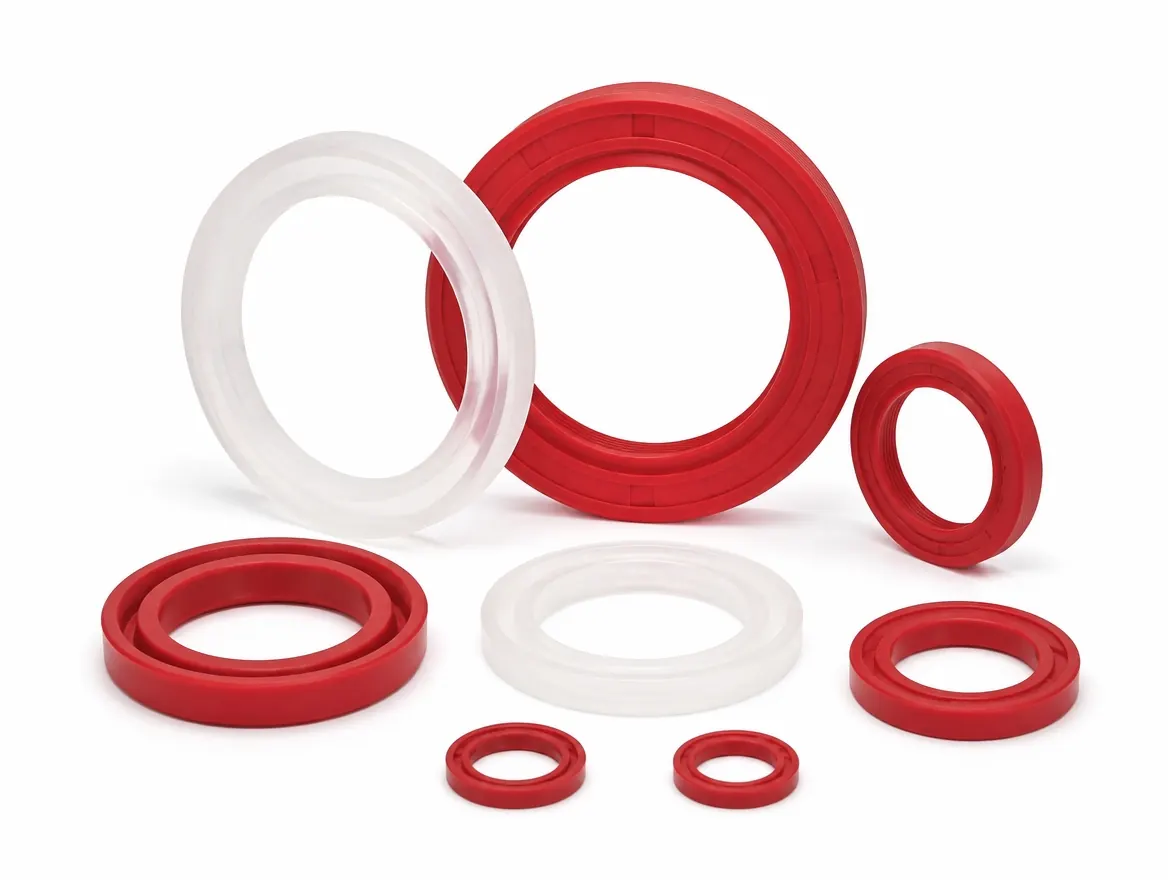
Silicone rubber oil seals of different sizes on a white background
Silicone rubber oil seals in several diameters. Colour varies by compound — red, orange, translucent and black VMQ grades are all common in industrial supply.

03 · Technical reference

Technical Specifications of Silicone Oil Seals

The values below are typical published ranges for general-purpose VMQ silicone moulding compounds, given for orientation. They are not a fixed Ananta Venture catalogue specification — hardness, compound and tolerances for your order are confirmed against the requirement and the selected compound datasheet.

Typical general-purpose VMQ silicone properties — confirm the selected compound before finalising a specification.
PropertyTypical value / range
Seal materialSilicone rubber, VMQ (vinyl-methyl silicone) family
Hardness30–80 Shore A, selected per application (50–70 Shore A most common for lip seals)
Service temperatureApprox. −60 °C to +200 °C continuous for general-purpose grades; specialty grades extend the band — application dependent
Inner diameter (ID)To match shaft diameter; standard sizes from ~6 mm upward, non-standard sizes to drawing or sample
Outer diameter (OD)To match housing bore with controlled interference fit; to drawing or sample
Width (W)Standard sections from ~5 mm upward, per housing depth and duty
Seal designSingle lip, twin lip with dust lip, cased (metal insert) or all-rubber; static rings and gaskets also moulded
ColourRed / iron-oxide, orange, translucent and black compounds commonly available; colour subject to compound selection
Weather, ozone & UV resistanceExcellent — a principal reason for specifying silicone
Mineral oil / fuel resistanceLimited — many hydrocarbon oils and fuels cause swelling; verify compatibility with the actual fluid before ordering
CustomizationDimensions, hardness, lip profile, compound grade and colour made to requirement
Manufacturing tolerancesPer agreed drawing and compound supplier data; dimensional checks confirmed before dispatch
Specifications marked “typical” describe the material family, not a guaranteed product datasheet. Performance depends on formulation, grade, design and operating conditions — material selection should be based on actual operating conditions and, where a duty is critical, on compatibility testing with the real fluid and temperature.

04 · Size chart

Silicone Oil Seal Sizes and Dimensions

Silicone oil seals are ordered by shaft size: ID × OD × W in millimetres. The table below lists commonly bought industrial sizes together with indicative market price ranges observed across Indian online industrial marketplaces for general-purpose VMQ seals. Availability of any specific size is confirmed against your enquiry — non-standard dimensions are supplied to drawing or sample.

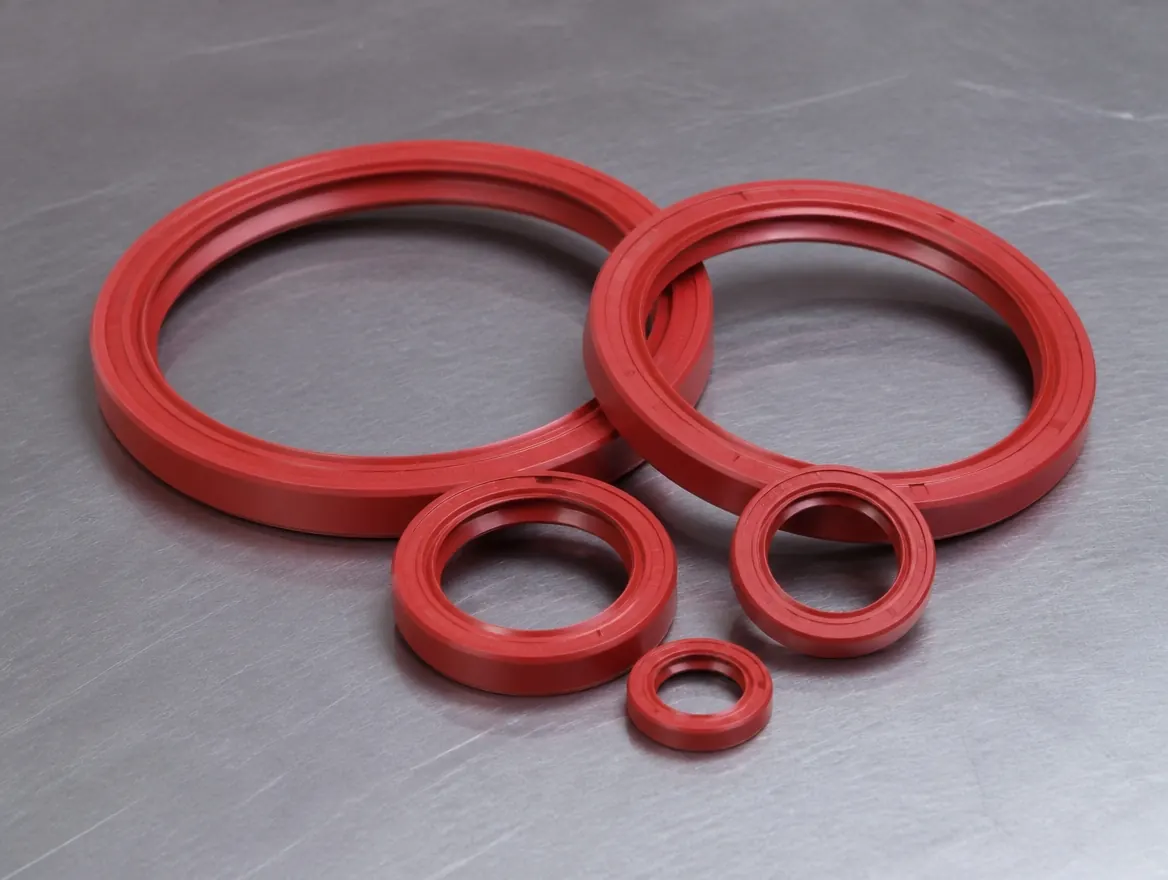
Silicone oil seal sizes from small to large diameters
Commonly stocked silicone oil seal sizes, small instrument diameters through large industrial shafts.
Silicone oil seal size chart with indicative market prices in INR (general-purpose VMQ, single piece).
Size ID × OD × W (mm) Shaft Ø (ID) Housing bore (OD) Width Typical applications Indicative price / piece*
10 × 20 × 510 mm20 mm5 mmSmall electric motors, appliances, instruments₹20 – ₹60
12 × 22 × 512 mm22 mm5 mmSmall pumps, power tools, textile attachments₹20 – ₹65
15 × 25 × 515 mm25 mm5 mmMachine tools, small gearboxes, bench grinders₹25 – ₹75
20 × 35 × 720 mm35 mm7 mmWater pumps, electric motors, fans₹30 – ₹90
25 × 40 × 725 mm40 mm7 mmMonoblock pumps, compressors, gear units₹40 – ₹110
30 × 45 × 830 mm45 mm8 mmIndustrial machinery, agricultural equipment₹55 – ₹140
35 × 52 × 835 mm52 mm8 mmMotors, blowers, tractor implement drives₹70 – ₹180
40 × 60 × 840 mm60 mm8 mmGearboxes, industrial fans, process machinery₹90 – ₹230
50 × 70 × 1050 mm70 mm10 mmHeavy pumps, crushers, large drive units₹120 – ₹300
60 × 80 × 1060 mm80 mm10 mmLarge gearboxes, mixers, heavy machinery₹160 – ₹400
Read the prices correctly: the ranges above are indicative estimates compiled from publicly listed marketplace prices for comparable silicone oil seals (Nov 2026). They are not Ananta Venture’s selling prices, and they do not imply that every listed size is held in stock. Final pricing depends on dimensions, silicone grade, hardness, seal design, quantity and customisation — sizes outside standard ranges are quoted on request. Share your sizes on WhatsApp or through the contact page for a firm quotation.

05 · Product range

Different Types of Silicone Oil Seals

“Silicone” describes the material; the seal’s construction decides how it is fitted and what motion it handles. These are the configurations industrial buyers most commonly order — note that a material grade is not the same thing as a seal type, and the two are chosen separately.

Standard silicone oil seals

Single-lip rotary seals in common ID × OD × W sizes for motors, pumps, gearboxes and fans — the everyday replacement seal in general-purpose VMQ.

Duty: rotaryLip: single

Silicone rubber lip seals (twin lip)

A primary sealing lip plus a secondary dust lip for gritty or wet environments, keeping contamination off the main lip so it holds oil without wear.

Duty: rotaryLips: 2

Metal-cased silicone seals

A steel insert bonded into the rubber body for bore rigidity and easier pressing into housing bores, used where the housing runs warm and dimensional stability matters.

Construction: casedDuty: rotary

All-rubber silicone sealing rings

Caseless moulded rings that conform well to worn or slightly imperfect bores; also used as static sealing rings and O-rings in hot or outdoor assemblies.

Construction: all-rubberDuty: rotary / static

High temperature silicone oil seals

Heat-resistant VMQ compounds selected for continuous duty near 200 °C — ovens, heaters, hot-air ducts and machinery beside heat sources. The compound, not just the shape, is the product here.

Compound: heat gradeDuty: rotary / static

Custom-size silicone oil seals

Non-standard diameters, sections, hardness and profiles made to drawing or sample — including combined sealing-and-insulating parts for specialist assemblies.

Made to: drawingMOQ: per enquiry
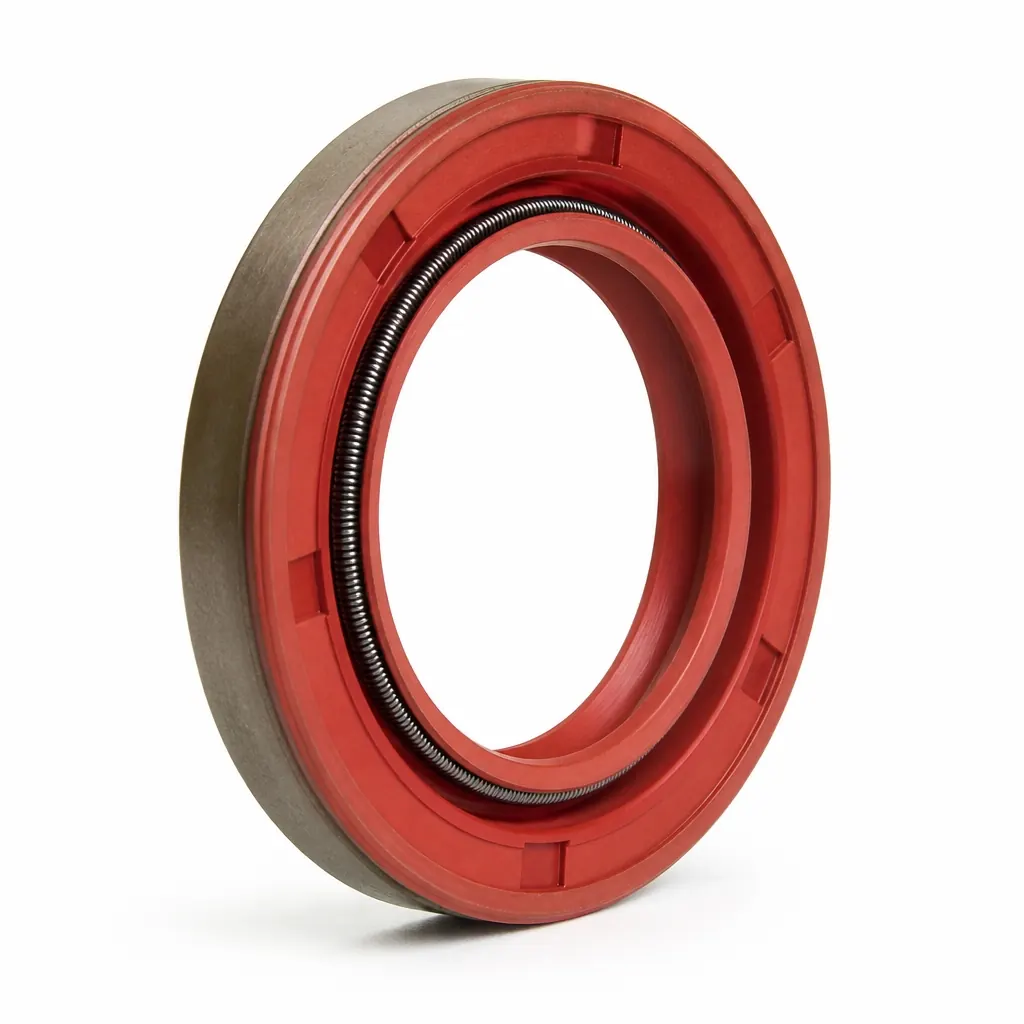
Silicone rubber shaft oil seal with garter spring
A single silicone rubber shaft seal with garter spring — the standard rotary construction most buyers mean by “silicone oil seal”.

Rotary lip seals and static rings are not interchangeable: a lip seal needs a precise interference band and a lubricated counterface, while a static ring needs controlled squeeze in a groove. If the duty is continuous rotation, the dedicated rotary shaft oil seals page explains dynamic duty in more depth, and metal cased oil seals covers cased construction across materials.

06 · Where they are used

Industrial Applications of Silicone Oil Seals

Silicone sealing components are usually specified where temperature, weathering or electrical isolation is the constraint. In each application below, the reason for choosing silicone — and the limitation to respect — is noted.

Electric motors

End-shield and shaft-exit seals on motors that run warm or sit outdoors. Silicone’s heat stability and insulation suit motor assemblies; greases are usually compatible where hot mineral oil would not be. See electric motor shaft seals.

Pumps and compressors

Shaft seals on water pumps, blowers and small compressors, particularly where housings heat up or equipment runs intermittently in the open. Fluid compatibility must be checked for pumped media beyond water. See water pump oil seals.

Food processing machinery

Where the selected compound is a food-contact grade, silicone suits wash-down equipment, ovens and mixers thanks to heat tolerance and neutral behaviour with water-based fluids. Grade certification must come from the compound supplier.

Ovens, heaters and hot-air equipment

Duct joints, heater housings and appliance seals where continuous heat would harden a general-purpose rubber within a season — silicone’s core territory.

Agricultural machinery

Implement, rotavator and irrigation-drive seals exposed to sun, dust, rain and wash-down, where ozone and UV resistance pay for the material choice. See agricultural machinery oil seals.

Automotive components

Heat-exposed, non-fuel joints and protective seals where weathering dominates. For engine oil, gear oil and fuel contact, nitrile or FKM usually remains the correct choice — silicone is selected deliberately, not by default.

Outdoor machinery and enclosures

Cabinet, panel and shaft seals on equipment that stands in sun and monsoon. Silicone keeps its elasticity through years of UV and ozone that crack general-purpose rubbers.

Electrical and heating assemblies

Switchgear, luminaires and heater elements where the seal must also insulate — silicone retains dielectric properties after heat exposure that would degrade other rubbers.

Custom industrial sealing systems

Machinery manufacturers who need a specific diameter, colour or profile for a temperature-sensitive assembly, supplied against drawing in production quantities.

Where another material is usually better: hot engine or gear oil and fuels → NBR oil seals or FKM (Viton type) oil seals; hot water and steam → EPDM oil seals; high-pressure hydraulic duty → hydraulic oil seals in suitable compounds; abrasive high-speed shafts → see the rubber oil seals range for oil-resistant alternatives.
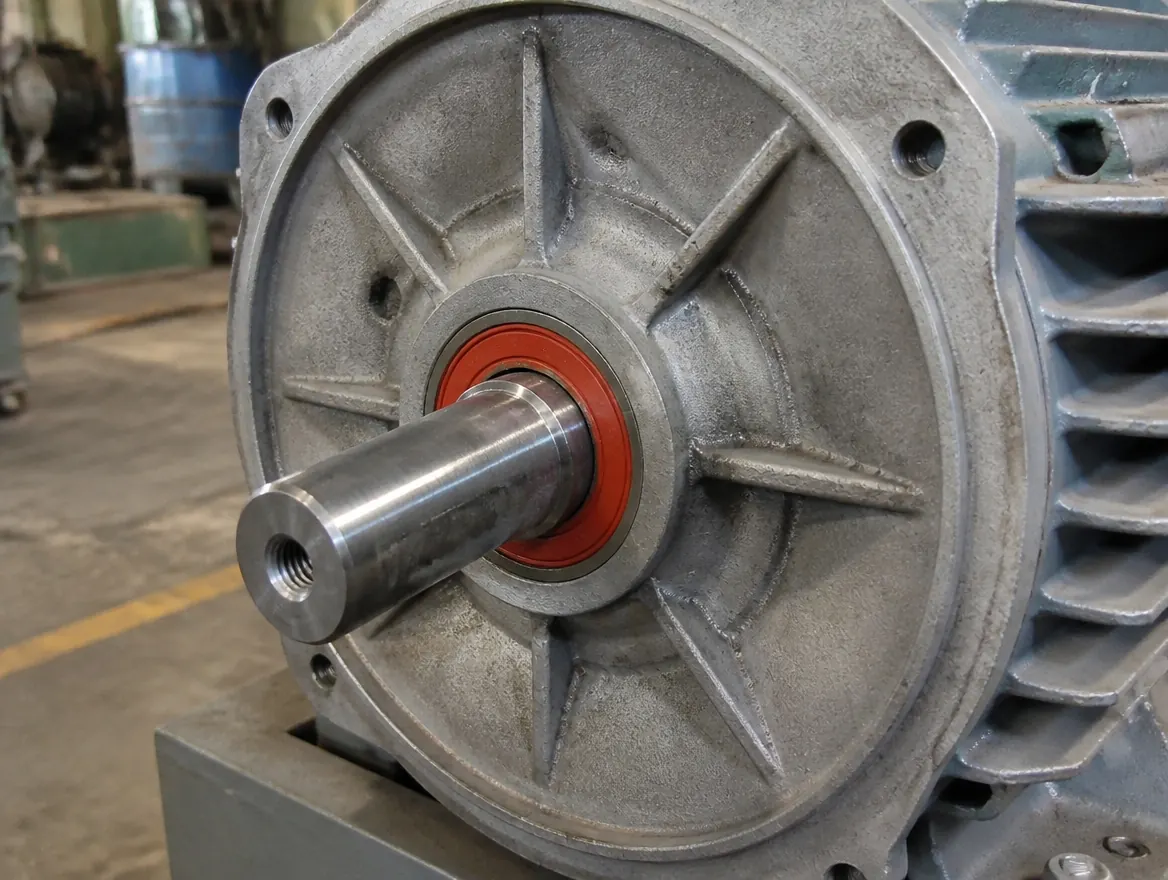
Silicone oil seal installed on an electric motor shaft
Silicone oil seal fitted at a motor shaft exit — a typical duty where warmth, weathering and insulation requirements converge.

07 · Heat duty

High Temperature Silicone Oil Seals

Heat is the reason most buyers specify silicone. A general-purpose VMQ compound carries a published continuous service band of about −60 °C to +200 °C, with specialty grades extending that at either end. But the number describes the rubber, not the seal in your housing: the practical limit is set by the compound, the fluid in contact, how long the part is held at temperature and the mechanical load on the lip.

What actually fails under heat is not melting — it is hardening. Prolonged heat drives oxidation and extra cross-linking; the lip loses elongation, takes a permanent set, and stops pressing on the shaft with the intended load. That is why compression set resistance, not tensile strength, is the property to watch in a hot seal, and why two VMQ compounds with the same headline temperature can age very differently.

Cycling adds a second dimension: daily cold starts to full heat make the rubber work against different shaft and housing expansions every run. Often the cold condition is the harsher one, because the compound is at its stiffest exactly when the machine starts. Where a seal is safety-related or runs at the edge of the range, a trial at the real temperature and in the real fluid is worth more than any table — we will say so and support it.

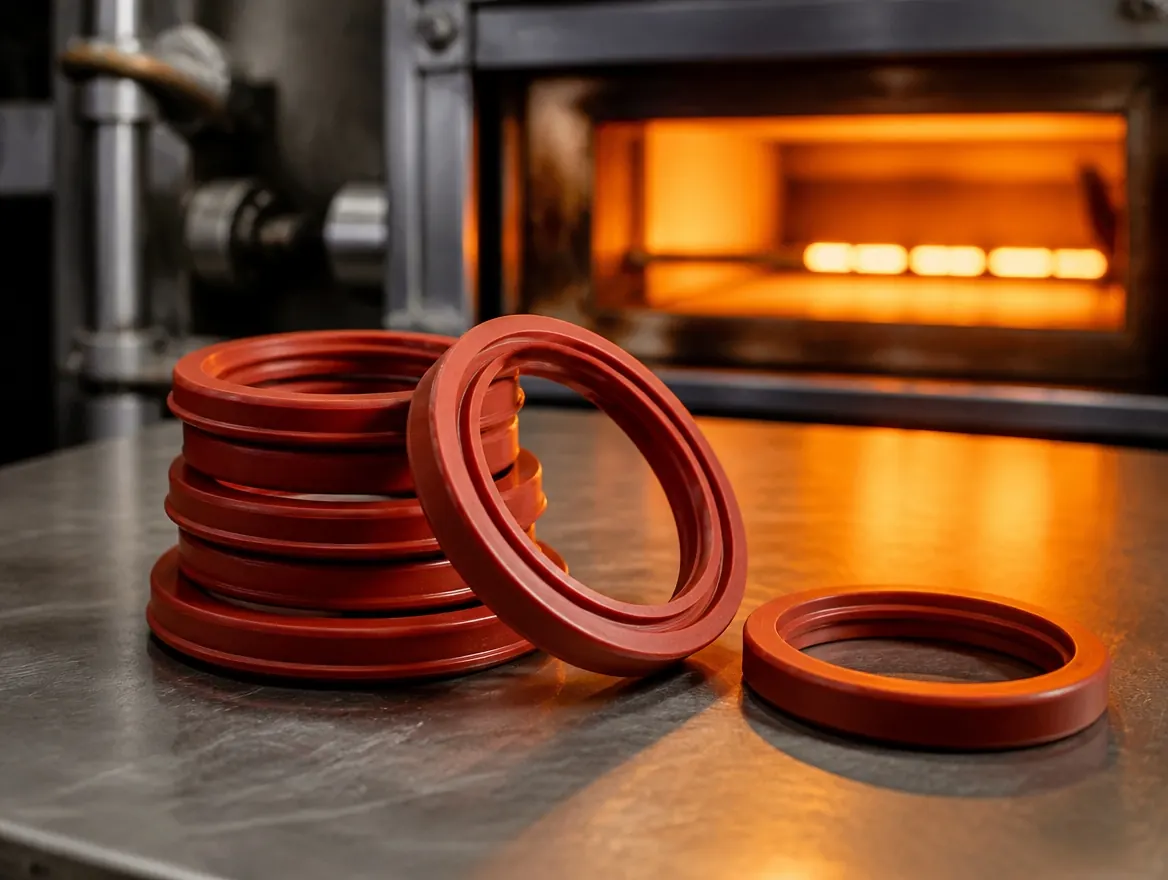
High temperature silicone oil seals on steel near an industrial heat source
Heat duty is rarely just hot air: radiant heat from housings, run time and cooling air all shape what the lip actually sees.

Silicone (VMQ)

≈ −60 to +200 °C continuous, general purpose. Specialty grades extend the band. Excellent ageing; limited in mineral oil.

NBR (nitrile)

≈ −40 to +120 °C. The standard oil seal rubber — excellent in mineral oil, weaker against heat ageing and ozone.

FKM (Viton type)

≈ −20 to +220 °C. Handles hot oil, fuels and many chemicals; poor cold flexibility and higher cost.

EPDM

≈ −50 to +150 °C. Excellent in water, steam and outdoor duty; swells in hydrocarbon oil.

Bands are typical published ranges for general-purpose grades and vary by compound and fluid. For heat-focused sealing across other materials, see the high temperature oil seals range.

08 · Rotary sealing

Silicone Rubber Shaft Seals

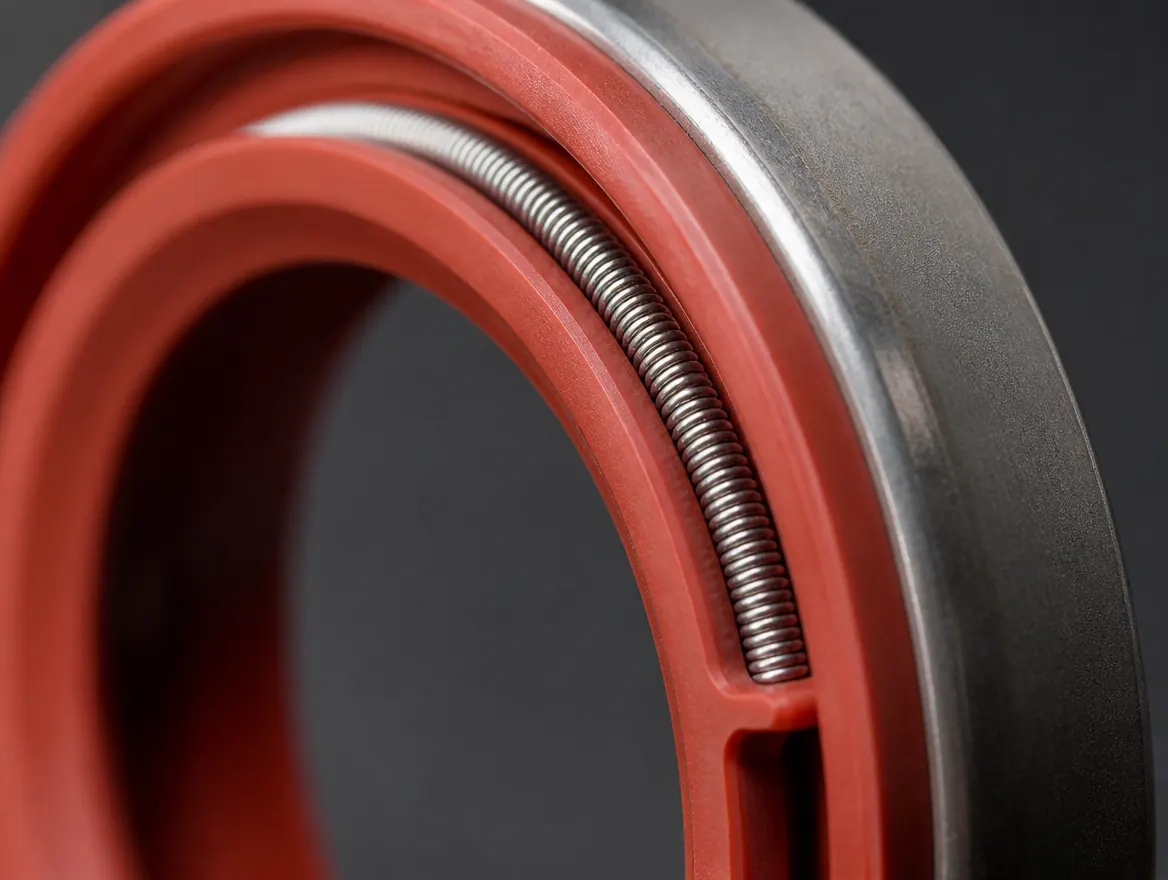
Close-up of a silicone oil seal lip design with garter spring and metal insert
The working part of a rotary seal is a contact band often under a millimetre wide — lip geometry, garter spring load and shaft finish decide how long it lives.

A silicone rubber shaft seal works through controlled interference: the lip is slightly smaller than the shaft, so it presses against the rotating surface with a light, uniform load, helped by the garter spring seated behind it. That contact band holds the lubricant film in and keeps contamination out — and it is also why shaft condition matters as much as the compound.

For rotary duty, the shaft counterface is typically ground to roughly Ra 0.2–0.8 µm without spiral lead, with wear grooves, runout or a rough finish all shortening seal life regardless of material. Surface speed at the lip — not rpm alone — drives frictional heat, and silicone’s lower tear and abrasion resistance make dirty, dry or very high-speed shafts a poor match for the material.

Within those limits, silicone shaft seals reward the application: they follow small runout and thermal movement, hold flexibility through cold starts, and keep their lip load after heat ageing that would stiffen a nitrile lip. Share the shaft speed, finish and fluid with your dimensions, and the lip profile and hardness are selected around them — see the broader rotary shaft oil seal range for dynamic sealing across materials.

09 · The company behind the product

Silicone Oil Seal Manufacturer and Supplier in India

Ananta Venture is a machinery components manufacturer and supplier based in Burari, Delhi, serving customers across Delhi NCR and the rest of India. Rubber oil seals — including silicone rubber sealing components — are one of our two core product lines, alongside industrial V belts.

Made to requirement

Seals are sized to your shaft, bore and duty — standard catalogue sizes and non-standard dimensions made to drawing or sample, with the profile and compound agreed before production.

Application-first selection

We ask what the machine does, where it runs and what fluid it sees before recommending silicone or another material — so a “premium” material is never the wrong answer dressed up.

Supply across India

From Delhi NCR workshops to plants in other states, enquiries are handled on call, WhatsApp and email with dimensional confirmation before dispatch — the same channel for one box or a running supply.

Buying for a mixed machine fleet? Our main oil seals manufacturing and supply page covers the full range — industrial, automotive and agricultural oil seals — and the about page explains how we work.

10 · Buyer’s guide

How to Select the Right Silicone Oil Seal?

Nine checks decide whether a silicone seal lasts seasons or weeks. Work through them in order — the first three are dimensions, the rest are duty.

Shaft diameter

Measure the shaft with a caliper at the sealing point — this sets the seal’s inner diameter. Check for wear grooves; a new seal cannot fix a damaged shaft surface.

Housing bore diameter

The bore sets the seal’s outer diameter. A loose outer fit lets the seal spin in its housing; check the bore is round and not worn or corroded before ordering.

Seal width

The housing depth available sets the width. A seal too narrow sits proud and misloads; too wide will not seat square in the bore.

Continuous operating temperature

Take the steady-state temperature at the seal, not the peak. Silicone is chosen when continuous heat — or deep cold at start-up — exceeds what NBR tolerates.

Fluid and lubricant compatibility

Name the actual fluid: grease, mineral oil, synthetic oil, water-based fluid. Silicone swells in many hydrocarbon oils and fuels, so compatibility with the real lubricant must be confirmed, not assumed.

Shaft speed

Surface speed at the lip drives frictional heat and wear. High-speed shafts need matched lip profiles, good finish and reliable lubrication.

Pressure conditions

Standard lip seals handle little or no pressure difference. Where pressure exists — pump chambers, gear pumps — the design must account for it, often with a different seal family.

Operating environment

Dust, moisture, wash-down and sunlight decide whether the seal needs a second dust lip — and whether silicone’s weather resistance is worth specifying at all.

Required seal design

Confirm what the housing was machined for: single or twin lip, cased or all-rubber, and any locating features. Matching the design avoids machining changes at installation.

Not sure about a value? Send us the old seal, a photo of the housing, or just the machine name — we will work the details out with you before quoting.

11 · Custom work

Custom Silicone Oil Seals

Most silicone sealing requirements are not a catalogue number — they are a shaft size, a housing, a temperature and a fluid. Custom work starts with those four facts: dimensions are agreed to your shaft and bore; the profile follows the motion and the space available; hardness is selected for lip load and installation; and the compound is chosen against the temperature and fluid, from general-purpose to low-compression-set and application-specific grades.

Where a size, hardness or profile is non-standard, any tooling implication is stated up front at quotation rather than discovered at the invoice — and quantities from a first trial batch to running production are both workable. Send the drawing, the old seal, or simply the dimensions and application details: a worn seal still shows the profile, lip form and any moulded markings we need.

What to send with a custom enquiry

  • Inner diameter, outer diameter and width — or the drawing / old sample
  • Operating temperature, continuous and peak
  • The fluid or lubricant the seal will touch, and its grade
  • Motion: static, rotating, intermittent — and shaft speed
  • Shaft condition: finish, runout, any wear groove
  • Quantity — first order and expected annual usage

12 · Why us

Why Choose Ananta Venture for Silicone Oil Seals?

No slogans — these are the working habits our customers deal with on every order, drawn from the way we already supply oil seals and V belts across India.

Consistent product quality

Compounds selected against the fluid and temperature, even curing and clean moulding, with finished pieces checked for hardness, finish and dimensions before packing.

Application-oriented product selection

We recommend the material after the duty — not before. Where silicone is the wrong answer for your fluid or speed, we will point you to NBR, FKM or EPDM instead.

Industrial product range under one roof

Oil seals across material families and V belts for power transmission, so machine builders and maintenance teams keep one point of contact for both.

Dimensional attention

Shaft, bore, width, hardness and profile confirmed in writing before production or dispatch — because a tenth of a millimetre decides whether the seal seats or leaks.

Practical technical assistance

Help identifying a failed seal from a photo, matching a sample, or choosing between compounds — in plain language, from people who know machines.

Responsive support and clear quotations

Reachable on WhatsApp and phone during working hours, Monday to Sunday, with quotations that state size, compound and quantity — no vague offers.

13 · FAQs

Frequently Asked Questions About Silicone Oil Seals

What are silicone oil seals used for?

Silicone oil seals retain lubricant and exclude dust, water and dirt at rotating shafts and static joints where temperatures, cold starts or outdoor exposure rule out ordinary nitrile seals. Typical uses include electric motors, pumps, ovens and heaters, outdoor machinery and agricultural equipment.

What material is used to manufacture silicone oil seals?

Silicone oil seals are moulded from silicone rubber, usually a VMQ (vinyl-methyl silicone) compound selected for heat stability, cold flexibility and weathering resistance. Hardness is commonly between 30 and 80 Shore A, and the exact compound is chosen against the fluid and temperature of the application.

What is the temperature range of silicone oil seals?

General-purpose VMQ silicone compounds are typically published with a continuous service band of about −60 °C to +200 °C. The usable limit for a specific seal depends on the compound, the fluid in contact, exposure time and mechanical load, so the rating should be confirmed against the selected compound datasheet.

Are silicone rubber shaft seals suitable for industrial applications?

Yes, in suitable duties. Silicone rubber shaft seals work well on motor, pump, fan and heater shafts where heat, cold or weathering dominates. They are less forgiving than nitrile in dirty, high-speed or poorly lubricated service because silicone has lower tear and abrasion resistance, so the duty should be reviewed before standardising on silicone.

What sizes of silicone oil seals are available?

Silicone oil seals are sized by inner diameter × outer diameter × width in millimetres. Indian suppliers commonly list sizes from about 6 × 16 × 6 mm up to several hundred millimetres. Ananta Venture supplies standard sizes and manufactures to drawing or sample, so a non-standard shaft or housing can be matched on request.

How much do silicone oil seals cost in India?

Indicative online market prices for general-purpose silicone oil seals in India range from roughly ₹20 to ₹400 per piece depending on size, with small 10–25 mm seals at the lower end and large diameters at the higher end. Final pricing depends on dimensions, silicone grade, hardness, design, quantity and customisation, so suppliers quote against a specific requirement.

Are high temperature silicone oil seals available?

Yes. Heat-resistant grades of VMQ silicone are the standard choice for continuous duty near 200 °C, and specialty compounds extend the range further at either end. The right grade depends on continuous versus peak temperature, exposure time and the fluid present, which is why the compound datasheet is confirmed before supply.

Can I order custom-size silicone oil seals?

Yes. Send the inner diameter, outer diameter and width, a drawing or the old seal, plus the application details — temperature, fluid, speed and quantity. Custom dimensions, hardness, colour and lip profile are discussed against the requirement, and any tooling implication is confirmed at quotation rather than assumed.

How do I select the correct silicone oil seal?

Start with the three dimensions: shaft diameter (seal ID), housing bore (seal OD) and seal width. Then check continuous temperature, fluid compatibility, shaft speed, pressure, contamination and the seal design the housing was machined for. Silicone should be chosen for heat, cold or weather duty — not automatically for hot mineral oil.

How can I get a quotation for silicone oil seals?

Call or WhatsApp Ananta Venture on +91 9211305366, or send the requirement through the contact page with dimensions, application details and quantity. Sharing a photo of the old seal or its markings speeds up the quote. Enquiries are answered during working hours, Monday to Sunday.

Need Silicone Oil Seals for Your Machines?

Send your shaft and bore dimensions, application details or a photo of the old seal. Our team will confirm size, compound and suitability — and come back with a clear quotation.

Ananta Venture · West Sant Nagar, Burari, Delhi · Open Monday to Sunday