Oil Seals · Commercial Vehicles

Truck Oil Seals for Commercial Vehicle Applications

A truck oil seal closes the gap where a rotating shaft leaves its housing. It helps hold engine, axle or gearbox lubricant in place and helps keep dust, water and road grit out of the assembly around it. This page covers where these seals are used, how they are built, and the dimensions and details worth confirming before you specify or replace one.

  • Engine, axle, hub & gearbox positions
  • Seal construction matched to duty
  • Dimension-led enquiries
Seal types & sizes
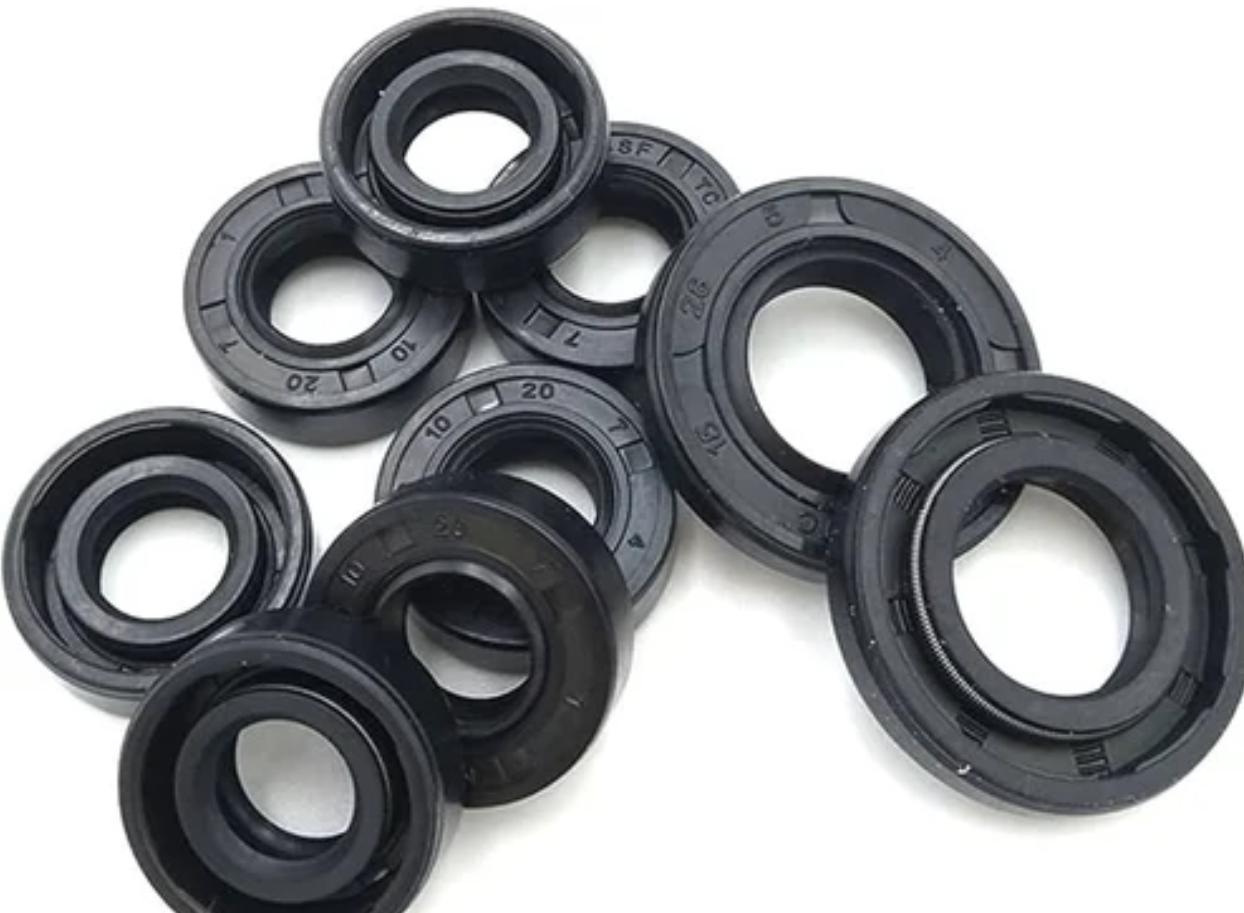
Assorted rubber-covered radial shaft oil seals of different sizes with metal cases and sealing lips
Radial shaft oil seals in mixed sizes. Construction and dimensions differ by application — a truck hub, axle or gearbox seal is selected from the shaft, bore and duty, not from appearance.
Introduction

What Are Truck Oil Seals?

A truck oil seal — also described as a rotary shaft seal, radial lip seal or shaft seal — is the component that closes the gap between a rotating shaft and the housing that supports it. A flexible sealing lip is pressed lightly against the shaft, usually with the help of a small garter spring, so that lubricant stays inside the housing while the shaft continues to turn.

The lip does not run dry. In normal service a very thin film of oil passes between lip and shaft, and that film is what keeps the elastomer from overheating and wearing. The seal therefore works as part of a system: the shaft surface, the housing bore, the lubricant, the breather and the bearing all influence how long it lasts.

Lubricant retention matters because a slow weep becomes a low oil level, and a low oil level becomes bearing damage that is far more expensive than the seal. Contamination matters for the same reason in reverse: dust, water and grit that reach the lip act as a lapping compound, polishing the shaft and wearing the lip until the joint leaks.

For those reasons, correct selection and careful installation matter as much as the seal itself. Actual performance depends on seal design, material, operating temperature, pressure, shaft speed, shaft condition and how the seal is fitted — not on the seal alone.

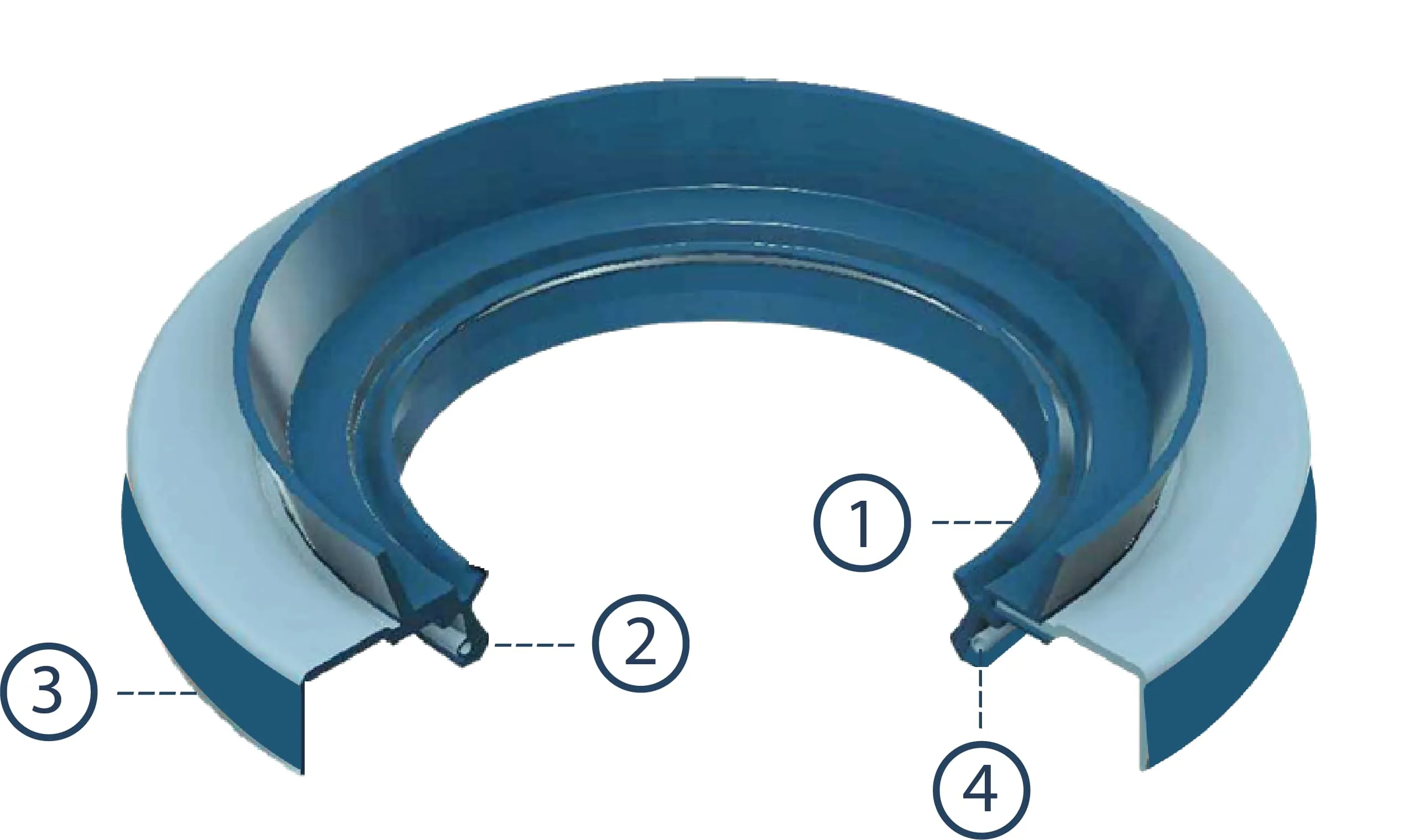
Cutaway illustration of a spring-loaded radial shaft seal showing the sealing lip, metal case and garter spring
Cutaway of a spring-loaded radial shaft seal: elastomeric lip, metal case and garter spring. Truck seals vary in lip profile, case type and material according to the position they serve.
Applications

Applications of Truck Oil Seals

The groups below cover the positions buyers and workshops ask about most often. They describe application categories and the points worth confirming — not a claim that one seal fits every position, make or model.

Engine & crankshaft

01

At the front and rear of the crankshaft, the seal keeps engine oil inside the crankcase while the shaft turns at engine speed. Rear main seals in particular work close to the flywheel and clutch housing, where a leak shows up quickly.

Confirm before ordering
  • Shaft diameter and housing bore
  • Crankcase pressure and breather condition
  • Lip material suited to the engine oil

Axles & differentials

02

Axle and pinion seals retain the specified gear oil in the axle housing and help keep water, mud and road grit away from the differential. Because axle assemblies breathe and warm up in service, the seal also has to tolerate pressure changes.

Confirm before ordering
  • Pinion or axle shaft dimensions
  • Gear oil type and fill level
  • Breather and vent condition

Wheel hubs

03

Wheel hub seals sit at the wheel end, holding bearing grease or hub oil in place and keeping water and grit out. On commercial vehicles this position sees road spray, brake heat and vibration, so the housing and shaft surfaces deserve close inspection.

Confirm before ordering
  • Hub bore and spindle dimensions
  • Grease or oil lubrication arrangement
  • Condition of the spindle surface

Gearboxes

04

Gearbox seals close the input, output and selector shaft openings, retaining gear oil around rotating shafts. Speed, oil type and internal pressure all affect lip loading, so the seal should match the gearbox duty rather than only its bore size.

Confirm before ordering
  • Shaft and bore dimensions
  • Gear oil specification
  • Running speed and lip type

Transmissions

05

Transmission sealing requirements depend on the arrangement: manual gearboxes, automatic transmissions, retarders and transfer cases place different demands on the lip and material. Shaft movement, oil type and temperature decide what is appropriate.

Confirm before ordering
  • Which shaft and housing position
  • Oil specification and temperature
  • Any specified part number

Auxiliary assemblies

06

Pumps, steering gear, power take-off drives and other auxiliary units on a commercial vehicle use shaft seals too, wherever lubricant has to be retained around a rotating shaft. The seal is chosen for that unit's duty, not by size alone.

Confirm before ordering
  • Equipment make and part number
  • Pressure and speed of the unit
  • Fluid compatibility

Seals for these positions differ in diameter, width, lip profile and material. Always confirm the complete specification for the position you are working on.

Seal types

Types of Truck Oil Seals

These groups are named by the position they serve. They are not mutually exclusive — a single seal may fall into more than one group depending on its duty, construction and where it is fitted.

Engine

Truck Engine Oil Seals

Used at engine sealing points such as the front cover, oil pump drive and rear main position. They retain engine oil and exclude dust while running at engine speed and temperature.

Confirm: shaft and bore size, oil specification, temperature.
Crankshaft

Truck Crankshaft Oil Seals

Seal the crankshaft where it leaves the crankcase. Shaft surface finish, concentricity and crankshaft movement matter here, because an imperfect shaft surface wears the lip quickly.

Confirm: shaft condition, seal width, lip type.
Axle

Truck Axle Oil Seals

Retain the specified axle lubricant around pinion and axle shafts and help protect the differential from water and grit thrown up from the road.

Confirm: axle position, gear oil, breather condition.
Wheel end

Truck Wheel Hub Oil Seals

Fit at the wheel hub, keeping bearing grease or hub oil in place and limiting contamination from road spray. Often renewed together with the wheel bearing.

Confirm: hub bore, spindle size, lubrication method.
Gearbox

Truck Gearbox Oil Seals

Seal rotating input, output and selector shafts so gear oil stays in the gearbox. Speed and oil type influence the lip design that suits the unit.

Confirm: shaft position, gear oil, running speed.
Transmission

Truck Transmission Oil Seals

Requirements vary with the transmission arrangement, including automatic units, retarders and transfer cases. The seal has to suit the fluid, temperature and shaft movement involved.

Confirm: unit type, fluid, part number.
Heavy duty

Heavy-Duty Truck Oil Seals

A description of duty rather than a single design. Demanding applications place more weight on temperature range, shaft speed, pressure, contamination exposure and lip construction.

Confirm: duty cycle, temperature, contamination.
HCV

Heavy Commercial Vehicle Oil Seals

Seals intended for heavy commercial vehicle assemblies such as tractor units, tippers and buses, subject to the correct specification and compatibility for each position.

Confirm: vehicle application, dimensions, specification.

Note on naming: the groups above describe applications. They do not indicate a stock range, a fixed material or a model-specific fitment. Dimensions, material and lip design have to be confirmed for each position.

Materials

Materials Used in Truck Oil Seals

The elastomer decides how a seal behaves when the oil is hot, the shaft turns fast or the joint is exposed to water and grit. Material choice is a compromise between oil resistance, temperature range, flexibility, mechanical strength and cost.

Nitrile rubber NBR

The most common general-purpose seal elastomer for mineral oils and many synthetic oils. Good mechanical strength and resistance to abrasion, with a working range commonly quoted at roughly −40 °C to +100 °C.

Typical interest: engine, axle, hub and gearbox positions in normal duty.

Fluoroelastomer FKM

Chosen where operating temperatures are higher than NBR can sustain, or where the lubricant and additive package demand better chemical resistance. Cost is higher, so it is usually specified for a reason.

Typical interest: hot engine and driveline positions, aggressive oils.

Polyacrylate ACM

An oil-resistant elastomer with better heat resistance than NBR in some applications, though with limits on low-temperature flexibility and water resistance. Often considered for gearbox and engine sealing duties.

Typical interest: gear oils and moderate high-temperature duty.

Silicone rubber VMQ

Wide temperature flexibility and good low-temperature behaviour, but limited resistance to some oil additives and lower mechanical strength. Suitability depends on the exact fluid and duty.

Typical interest: wide-temperature applications with compatible fluids.

PTFE lip PTFE

A polytetrafluoroethylene sealing element used where low friction, high shaft speed or aggressive media are involved. PTFE lips behave differently from elastomer lips and need a matching shaft finish.

Typical interest: high-speed or chemically demanding positions.

Case & lip construction Design

Most truck seals combine an elastomeric body with a metal case and a spring-loaded lip. Rubber-covered or exposed-metal outer diameters, single or double lips, and dust lips are all selected for a reason.

Typical interest: bore condition, contamination, shaft speed.

Please note: the materials above are described as general technical information, not as a statement of stock or standard supply. Confirm the material offered for your specific requirement, along with its temperature and fluid limits, before ordering.

Selection matters

Why Correct Truck Oil Seal Selection Matters

A seal is a low-cost part with an outsized effect on the assembly around it. Most of the value comes from avoiding avoidable failures rather than from any single performance claim.

Lubricant stays where it is neededA correctly sized lip helps maintain the oil or grease level the assembly was designed around.
Leakage is reduced, not eliminatedGood selection and installation help limit weeping; no seal can be guaranteed leak-free for life.
Contaminant entry is limitedDust lips and correct lip contact help keep grit and water away from bearings and gears.
Components stay cleanerLess ingress means less abrasive paste around the shaft, bearing and housing.
Lubricant loss is controlledHolding the fill level protects bearings from starvation and reduces top-up frequency.
Maintenance is more predictableA seal matched to the duty is easier to plan around than repeated roadside replacements.

None of this amounts to a promise of zero leakage or a fixed service life. Seal performance depends on the complete assembly: shaft finish and hardness, bore condition, alignment, lubricant, temperature, pressure, speed and the quality of installation.

Buyer's checklist

How to Select the Right Truck Oil Seal

Work through the parameters below before requesting a quote. They are the details a supplier needs in order to identify a suitable seal rather than a similar-looking one.

Parameters to confirm before ordering a truck oil seal
Parameter Why it matters
01Application & position The same vehicle can use several different seals. Engine, axle, hub and gearbox positions place different demands on the lip and material.
02Shaft diameter The inner diameter of the seal is matched to the shaft. A shaft that is worn below nominal may need a different approach, not just a new seal.
03Housing bore The outer diameter must suit the bore, including its condition. A damaged or oversized bore can allow the seal to move or leak at the outside diameter.
04Seal width Width has to suit the housing depth and the space available around the lip. Too wide or too narrow affects seating and lip position.
05Shaft finish & condition Surface roughness, hardness, scoring and runout all affect lip life. A new seal on a damaged shaft often leaks again.
06Operating temperature Continuous and peak temperatures decide whether NBR is adequate or a higher-temperature elastomer is needed.
07Lubricant compatibility Mineral gear oil, engine oil, ATF, grease and synthetic fluids behave differently with the same elastomer.
08Speed & pressure Where relevant, shaft speed and internal pressure influence lip design, spring load and the need for a reinforced construction.
09Lip configuration Single lip, double lip, dust lip and case style are chosen for the contamination and pressure the position sees.
10Part number or OEM spec An original part number or equipment manufacturer's specification is the most reliable starting point and reduces the risk of a near-match.

Never select a seal on outer diameter alone. Several seals can share the same outer diameter while differing in inner diameter, width, lip profile and material. Confirm the complete dimensions and the application before ordering.

Dimensions

Understanding Truck Oil Seal Size

Seal dimensions are commonly written as inner diameter × outer diameter × width, usually in millimetres. Reading the format correctly avoids most ordering mistakes.

Dimensional format

45 × 65 × 10 mm

ID · shaft OD · bore Width

Illustrative example of the format only. These are not confirmed Ananta Venture product dimensions and not a universal truck oil seal size.

In the example above, 45 mm is the nominal inner diameter that contacts the shaft, 65 mm is the nominal outer diameter that seats in the housing bore, and 10 mm is the seal width. The same format is used whether the seal is described as a truck axle oil seal, a hub seal or a crankshaft seal.

When checking a size, keep three practical points in mind:

  • Nominal is not the same as measured. Seals are made to tolerances, and a used seal may be distorted. Measure the shaft and bore, not only the old seal.
  • Metric and imperial formats both exist. Confirm which convention the equipment uses before converting, and never round a conversion silently.
  • The part number is the strongest reference. Where an original part number is available, quote it alongside the dimensions.

Dimensional conventions and equipment manufacturer specifications vary. Check both before ordering, especially on imported vehicles or assemblies that may have been modified in service.

Cost factors

Factors That Affect Truck Oil Seal Price

There is no single price for a truck oil seal. Cost follows the specification, the quantity and the terms of supply rather than the name of the part.

  • Seal dimensionsLarger diameters and non-standard widths generally cost more than common small sizes.
  • Material and designFKM or PTFE constructions usually cost more than standard NBR, and double-lip or special case designs add cost.
  • Application requirementsHigher temperature, speed or pressure duty may call for a more specialised construction.
  • Order quantityA single workshop replacement and a repeat wholesale programme are quoted differently.
  • Tolerances and specificationTighter tolerances, drawing-based requirements or special testing affect the price.
  • Brand or OEM requirementWhere a specific brand, marking or OEM specification is required, that requirement is part of the cost.
  • Availability and order termsLead time, packing, freight and payment terms all form part of the commercial offer.

No prices are published on this page

Ananta Venture does not list truck oil seal prices online, because the correct figure depends on the exact specification and quantity. Share the dimensions, material preference, quantity and delivery location to receive current terms.

If you already have an original part number or a sample, include it — it reduces the back-and-forth needed to identify the right item.

Service guide

When Does a Truck Oil Seal Need Replacement?

A leaking seal is a symptom. Replacing it without understanding the cause often produces the same leak again a short time later.

Warning signs worth inspecting

  • Visible oil or lubricant leakage at a shaft, hub or housing joint.
  • Oily residue or a damp patch around the sealing area, even without drips.
  • Dirt or grit collecting close to the lip, suggesting ingress at the dust side.
  • Repeated lubricant top-ups without an obvious external leak.
  • Cracking, hardening or lip damage found during inspection or bearing renewal.

These signs can have other causes

A blocked breather, overfilling, the wrong lubricant, a worn bearing or a damaged shaft can all produce a leak that looks like a seal failure. Inspect before replacing.

Checks before fitting a replacement

  1. Check the shaftLook for scoring, wear steps, rust pitting and hardness loss where the lip runs. A worn shaft may need repair or a different seal arrangement.
  2. Check the bearingPlay or roughness in the bearing allows shaft movement that a new lip cannot control.
  3. Check the boreLook for damage, corrosion or previous sealant residue that would stop the outer diameter seating squarely.
  4. Check installation alignmentThe seal should enter the bore square, at the correct depth, without distortion or a dry start-up.
  5. Check the causeConfirm breathers are clear, the lubricant is correct and the fill level suits the assembly before returning the vehicle to service.
Sourcing

Choosing Reliable Truck Oil Seal Manufacturers and Suppliers

Truck oil seal manufacturers and truck oil seal suppliers are not interchangeable terms, and the difference matters when you need consistency across a fleet or a repeat order. The criteria below apply either way.

01

Dimensional accuracy

Ask how inner diameter, outer diameter and width are controlled, and whether the quoted figures are nominal or measured.

02

Material suitability

Confirm the elastomer offered suits your lubricant and temperature, not just the dimensions.

03

Traceability

Where available, batch or marking information helps when a repeat order has to match an earlier supply.

04

Technical documentation

Drawings, material details and specification sheets reduce ambiguity between buyer and supplier.

05

Application support

A supplier who asks about the position, shaft condition and duty is more useful than one who quotes a size alone.

06

Consistency of supply

For fleet or distributor programmes, repeatability across orders matters as much as the first sample.

07

Order quantity & terms

Clarify minimum quantities, lead times, packing and delivery terms before committing to a schedule.

08

Specification confirmation

Get the final dimensions, material and marking confirmed in writing so both sides are working to the same specification.

A useful test is to send one requirement with full details and see whether the response addresses the application or only the size. The first reply usually shows how the rest of the relationship will go.

About the company

Truck Oil Seal Solutions from Ananta Venture

Ananta Venture is a Delhi-based manufacturer of oil seals and V belts for industrial, automotive, agricultural and heavy machinery applications. The oil seal range covers industrial, rotary shaft, automotive, heavy-duty, rubber and agricultural machinery seals, with requirements reviewed against the dimensions and application details a buyer provides.

For commercial vehicle work, that means the enquiry starts with the position and the specification: where the seal fits, the shaft and bore dimensions, the lubricant, the operating conditions and any original part number. Where a requirement falls outside a standard size, a made-to-requirement enquiry allows the dimensions, material and lip arrangement to be reviewed together.

This page is a technical guide to truck oil seals as a product category. It does not claim model-specific fitment, OEM approval, certification or stock availability for any particular part. Those details are confirmed against the actual requirement.

Buyer questions

Frequently Asked Questions About Truck Oil Seals

Practical answers to what procurement teams, workshops and fleet maintenance buyers ask before ordering.

What are truck oil seals used for?

Truck oil seals retain lubricant around rotating shafts and help keep dust, water and road grit out of the assembly. On a commercial vehicle they are used at engine crankshaft, axle, wheel hub, gearbox and transmission positions. Each position has its own dimensions, lip design and material requirement, so a seal is matched to the application rather than chosen by size alone.

What are the different types of truck oil seals?

Common categories include engine and crankshaft seals, axle and differential seals, wheel hub seals, gearbox and transmission seals, and heavy-duty seals for demanding duty. They differ in diameter, width, lip profile, case construction and elastomer. The categories overlap: one seal may be described by more than one name depending on where it is fitted and how the buyer sources it.

How do I identify the correct truck oil seal size?

Read the old seal or the equipment documentation. Dimensions are normally given as inner diameter × outer diameter × width in millimetres, for example 45 × 65 × 10 mm. Measure the shaft and the housing bore as a cross-check, and confirm the part number where one exists. Do not rely on outer diameter alone, because several seals can share an outer diameter.

What factors affect truck oil seal price?

Truck oil seal price depends on dimensions, material and lip design, the duty the seal must handle, order quantity, tolerances and any OEM or brand requirement. Small workshop purchases and repeat wholesale programmes are priced differently. Ananta Venture does not publish prices, so share the specification and quantity through the contact page for current terms.

What causes truck oil seals to leak?

Leaks can come from a worn or hardened lip, a damaged or worn shaft surface, a scored housing bore, incorrect installation, excessive crankcase or gearbox pressure, a blocked breather, the wrong lubricant, or bearing play that lets the shaft move. A leak is a symptom, so the cause should be identified before a new seal is fitted.

When should a truck oil seal be replaced?

Replace when inspection shows weeping at the lip, oil residue around the shaft or hub, repeated lubricant loss, or a lip that is cracked, hardened or damaged. Replacement is also sensible when a nearby bearing or shaft is being renewed. Because these signs can have other causes, confirm the source of the leak first.

What is the difference between truck axle oil seals and wheel hub oil seals?

An axle seal typically seals a pinion or axle shaft where it enters the axle housing, retaining gear oil in the differential. A wheel hub seal sits at the wheel end and retains bearing grease or hub oil while excluding water and grit. They are different components at different positions, and one should not be substituted for the other.

How do I choose heavy-duty truck oil seals?

Start with the operating conditions: temperature range, shaft speed, pressure, contamination exposure and lubricant. Then confirm shaft diameter, bore, width and shaft surface condition, and choose a lip and material suited to that duty. Heavy-duty describes the application, not a single specification, so the dimensions and part number still have to be confirmed.

Which material is suitable for truck engine oil seals?

Nitrile rubber (NBR) is widely used for engine oil sealing because it handles mineral and many synthetic oils at normal engine temperatures. Fluoroelastomer (FKM) is chosen where temperatures are higher or the oil and additive package demand it. The right choice depends on the lubricant specification, temperature and shaft speed, so confirm it with the seal supplier.

What information should I provide when purchasing commercial vehicle oil seals?

Provide the application and position, inner diameter, outer diameter and width, shaft surface condition, operating temperature, lubricant, speed and pressure where relevant, plus the original part number or equipment make and model if available. A photograph of the old seal and any markings on it also help. Quantity and delivery location complete the enquiry.

Have a Truck Oil Seal Requirement?

Share the position, shaft and bore dimensions, material preference, quantity and any part number. The requirement will be reviewed and the applicable options confirmed.