Oil seal materials & Fluoroelastomer (FKM)

Viton Oil Seals

Viton oil seals are rotary shaft seals moulded in fluoroelastomer & the material family industry calls FKM. They are specified where ordinary nitrile seals run out of temperature or fluid resistance: hot oil, fuel, and chemically demanding positions on pumps, gearboxes and engines.

FKM holds its sealing force at temperatures that harden cheaper rubbers, and resists many oils, fuels and solvents that swell or soften them. It is not a universal answer & some esters, amines and hot water defeat it. Send us the fluid, the temperature and the shaft size, and we will help you confirm whether FKM is the right choice or a waste of money.

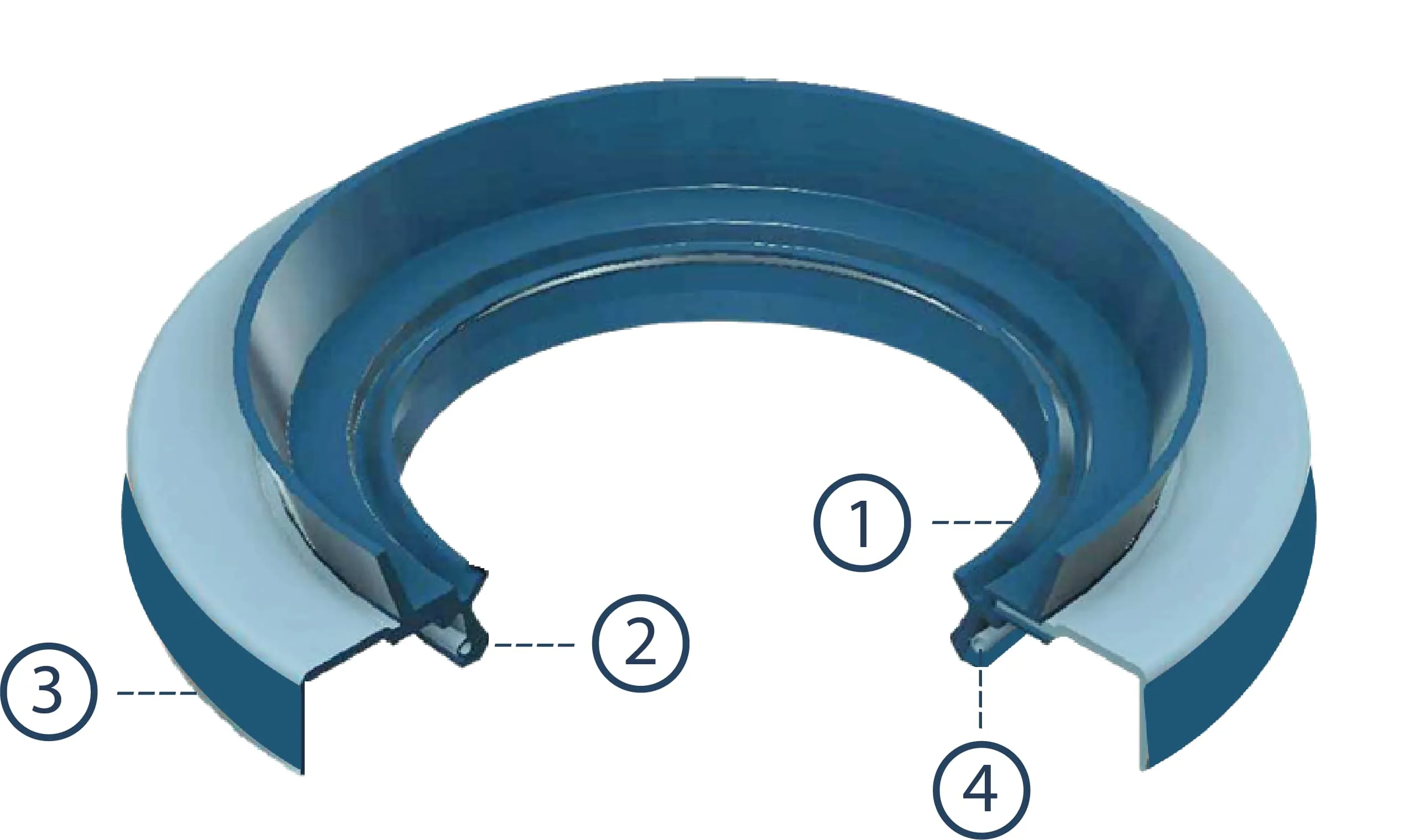
FKM / fluoroelastomer Cutaway view of a fluoroelastomer rotary shaft oil seal showing the sealing lip, garter spring and metal case
Where the material works hardest In a band a few millimetres wide, oil film, heat and shaft speed decide how long the seal lasts.
Material family
FKM / fluoroelastomerViton™ is a trade name within it
Heat ceiling
About +204 °C continuousGeneral-purpose grades; confirm the compound
Commonly chosen for
Hot oil, fuel, chemicalsNot for every fluid — compatibility first
Supply basis
Made to requirementSizes and profiles confirmed at enquiry

Figures are indicative of published general-purpose FKM data, not a specification for any seal we supply. The compound data sheet governs.

The short answer

What Are Viton Oil Seals?

A Viton oil seal is a radial shaft seal — a moulded rubber lip bonded into a metal case, usually with a garter spring behind the lip — made from a fluoroelastomer compound rather than nitrile, silicone or polyurethane. It presses into a housing bore, its lip rides on the rotating shaft, and a thin film of oil is all that separates the two surfaces.

Viton is a trade name; FKM is the material family

Viton™ is the brand Chemours uses for its fluoroelastomer range. The international designation for the family is FKM (ASTM D1418), and buyers in India will also see it described as fluoroelastomer, fluorocarbon rubber or simply “Viton type”. The distinction matters commercially: an FKM seal is not automatically a Viton seal, and compound grades differ considerably in temperature ceiling, fluid resistance and compression set. When you ask for a quotation, ask which compound and which data sheet is behind it.

What the seal actually does

Two jobs, and they pull in opposite directions. The lip must hold lubricant inside the housing, then return to contact after every shaft revolution without leaking or pumping oil out. At the same time it must keep dust, water and grit away from the bearing chamber. A spring-loaded lip supplies the radial force; the rubber supplies the flexibility to follow shaft run-out and the chemical resistance to survive what it is bathed in.

Why material choice decides seal life

A seal rarely fails because the dimensions were wrong. It fails because the rubber hardened, swelled, cracked or lost its compression set — and every one of those is a material response to heat and fluid. That is the whole case for FKM: in a hot, oil-wetted or fuel-exposed position it holds its properties far longer than general-purpose nitrile, which is why it is specified on engines, gearboxes and process equipment where a leak is expensive.

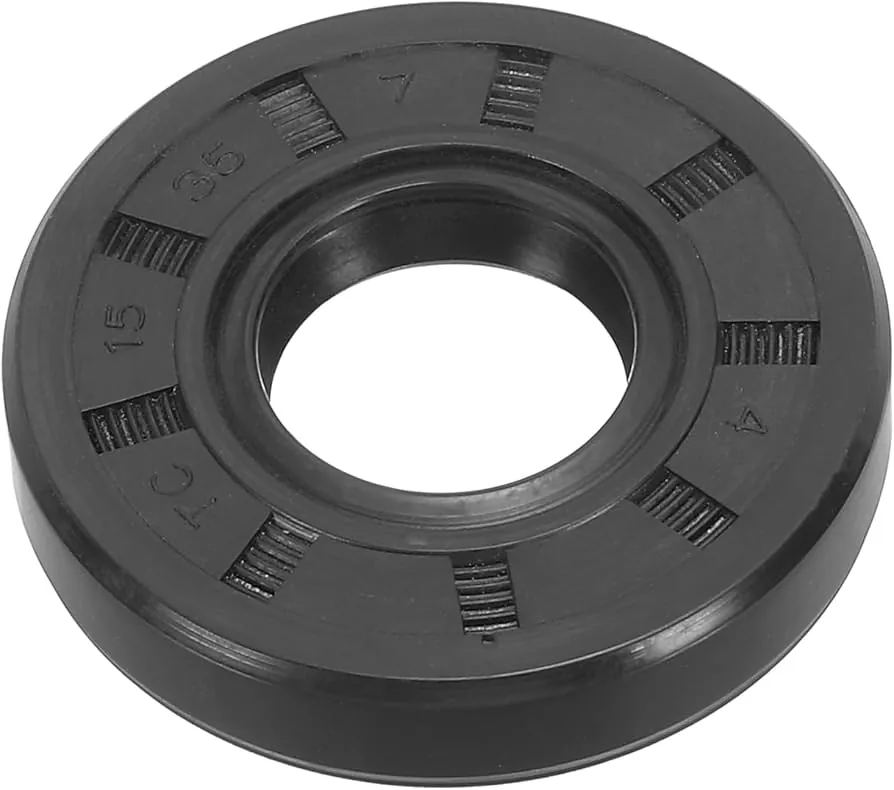
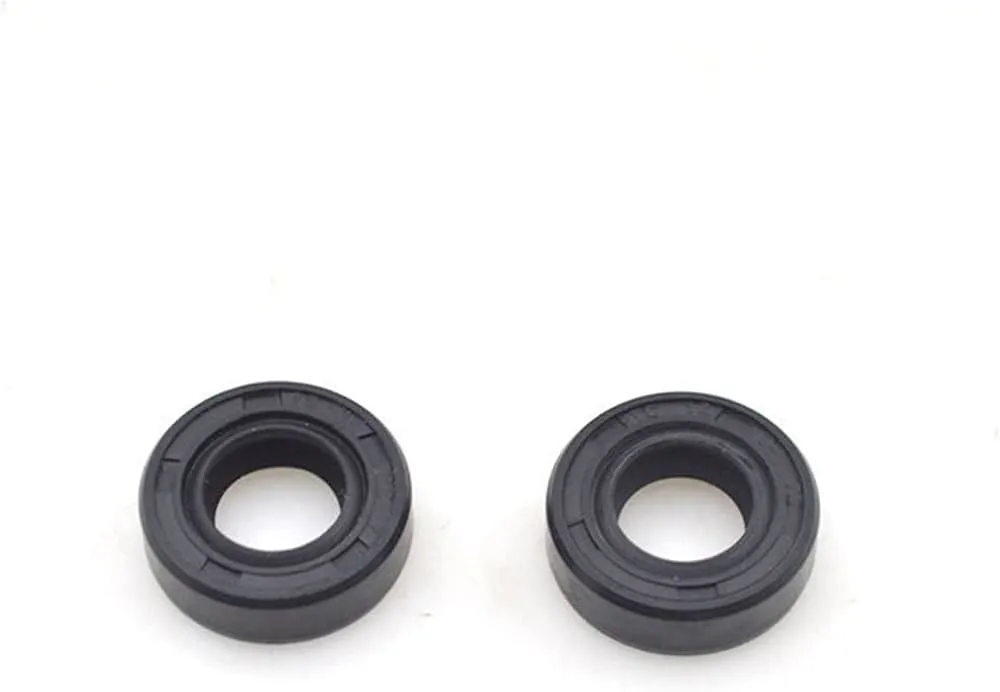
Single FKM rotary shaft oil seal with rubber sealing lip and metal outer case
Typical rotary shaft seal. Metal case for bore retention, rubber lip for the sealing line, spring for consistent radial load. The compound behind that lip is what separates an FKM seal from a general-purpose one.

Material behaviour

Key Features of Viton Oil Seals

What FKM brings to a sealing position — stated as material behaviour, because a finished seal performs only as well as its compound, lip geometry and installation allow.

Heat resistance, to the compound’s limit

General-purpose FKM is quoted for continuous service to about 204 °C. Speciality grades sit higher and low-temperature grades trade some upper range for cold flexibility — the number belongs to the grade, not the brand.

Resistance to oils, greases and fuels

Excellent against mineral oils, greases and many hydrocarbon fuels and solvents — the reason FKM appears on engine, gearbox and fuel-handling shafts where nitrile would swell and soften.

Chemical resistance with real limits

Many FKM grades handle chlorinated solvents, mineral acids and hydrocarbon fluids. Low molecular weight esters, strong organic acids and some amines attack them, and hot water or steam is generally a poor duty.

Sealing force that stays put

FKM holds compression set well at temperature, so the lip keeps pressing on the shaft instead of taking a set and weeping. That is what buys service life in a hot housing, not just chemical resistance.

Design options across sizes

Single-lip and double-lip profiles, spring-loaded and non-spring designs, rubber-covered or metal-cased bodies, and sizes made to shaft and bore dimensions rather than a fixed catalogue.

Built for demanding environments

Ozone, weathering and oxidation resistance are strong, so a seal exposed to outdoor air, heat soak or cycle after cycle of warm-up and cool-down degrades more slowly than an unprotected general rubber.

Read this before specifying. None of the above is a guarantee for every seal we can quote. Performance depends on the exact compound, the lip design and the operating conditions — fluid, concentration, temperature (continuous and peak), shaft speed, surface finish, run-out and contamination. FKM earns its price only when the duty actually needs it.

Configurations

Viton Oil Seal Product Types

These are the industry-standard configurations an FKM seal is built in. Exact profile, lip geometry and dimensions are confirmed against your shaft and housing rather than assumed from a catalogue picture.

01

Viton rotary shaft oil seals

The standard radial lip seal for a rotating shaft in a housing bore — pumps, motors, gearboxes and hubs. The workhorse profile, and usually the first option quoted.

02

FKM shaft seals, single lip

One sealing lip, spring-loaded, retaining lubricant. Suits clean, oil-wetted positions where contaminant exclusion from outside is not the dominant requirement.

03

Double-lip seals

A secondary lip excludes dust and water from the outside face, which matters on farm, site and process machinery. Where heat build-up is a concern, ask about the lip design.

04

Spring-loaded radial seals

A garter spring regulates radial lip force so contact is maintained as the rubber ages and the shaft runs out. The usual construction for dynamic oil sealing.

05

Rubber-covered and metal-cased

Rubber-covered bodies seal against the bore and tolerate rougher housings; metal-cased bodies suit rigid, well-machined bores. Both are available depending on the housing.

06

Custom profile and special sizes

Non-standard bore, width or lip geometry for retrofit work, imported machinery and assemblies where the original seal is no longer catalogued.

Availability qualification. These are the types we discuss and quote — FKM compound availability, profile, tooling and minimum quantity are confirmed per requirement. Nothing on this page should be read as a stock list of specific FKM part numbers, and no seal is offered as suitable for a duty until the fluid and temperature have been checked.

Where they are used

Viton Oil Seal Applications

Sectors where hot oil, fuel or aggressive fluids make FKM worth considering. In every case the individual position still has to be evaluated — two shafts on the same machine can need different materials.

Automotive and engine components

Crankshaft, camshaft and gearbox positions where oil runs hot and the seal must survive heat soak after shutdown. Fuel-exposed positions are a separate compatibility question.

Pumps and industrial machinery

Process and hydraulic pump shafts handling hot oil or fluid with a solvent content, where a nitrile lip would harden or swell within the service interval.

Gearboxes and rotating equipment

Gear reducers and rotating assemblies that run continuously at elevated sump temperature — heat ageing, not fluid attack, is often the failure mode here.

Oil-handling equipment

Piping, transfer and lubrication systems where hot hydrocarbon oil must be retained at a shaft pass-through and leakage is a housekeeping and safety issue.

Selected chemical-processing equipment

Only where the specific chemical has been checked against the specific FKM grade. Aggressive solvents, amines and hot aqueous duties frequently belong to another elastomer.

Manufacturing and engineering machinery

Machine tools, compressors and production equipment where a seal change means a stoppage, so the material is chosen for interval rather than first cost.

No compatibility is implied by the sector. Fluid type and concentration, continuous and peak temperature, shaft speed, pressure and seal design must all be evaluated for the actual position. A seal that performs for years in one engine bay can fail in a month in a different duty at the same temperature.

Technical detail

Temperature and Chemical Compatibility

The two questions that decide whether FKM is the right material — and the two where a generic answer is most likely to be wrong.

Heat: a compound figure, not a brand figure

Published Chemours data for general-purpose Viton™ fluoroelastomer gives a continuous service window of roughly −40 °C to +204 °C. That is a material starting point, not a promise for a seal in a housing. Compound chemistry shifts the window in both directions: higher-fluorine grades improve fluid resistance at the cost of low-temperature flexibility, while GLT-type grades are formulated to stay flexible well below the standard types.

Two further corrections matter in practice. First, continuous versus intermittent: a short excursion above the rated temperature is not the same as living there, and heat ageing accumulates. Second, the seal is not a slab of rubber — a thin lip in a hot housing sees its own temperature, influenced by shaft speed, lubricant flow and the housing it sits in. Specify the temperature at the lip, not at the machine’s nameplate.

Chemicals: excellent, then sharply limited

FKM is outstanding against hydrocarbon oils and greases, good to excellent against hydrocarbon fuels and solvents, and strong against chlorinated solvents and mineral acids. The same data rates it poor against low molecular weight esters and strong organic acids, variable against high molecular weight esters and low molecular weight alcohols, and only poor to good on steam. Strong bases depend entirely on the grade.

So “chemical resistant Viton oil seals” is a claim that needs a fluid name attached. Concentration, temperature, water content and the additives in a formulated oil all change the answer, and a compatibility chart consulted at 20 °C does not settle a question at 150 °C. Where the duty is severe or safety-related, verify against the compound supplier’s data and test the actual seal.

Mechanical conditions decide the rest

Material is only half the specification. Shaft speed builds lip friction and heat; surface finish and run-out decide whether the lip can maintain its film; most rotary shaft seals are designed for little or no pressure differential, so a pressurised chamber needs a different design approach, not just a tougher rubber. Contamination from outside is a design question too — a double lip or a protective lip often buys more life than a more expensive compound.

Published general-purpose FKM data (Chemours Viton™ properties). Indicative only — compound grades differ.
Property General indication
ASTM designation FKM (D1418); D2000 class HK
Continuous service About −40 °C to +204 °C
Hardness range 50–95 Shore A, grade-dependent
Hydrocarbon oils & greases Excellent
Hydrocarbon fuels & solvents Good to excellent
Low molecular weight esters Poor — check before use
Steam / hot water Poor to good — generally avoided
Ozone & weathering Outstanding

Scope of these figures. They describe a material test piece, not a finished seal in your housing. Ask for the compound data sheet for the grade actually offered and confirm compression set, fluid immersion results and the temperature at the lip.

Made to requirement

Custom Viton Oil Seals

Most FKM requirements we see are not a catalogue number — they are a shaft, a bore, a fluid and a temperature that have to be matched. Here is what to send so the answer is a specification rather than a guess.

  • Shaft diameter — measured at the sealing band, and whether the shaft is worn or grooved
  • Housing bore and depth — the outer diameter and width the seal must fit
  • Seal profile and lip configuration — single lip, double lip, spring-loaded, rubber-covered or metal-cased
  • Fluid or chemical — the oil grade, fuel, solvent or process fluid, with concentration where relevant
  • Continuous and peak temperatures — at the seal position, plus how long the peaks last
  • Shaft speed and pressure — rpm at the sealing diameter, and any pressure differential across the seal
  • Quantity — sample, trial batch or repeat production volume
  • Drawing, sample or part number — the fastest route when the original seal still exists

What happens next. The requirement is reviewed for material suitability and dimensional feasibility before anything is quoted. Custom-profile work involves tooling, so minimum quantities and lead times are confirmed in writing — we would rather tell you a special size is not practical than supply a seal that will not hold.

Buyer’s guide

How to Select the Right FKM Oil Seal

Seven steps that turn a vague requirement into something a supplier can quote — and that stop an expensive material being wasted on the wrong duty.

01

Identify the fluid or lubricant

Oil grade, fuel, solvent or process fluid — with additives and concentration if known. This is the step that decides whether FKM is even a candidate.

02

Confirm continuous and peak temperatures

At the seal, not at the machine panel. Continuous temperature drives compound choice; short peaks decide the safety margin and whether a higher grade is needed.

03

Measure shaft and housing

Shaft diameter at the sealing band, bore diameter, bore depth and width. Note wear grooves and run-out — a grooved shaft will leak with any material.

04

Establish speed and pressure

rpm at the sealing diameter, and any pressure differential across the lip. Standard shaft seals assume near-zero differential; pressure needs a different design.

05

Assess contamination and environment

Dust, mud, washdown, steam or solvent splash from outside. Often the answer is a double lip or a protective lip rather than a more costly compound.

06

Fix the profile and installation

Single or double lip, case style, spring, and how the seal is pressed in. A correct seal fitted with the wrong tool or dry-started will fail early regardless of material.

07

Verify compatibility and specification

Check the compound data sheet against your fluid and temperature, confirm tolerances and dimensions in writing, and agree what is being supplied before the order.

!

Where buyers most often go wrong

Specifying FKM by habit. In a clean mineral-oil duty at moderate temperature, NBR oil seals often cost less and last as long. FKM should be a response to a measured requirement.

Material comparison

Viton vs Other Oil Seal Materials

FKM is one of four elastomers that cover most oil seal enquiries. Each solves a different problem — there is no universal winner, only a material that matches your fluid, temperature and mechanical duty.

General comparison of common oil seal materials. Ranges are typical published values for general-purpose grades — speciality compounds can differ in both directions.
Material Typical temperature Oil & fuel compatibility Weather & ozone Often considered for Main limitation
FKM / Viton™ This page About −40 °C to +204 °C* Excellent in hydrocarbon oils, greases and many fuels Outstanding Hot oil, fuel and chemically demanding shaft sealing Higher cost; poor against low molecular weight esters, strong organic acids and some amines; limited low-temperature flexibility in standard grades
NBR (nitrile) About −40 °C to +120 °C* Excellent in mineral oils, greases and mineral hydraulic fluid Moderate General oil sealing, hydraulic components, automotive and industrial shafts Limited heat and ozone resistance; hardens with age; swells in many polar and synthetic fluids
EPDM About −50 °C to +150 °C* Poor in petroleum oils, fuels and hydrocarbon solvents Excellent Water, steam, brake fluid, glycol and outdoor duties — not oil sealing Generally unsuitable for petroleum-based oils and fuels; poor hydrocarbon resistance
Silicone (VMQ) About −60 °C to +200 °C* Poor to moderate in hydrocarbon oils; better in some synthetic and silicone fluids Excellent Wide temperature span, cold and heat extremes, static and low-load sealing Swells in many oils and fuels; lower tear and abrasion resistance, so poor where a dynamic lip carries load

*Figures are indicative ranges for orientation and will not match every grade. Confirm the actual limits, fluid compatibility and compression set on the data sheet of the compound offered, and test where the duty is severe or safety-related.

Reading the table: NBR remains the sensible default for machinery running in mineral oil at moderate temperature, and it is usually the cheaper seal. FKM earns its cost where the sump runs hot, where fuel or solvent is present, or where the seal must hold its lip for a long interval between shutdowns. EPDM is a water-and-steam material — in petroleum oil it is the wrong choice regardless of price. Silicone covers an enormous temperature span but is rarely right for a dynamic, oil-wetted lip because of its mechanical weakness.

For a cooler, oil-only duty at modest speed, our NBR oil seal guide explains where nitrile is the better commercial answer. For high-load and abrasive duties, polyurethane oil seals are a different tool again.

The working relationship

Why Choose Ananta Venture for Viton Oil Seals?

Ananta Venture is a Delhi-based manufacturer of rubber oil seals and V belts, working from Burari and supplying customers across Delhi NCR and the rest of India. What that means in practice on an FKM enquiry:

  • Application-first selection

    We ask what the machine does, what fluid it runs and how hot it gets before discussing material. If nitrile will do the job, we will say so rather than sell you fluoroelastomer.

  • Seals and belts under one roof

    If the shaft you are resealing is belt-driven, the drive side can be discussed in the same enquiry — one contact, one conversation about the machine rather than two suppliers blaming each other.

  • Dimensional detail taken seriously

    Shaft, bore and width are confirmed before production or dispatch. On an FKM seal the price of a re-make is higher than on nitrile, so the numbers get checked first.

  • Replies in hours, in plain language

    WhatsApp and phone during working hours. Send a photo of the failed seal, the markings, or the machine name — technical questions do not have to arrive as a formal drawing.

  • Honest about what is not verified

    We do not publish temperature ratings, pressure limits or certifications we have not confirmed for the compound being offered. Ask for the specification and it will be stated for the seal you are buying.

  • Custom-requirement discussions welcome

    Non-standard sizes, imported machinery and obsolete part numbers are normal enquiries. Feasibility, tooling and minimum quantity are discussed openly before any commitment.

Heavy duty oil seals for industrial machinery, selected for dust, heat and shock loads
Matched to the machine, not the catalogue. Sealing and power transmission are specified together, because one failing usually takes the other with it.

Selection parameters

Viton Oil Seal Specifications

A guide to the fields an FKM seal specification is built from — not a datasheet for a stock item. Each value is confirmed against your requirement before supply.

Typical specification fields for a Viton (FKM) oil seal. Values in the right-hand column are the basis of discussion, not a quotation.
Specification Information
Material FKM / fluoroelastomer compound, grade to be confirmed for the fluid and temperature
Product type Oil seal / rotary shaft seal, single or double lip, spring-loaded or non-spring as required
Temperature suitability Depends on the compound and the application; general-purpose FKM is quoted to about +204 °C continuous
Chemical compatibility Must be checked against the actual fluid, concentration and temperature — never assumed from the material name
Dimensions To be confirmed: shaft diameter, housing bore, seal width, measured on the machine or the old part
Seal profile Subject to the design available for the size; case style and lip arrangement confirmed at enquiry
Hardness Grade-dependent — stated on the compound data sheet for the seal supplied
Pressure and speed Depends on seal design and installation; confirm for the position being sealed rather than assuming a rating
Custom requirements Confirm with the supplier — feasibility, tooling, minimum quantity and lead time are quoted per requirement
Documentation Ask for the compound data sheet and agreed dimensions in writing with the quotation

No price, stock level, tolerance, pressure rating or certification is stated on this page because none can be confirmed for a generic requirement. Those details belong on the quotation for your specific seal.

Buyer questions

Frequently Asked Questions

Direct answers to the questions that come up most often on Viton and FKM oil seal enquiries. Where the honest answer depends on the compound, it says so.

What are Viton oil seals?

Viton oil seals are radial shaft seals made from a fluoroelastomer (FKM) compound. The lip runs against a rotating shaft to retain oil or grease inside a housing and to keep dust and moisture out. Viton is a brand name for a family of fluoroelastomers; the material family itself is designated FKM under ASTM D1418.

What is the difference between Viton and FKM oil seals?

None in material terms: Viton is a trade name for fluoroelastomers produced by Chemours, while FKM is the standard designation for the family. An FKM seal is therefore not automatically a Viton seal, because several manufacturers produce FKM compounds. Always ask which compound and which data sheet is being offered — temperature limits and fluid resistance vary between grades.

Are Viton oil seals suitable for high-temperature applications?

FKM is one of the elastomers chosen for hot duties, but the limit belongs to the compound, not the trade name. Published general-purpose data quotes a maximum continuous service temperature of about 204 °C, with speciality grades going higher and low-temperature grades extending the cold end. Continuous versus intermittent exposure, the fluid present and the seal design all affect the real limit — confirm it on the data sheet for the compound quoted.

Are FKM oil seals resistant to chemicals and fuels?

FKM resists hydrocarbon oils and greases very well, and many grades resist hydrocarbon fuels, solvents and mineral acids. Resistance is not universal: low molecular weight esters, strong organic acids, some amines and certain polar fluids can attack it, and hot water or steam is generally a poor duty. Compatibility must be checked against the actual fluid, its concentration and the operating temperature before the seal is specified.

Where are Viton rotary shaft oil seals used?

They are considered wherever a shaft seal has to survive heat, hot oil, fuel or aggressive fluids — engine and gearbox positions, pump and compressor shafts, gear reducers, oil-handling equipment and selected chemical-process machinery. Suitability still depends on the fluid, temperature, shaft speed, pressure and seal design at each position, so two seals on the same machine can legitimately need different materials.

Can I enquire about custom Viton oil seals?

Yes. Send the shaft diameter, housing bore, seal width, lip configuration, fluid, continuous and peak temperatures, shaft speed, quantity, and any drawing, sample or part number you have. Feasibility, tooling and lead time are confirmed after the requirement is reviewed — custom profiles involve tooling, so minimum quantities apply.

How do I select the correct FKM shaft seal?

Identify the fluid first, then the continuous and peak temperatures at the seal, then the shaft and bore dimensions, speed, pressure and contamination. Match the lip design and case style to the housing, verify the compound against the fluid data, and confirm the supplier’s specification in writing before ordering.

How can I request a quotation for Viton oil seals in India?

Call or WhatsApp Ananta Venture on +91 9211305366, email [email protected], or use the contact page. Share dimensions, fluid, temperature, speed and quantity so the seal can be quoted against a defined requirement rather than a size alone.

Next step

Looking for Viton Oil Seals for Your Application?

Share your dimensions, operating temperature, fluid type and quantity requirements so the appropriate seal specification can be evaluated — including whether FKM is genuinely the right material for the duty.

If the old seal is still in your hand, photograph it with the markings visible and send the measurements alongside. That single message usually settles the size, the profile and half the material question.

No prices are published on this page. Quotations depend on size, compound, quantity and tooling, and are confirmed after your requirement is reviewed.