Rotary shaft seals · Metal case construction

Metal Cased Oil Seals

Metal cased oil seals are rotary shaft seals whose outer case is a pressed metal shell rather than a rubber covering. The metal case gives the seal a rigid, dimensionally stable body that presses into the housing bore, while an elastomer sealing lip — usually held by a garter spring — rides the rotating shaft to retain lubricant and help keep dust, water and abrasive particles out.

They are commonly specified for gearboxes, electric motors, pumps, axle and hub assemblies and other rotating equipment where a firm bore fit and dimensional stability matter. Performance always depends on the seal construction and the actual application conditions: shaft diameter, bore, speed, temperature, pressure and the fluid being sealed.

  • Design optionsSingle lip, double lip, dust lip, double case, stainless steel case
  • Sealing elementNBR, FKM, silicone, EPDM or polyurethane — matched to the duty
  • To enquireShaft diameter, housing bore and width, or a drawing / sample
Industrial rotary shaft oil seals with rubber lips and metal cases
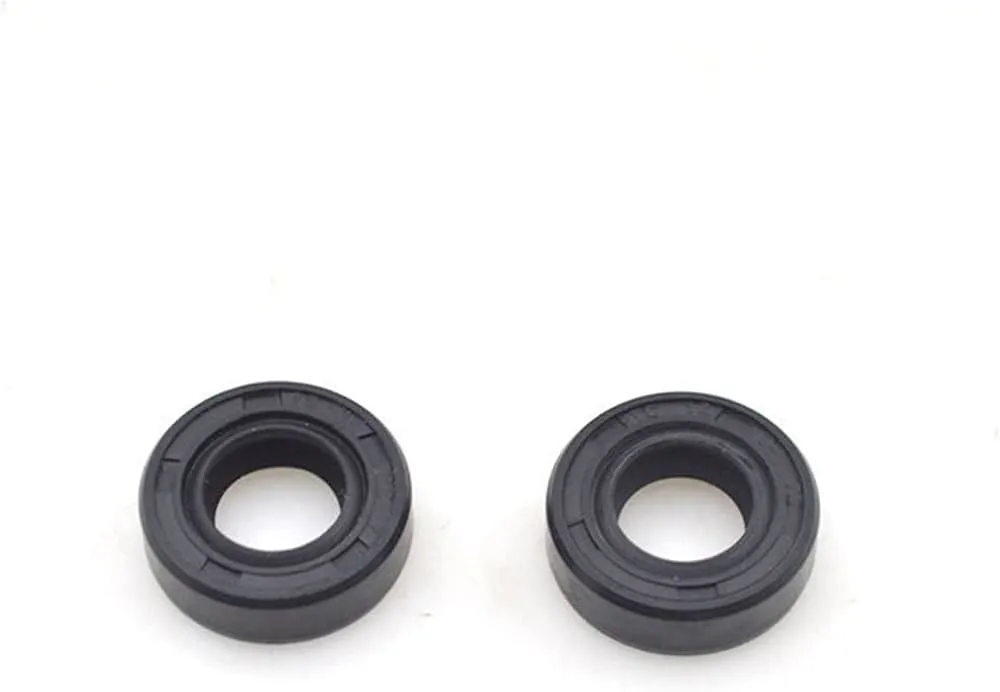
Rotary shaft oil seals with elastomer lips carried in metal cases
The basics

What Are Metal Cased Oil Seals?

A metal cased oil seal is a radial (rotary) shaft seal in which the elastomer sealing element is bonded or clamped into a rigid metal shell. The shell is the part that locates and holds the seal in the housing bore; the lip is the part that does the sealing.

In one line: a metal cased oil seal closes the gap between a rotating shaft and the housing around it, using a pressed metal case for a firm, dimensionally stable press fit and a flexible spring-loaded lip to hold lubricant in and keep contamination out.

The role of the metal outer case

The case is a thin pressed-metal shell that carries the sealing element and provides the seal’s structural rigidity. Because it is metal, the seal holds its roundness and its outside diameter under press-fit stress, which helps it sit squarely and stay put in the bore.

The case surface is usually finished (for example phosphated or coated) to suit a press fit in a metal housing. Where corrosion is a concern, a stainless steel case may be considered — the grade, exposure and fluid determine whether it is appropriate.

How the sealing lip meets the shaft

The primary lip is a flexible elastomer edge that presses against the shaft with a controlled contact force, normally maintained by a garter spring seated in the lip. The design intent is a thin, stable oil film between lip and shaft — not a dry rubber-to-metal squeeze.

That film lubricates the contact and is what allows the seal to run for a long service period. Too little contact force and the seal weeps; too much and it generates heat and wears the shaft. Lip profile, spring load and compound hardness are balanced to suit the application.

Fitting into the housing or bore

The outside diameter of the metal case is sized to the housing bore so that the seal presses in with the correct interference and seats against a shoulder or at the required depth. A loose outer fit lets the seal creep or spin in the housing; an over-tight fit distorts the case and can distort the lip.

Bore surface finish, bore material and the press tooling all matter. A tenth of a millimetre of interference, or a scored bore, changes how the seal behaves in service.

How the construction differs between designs

Metal cased seals differ in casing form (single or double case), lip arrangement (single lip, double lip with a secondary dust lip), spring type (garter spring or non-spring-loaded), and the elastomer used for the element.

A metal case provides structural support and installation-related benefits depending on the design. It does not automatically guarantee better sealing in every application — a rubber covered seal can be the better choice where the bore is imperfect, the housing is a light alloy, or a softer interference fit is wanted.

Selection note: sealing performance depends on the combination of case type, lip design, spring, elastomer compound and the real operating conditions — and on the condition of the shaft and bore it is fitted into. Confirm the final choice against the application and the manufacturer’s technical documentation.

Design considerations

Key Features and Benefits of a Metal Cased Construction

These are the general technical characteristics of a metal cased oil seal. Each point notes what follows from the design — and what still has to be confirmed for the application.

Structural support from the case

A pressed metal case keeps the seal round and holds its shape while it is being pressed into the bore. That rigidity supports the lip geometry instead of letting it deform during installation.

Housing fit and dimensional consistency

Metal casings are produced to a controlled outside diameter, which allows a predictable press fit. Repeat batches in the same size therefore install the same way, which matters on assembly lines and in maintenance stores.

Suited to rotary shaft sealing duties

The construction works where a shaft turns continuously inside a fixed housing — gearboxes, motors, pumps, hubs and similar assemblies — provided the speed, temperature and fluid are within the selected compound and design.

Compatibility with specified lubricants

The elastomer element is chosen for the lubricant and the temperature at the lip. Oil resistance is a property of the compound, not of the metal case, so the compound must be matched to the fluid being sealed.

Lip configurations where offered

Single lip, double lip (with a secondary dust lip) and non-spring-loaded variants exist within metal cased designs. Availability of a particular configuration depends on the size and the supplier’s range, and is confirmed before ordering.

Application-specific dimensions and materials

Seals are sized to the shaft, bore and housing depth rather than picked from a shelf label alone. Where a duty needs a different casing material, compound hardness or lip arrangement, that requirement is discussed against the application and quantity.

General characteristics vs. what we can confirm: the points above describe how metal cased seals work as a product category. Specific casing materials, compounds, lip arrangements and size ranges that can actually be supplied for your requirement are confirmed on enquiry — please send the dimensions and application and the team will confirm what is available.

Seal configurations

Types of Metal Cased Oil Seals

These are design categories rather than a stocked list. Each describes how the construction behaves — the availability of a specific configuration in your size must be confirmed with the supplier.

A · Single lip

Single Lip Metal Cased Oil Seals

One sealing lip retains the lubricant. The simplest and most widely used arrangement, it suits housings that are clean and reasonably protected — indoor machinery, closed gearboxes and bearing chambers away from dust or washdown.

Sealing effect depends on the lip profile, spring load, shaft finish and the fluid film at the contact.

B · Double lip

Double Lip Metal Cased Oil Seals

A second, usually outward-facing lip is added to shield the primary sealing lip from external contamination. Useful where dust, splash, slurry or washdown reaches the housing.

What each lip does depends on the actual design: a secondary lip is typically a dust/exclusion lip, and should not be treated as a pressure-rated element unless the design says so.

C · Dust lip

Dust Lip Oil Seals

A supplementary dust lip runs against the shaft ahead of the main lip and helps reduce the entry of external particles, mud and moisture into the sealing zone, keeping abrasives away from the primary contact.

It reduces the amount of contamination reaching the main lip — it does not provide complete exclusion in every environment, and it is not a substitute for correct compound selection.

D · Double case

Double Metal Cased Oil Seals

Here the case itself is doubled — two metal shells form the body of the seal, giving a stiffer, more robust outer structure than a single-shell design.

Double casing and double lip are different features and are not interchangeable terms: one describes the outer shell, the other the number of sealing edges.

E · Stainless steel case

Stainless Steel Cased Oil Seals

A stainless steel case may be considered where the seal body is exposed to moisture, washdown, condensation or mildly aggressive atmospheres and a plain carbon steel case would be expected to corrode. A corrosion-resistant case can also help where the housing bore is aluminium or another dissimilar metal.

Suitability depends on the actual stainless grade, the exposure, the temperature and the fluid. Stainless does not change the requirements of the elastomer — the compound must still suit the lubricant and conditions, and a stainless case does not compensate for the wrong rubber.

Availability: these are technical options, not a guaranteed stocked range. Sizes, casing materials and lip arrangements that can be supplied are confirmed against your drawing, sample or application details before any order is placed.

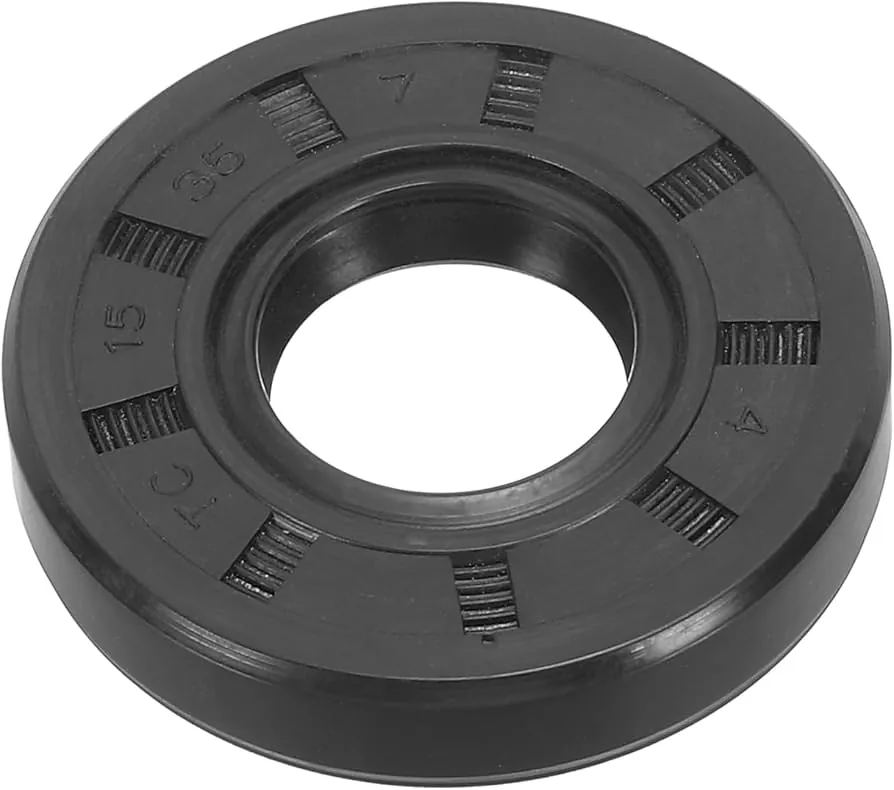
Oil seal component with metal casing and spring-loaded sealing lip
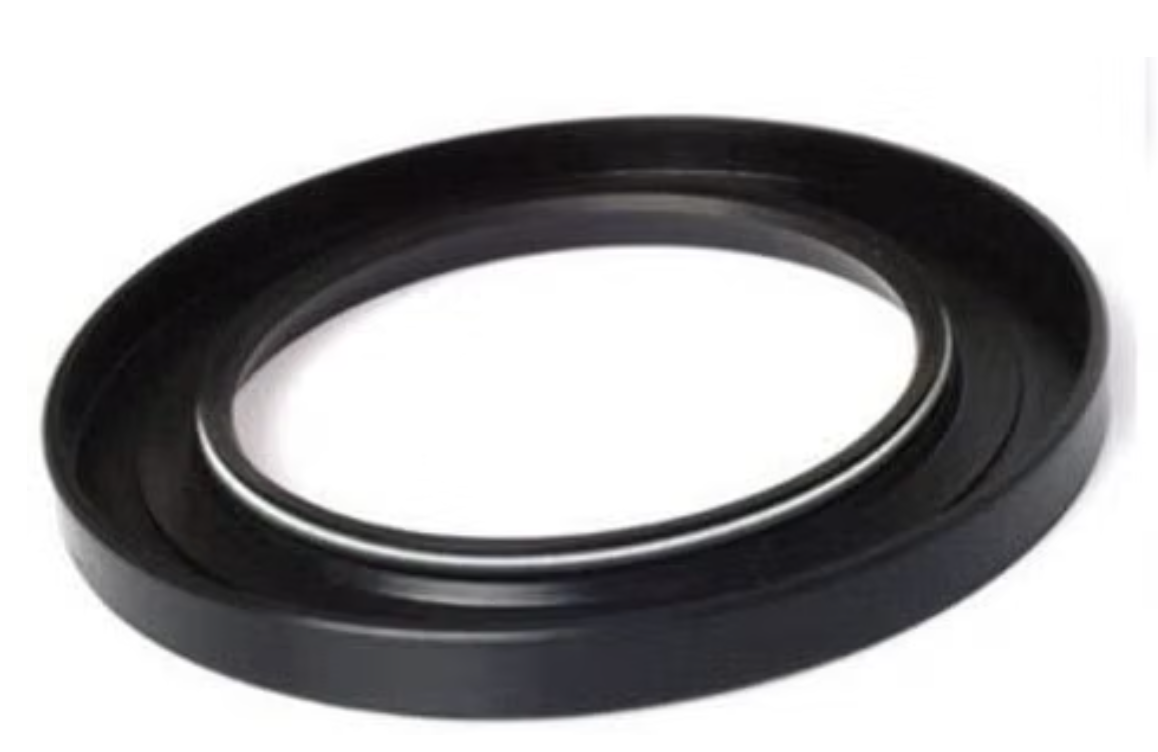
Heavy duty oil seals for industrial machinery
Selection guidance

Metal Cased vs Rubber Covered Oil Seals

Both constructions seal the same way at the lip — the difference is on the outside, where the seal meets the housing bore. That difference decides which one suits a given housing.

How metal cased and rubber covered oil seals compare — general guidance, not a specification
Factor Metal cased oil seal Rubber covered oil seal
Outer surface construction Pressed metal shell forms the outside diameter; the elastomer is bonded inside the case with the lip exposed. A rubber layer covers the outside of the case, so the housing sees rubber rather than bare metal.
Housing fit and retention Firm, dimensionally stable press fit. Good resistance to the seal creeping or spinning in a sound bore. Slightly more forgiving interference; the rubber layer grips and helps absorb small bore variations.
Sensitivity to bore surface condition Less tolerant of a scored, pitted or out-of-round bore, where a metal-to-metal fit may not seal around the outside. More tolerant of minor bore imperfections, light damage and slight ovality.
Corrosion-related considerations A carbon steel case can corrode in damp or washdown conditions; stainless steel casing is an option where that risk matters. The rubber covering shields the case, but the compound must resist the ambient environment and the fluid.
Installation requirements Needs the correct press tooling, square seating and a clean bore; the case can mark a soft housing if fitted carelessly. Also needs correct tooling and square seating; the rubber covering needs some lubrication to slide in without rolling or tearing.
Typical selection considerations Sturdy metal housings, higher-duty positions, repeated assembly, and applications where dimensional stability at the bore is valued. Light-alloy or softer housings, slight bore damage, housings where a metal case could fret, and applications needing a gentler outside fit.
Maintenance and replacement Replaced as a unit; removal needs care so the bore is not scored for the next seal. Replaced as a unit; a rubber-covered outside can be more forgiving of previous removal marks in the bore.

Neither construction is universally better. The correct choice depends on the housing material, the bore surface and finish, the required fit and interference, the operating conditions and the manufacturer’s recommendation for that design. Where a bore is already damaged, or the housing is a soft alloy, a rubber covered seal may suit better even in a demanding position.

Construction

Metal Cased Oil Seal Materials and Construction

A metal cased seal is a small assembly of parts, each with a job. The exact construction — and which elements are present — depends on the seal design and the application.

Main components of a metal cased oil seal

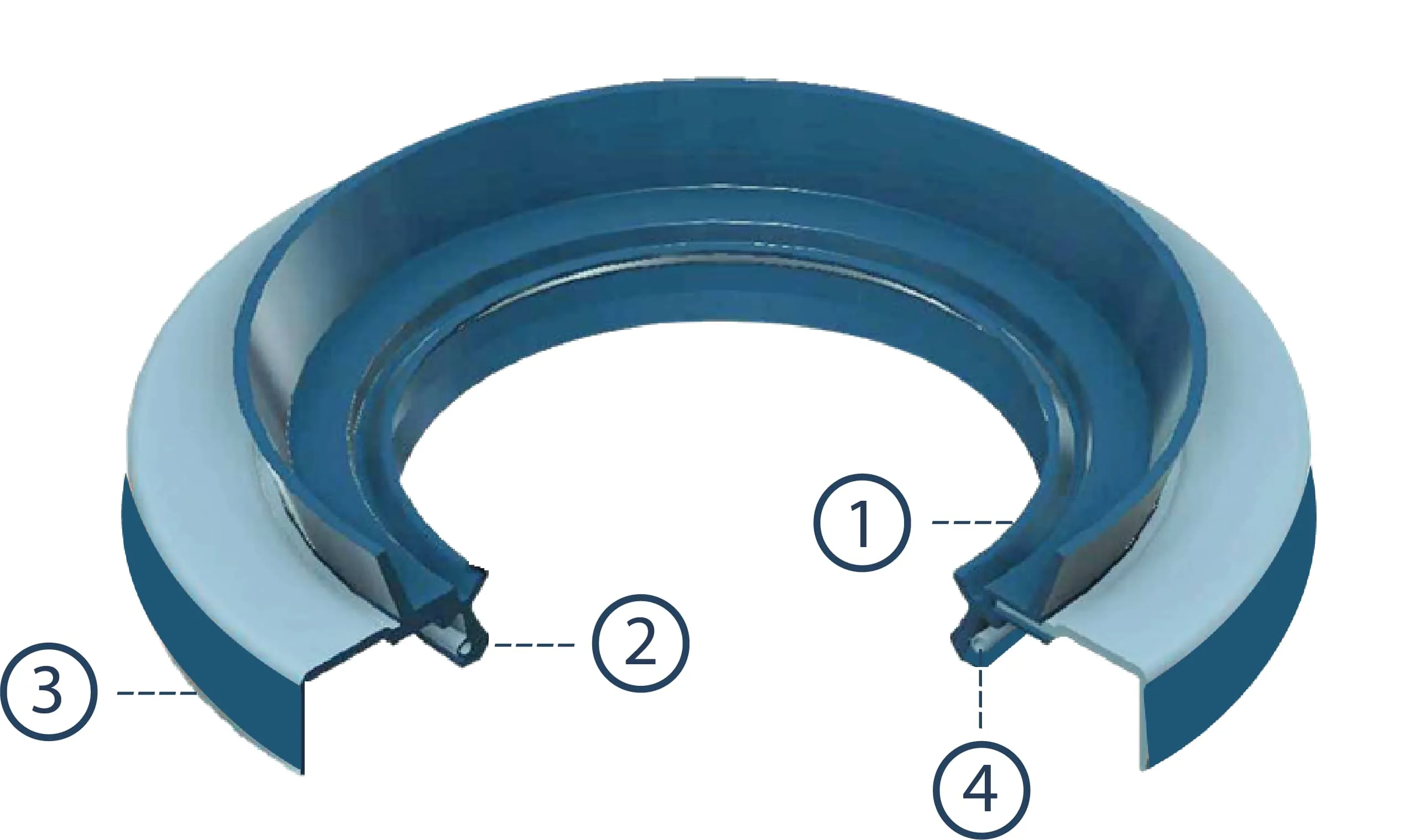
  • Metal outer case — the pressed shell that locates the seal in the housing bore and carries the sealing element. Commonly carbon steel; optionally stainless steel for corrosion-related duties.
  • Elastomer sealing element — the rubber body bonded into the case, which forms the actual sealing lip.
  • Primary sealing lip — the edge that runs against the rotating shaft and controls the lubricant film.
  • Optional auxiliary or dust lip — a second edge that helps exclude external contamination.
  • Spring (where included) — usually a garter spring in the lip, maintaining contact pressure as the lip wears and temperature changes. Some designs are non-spring-loaded.
  • Optional stainless steel casing — substituted for a carbon steel case where corrosion resistance is needed.
  • Shaft and housing interface — not part of the seal, but the surfaces that decide how well it works: shaft finish, hardness, run-out and bore size.
Assorted precision rubber oil seals manufactured in Delhi
Oil seals with elastomer elements in metal and rubber-covered casings

Elastomer options — and how they are chosen

The compound decides how the lip behaves in heat, in the lubricant and in the working environment. The materials below are the common technical alternatives; not every material is available from every supplier, and none of them suits every duty.

General purpose

NBR / Nitrile rubber

Resists many mineral oils, greases and fuels at moderate cost and temperature — the most widely specified oil-seal compound for oil-contact duties.

High temperature

FKM / Viton

Chosen where heat and more aggressive fluids exceed what NBR handles, with higher continuous temperature capability and good resistance to many industrial oils and chemicals.

Temperature range

Silicone

Stays flexible across a wide temperature band and suits some general sealing duties; its mechanical wear resistance is lower than compounds such as NBR or polyurethane.

Weather & water

EPDM

Excellent resistance to ozone, UV, weathering, water and steam. Note that EPDM is generally unsuitable for many petroleum-based oils, so it is not a general substitute in oil-sealing positions.

Abrasion

Polyurethane (PU)

High abrasion resistance and toughness for gritty, dusty duties where the lip must resist wear from particles rather than just retain oil.

Specialist

Other elastomers

Further compounds are sometimes selected for specific fluids, temperatures or regulatory requirements. Selection is made against the application rather than from a general chart.

Caution on compound selection: elastomer choice must account for the specific fluid, operating temperature, shaft speed, pressure and environment. Two seals that look identical can behave differently because the compound differs. In particular, EPDM is generally unsuitable for many petroleum-based oils and should not be selected indiscriminately for oil sealing. Confirm the compound against the actual duty and the supplier’s material documentation before ordering.

Technical data

Metal Cased Oil Seal Specifications

The table lists the fields that define a metal cased oil seal. Seals are supplied against the requirement of the application, so values are confirmed for your duty rather than quoted as generic numbers.

Specification fields — to be completed for your application
Inner diameter / shaft diameter Measured at the shaft the lip runs on. Determines the seal bore and the contact geometry. Value to be confirmed from your measurement or drawing.
Outer diameter / housing bore diameter Sets the press fit of the metal case in the housing. Value to be confirmed from the housing dimensions.
Seal width Overall case width, matched to the available housing depth and the retaining shoulder. To be confirmed according to the selected design.
Metal case material Carbon steel (commonly surface-treated for a press fit), or stainless steel where corrosion resistance is required. Depends on the environment and bore material.
Elastomer material NBR, FKM, silicone, EPDM, polyurethane or another compound — selected for the fluid and temperature. To be confirmed against the lubricant and conditions.
Lip configuration Single lip, or double lip with a secondary dust lip. Chosen against the contamination level of the application.
Spring configuration, if applicable Garter spring (spring-loaded) or non-spring-loaded design. Selected against shaft speed and the fluid being retained.
Shaft speed Surface speed at the lip, not only machine rpm. Affects heat generation and permissible lip load. To be confirmed according to the selected design.
Operating temperature Continuous temperature at the sealing lip is the value that matters, and it must sit inside the compound’s limits. Confirm against the compound data sheet.
Pressure conditions Whether the seal sees only gravity or splash, or a positive pressure differential. Pressure duty needs purpose-rated constructions. To be confirmed according to the selected design.
Lubricant or fluid compatibility The oil, grease or other fluid the lip will sit in, including additives that can affect the elastomer. Verify against the actual media and temperature.
Shaft surface finish Finish and hardness of the shaft under the lip influence wear and sealing life. Confirm against the manufacturer’s recommendation for the design.
Housing fit Bore tolerance, roundness, surface finish and seating shoulder. Confirmed against the housing drawing.
Required quantity Single piece, spares, or production quantities against a schedule. State the quantity on enquiry.
Application environment Dust, water, washdown, outdoor exposure, chemicals — the conditions the outside of the seal sees. Influences casing material and lip configuration.

The final specification must be confirmed against the requirements of the application and the manufacturer’s technical documentation for the selected design. The fields above are not a set of standard ratings — permissible speed, temperature and pressure vary with the compound, the lip profile, the casing and the operating conditions, and a value that is safe in one assembly may not be in another.

Where they work

Metal Cased Oil Seal Applications

Wherever a shaft turns through a housing, a shaft seal has a job. These are general application categories — suitability always depends on the actual product design and the operating conditions of the machine.

Industrial gearboxes

Input, output and intermediate shafts run in warm gear oil. A metal case holds its fit in the cast or machined housing bore, where the seal retains the oil and keeps workshop dust out of the bearing chamber.

Electric motors

Bearing housings on motor shafts need a lip that keeps grease or oil in and dust out across long duty cycles. Speed and temperature at the lip should be stated when specifying.

Pumps

Pump shafts and bearing frames need sealing against the pumped media on one side and lubricant on the other. Fluid compatibility decides the compound, and pressure duty needs an appropriately rated design.

Agricultural machinery

Tractors, rotavators, threshers and harvesters work in dust, mud and crop residue. Dust lip and double lip arrangements help shield the primary sealing edge in these conditions.

Automotive and transport equipment

Engine, gearbox, axle and wheel-hub positions seal engine and gear oils in hot, dusty surroundings. Compound and lip design are matched to each position rather than to the vehicle as a whole.

Industrial machinery

Machine tools, mixers, crushers, conveyors and processing lines — wherever a shaft passes through a housing and lubricant has to stay inside it over a daily duty cycle.

Rotating shafts in mechanical assemblies

Fans, blowers, generators, spindles and general rotating assemblies use metal cased shaft seals where a stable press fit in the housing and predictable lip behaviour are wanted. In every case the seal must be matched to the shaft, bore, speed, temperature and fluid of that specific assembly.

These are general application examples, not verified installations or approved uses for every seal. A seal that performs well in one machine may be unsuitable in another with different speed, temperature or contamination levels. Describe the equipment and its duty on enquiry so the design and compound can be confirmed.

Made to requirement

Custom Metal Cased Oil Seals

Non-standard sizes and configurations are discussed against the application. The more of the following details you can share, the faster the team can confirm what can be supplied.

Dimensions and construction

  • Shaft diameterInner diameter the lip will run on
  • Housing bore diameterOuter diameter the case must fit
  • Seal widthMatched to the available housing depth
  • Casing material requirementsCarbon steel, or stainless where corrosion matters
  • Lip configurationSingle lip, or double lip with a dust lip

Application and operating conditions

  • Elastomer and fluid compatibilityThe lubricant, and its additives
  • Operating temperatureContinuous temperature at the lip
  • Shaft speedSurface speed under the lip
  • Lubricant or fluid typeOil, grease, water-based or other media
  • Operating environmentDust, water, washdown, outdoor exposure

Quantity and traceability

  • Required quantitySingle piece, spares or scheduled production
  • Existing part numberWhere the seal is a replacement for a known reference
  • Drawing or sampleA drawing, part marking or the old seal itself

Discuss your requirement

Send the dimensions and the application details. The team will confirm what can be supplied for your requirement, along with options and pricing.

On customisation: non-standard dimensions, casing materials, compounds and lip arrangements are treated as an enquiry about customisation and sourcing options. Feasibility, tooling implications, order quantity and lead time are confirmed with the team before any commitment — nothing is promised until the requirement has been reviewed.

Buyer guidance

Metal Cased Oil Seal Manufacturer and Supplier in India

Buyers looking for metal cased oil seal manufacturers in India usually need the same three things: a seal that fits the drawing, a compound that survives the duty, and a supplier who answers technical questions before the order rather than after it.

How to evaluate a metal cased oil seal supplier

  • Dimensional conformity — the seal should match the stated shaft, bore and width, with the fit confirmed against the housing rather than assumed from a size code.
  • Material documentation — you should be able to establish which compound and which casing material you are buying, and on what basis it was chosen.
  • Product consistency — repeat orders in the same size should install the same way, batch after batch.
  • Application suitability — a supplier worth using will ask about speed, temperature, fluid and contamination before recommending a seal.
  • Technical support — help matching an old seal, a part number, a drawing or a sample to something that can actually be supplied.
  • Order quantity requirements — whether single pieces, spares and production quantities can all be handled for your sizes.
  • Traceability and documentation — where offered, paperwork that lets you record what was fitted and when.
Industrial oil seal with metal case and rubber lip manufactured in India
Industrial oil seal with a metal case and elastomer lip

About Ananta Venture

Ananta Venture is a Delhi-based manufacturer of rubber oil seals and V belts for industrial, automotive, agricultural and heavy machinery applications, working from Burari, Delhi, and supplying plants, dealers and OEMs across India. Metal cased oil seals are published as one of the seal categories the company manufactures and supplies, alongside single lip, double lip, rubber covered, industrial rotary shaft, heavy duty, automotive and custom oil seals. Share your shaft diameter, housing bore and width, or send the old seal or a drawing, and the team confirms what can be supplied.

If you need the company’s exact role on a specific item — whether a particular size, casing material or compound is manufactured in-house, sourced or supplied through a partner — please contact the team and confirm it directly for your requirement. Verifying capability against the actual part is the safest step for any procurement or OEM process.

Related pages on this site

Price & quotation

Metal Cased Oil Seal Price

There is no single price for a metal cased oil seal, because the seal is defined by its dimensions, casing material, compound and construction. The factors below are what move the price — and what to include when you ask for a quotation.

Seal dimensions

Inner diameter, outer diameter and width. Larger outside diameters and non-standard sizes generally cost more than small standard ones.

Casing material

A carbon steel case and a stainless steel case are not priced alike. Corrosion-resistant casings carry a material premium.

Elastomer material

NBR is the economical general-purpose choice; FKM and specialist compounds cost more because of the raw material and processing.

Lip design

Single lip construction is simpler than a double lip or dust lip arrangement, which adds operations and material.

Special requirements

Non-standard profiles, specific hardness, tighter tolerances or unusual casing forms add tooling or processing steps to the cost.

Order quantity

Unit cost normally falls as quantity rises, because setup and tooling are spread across more pieces.

Availability and sourcing

How readily the size and construction can be obtained affects the price you are quoted for that specific item.

Packaging or documentation

Where applicable, specific packing, marking or paperwork requirements are part of the delivered cost.

GST and freight

Published rates are per piece and normally exclude GST and freight; these are added for the destination and order value.

Ananta Venture’s published oil seal price list

Ananta Venture publishes an indicative per-piece oil seal price list, digitised from the Blowsom oil seal price list effective 1 January 2023. Rates are banded by outside diameter range — for example the band covering 41–45 mm OD and the band covering 121–125 mm OD are priced differently — quoted per piece in INR, exclusive of GST and freight. Prices may change without notice and the printed list prevails in case of any discrepancy, so confirm the current rate for your exact seal number before ordering. Non-listed sizes, stainless steel casings and custom configurations are quoted on request.

What to include in a quotation request

  • Inner diameter (shaft), outer diameter (housing bore) and seal width — or the old seal, part number or a photo of the part.
  • The application: what the machine is, where the seal sits and how it runs.
  • The required casing material and elastomer, if you already have a specification to match.
  • Operating conditions: temperature at the lip, shaft speed, pressure and the fluid being sealed.
  • The required quantity, and whether it is a one-off, a spare requirement or a repeating schedule.
Common questions

Metal Cased Oil Seals — Frequently Asked Questions

Short, practical answers to what buyers ask before specifying or ordering a metal cased oil seal.

What are metal cased oil seals used for?

They are used to seal a rotating shaft where it passes through a housing. Typical positions include gearboxes, electric motors, pumps, axle and hub assemblies, and general rotating machinery, where the seal keeps lubricating oil or grease inside the bearing chamber and helps keep dust, water and abrasive particles out.

What is the difference between metal cased and rubber covered oil seals?

The difference is the outer surface of the seal. A metal cased seal has a pressed metal shell that presses directly into the housing bore, which gives a firm, dimensionally stable fit but is less tolerant of a rough or damaged bore. A rubber covered seal carries a rubber layer over the outside of the case, which conforms to minor bore imperfections and can suit softer or light-alloy housings.

Neither construction is universally better — the housing material, bore surface and required fit decide which one is appropriate.

What is the difference between single lip and double lip oil seals?

A single lip seal has one sealing lip and suits relatively clean, protected housings. A double lip seal adds a second, usually outward-facing lip that shields the primary sealing lip from dust, splash and slurry.

Exactly what each lip does depends on the seal design. A secondary lip should not be assumed to be a pressure lip or a second primary seal unless the design states it.

What are metal cased oil seal specifications?

The main fields are inner diameter (shaft diameter), outer diameter (housing bore), seal width, metal case material, elastomer compound, lip configuration, spring configuration, shaft speed, operating temperature, pressure conditions, fluid compatibility, shaft surface finish, housing fit, required quantity and the application environment.

Values are confirmed for your application and against the manufacturer’s technical documentation for the selected design, because permissible limits change with the compound, lip profile and casing.

Which materials are used in metal cased oil seals?

The case is normally a pressed metal shell — commonly carbon steel with a surface treatment, or stainless steel where corrosion is a concern — and the sealing element is an elastomer such as NBR, FKM, silicone, EPDM or polyurethane.

Each compound has limits, so the choice is made against the fluid, temperature, speed and environment. EPDM, for example, resists weather and water well but is generally unsuitable for many petroleum-based oils. Availability of a particular material for your size should be confirmed on enquiry.

What factors affect metal cased oil seal prices?

Mainly the seal dimensions (larger outside diameters generally cost more), the casing material, the elastomer compound, the lip and spring configuration, any special requirement, the order quantity, availability or sourcing, and packaging or documentation needs.

Ananta Venture publishes an indicative per-piece oil seal price list on its oil seals page, banded by outside diameter and exclusive of GST and freight. Non-listed and custom sizes are quoted on request.

Can metal cased oil seals be customized?

Non-standard dimensions, casing materials, elastomer compounds and lip arrangements can be discussed against the application. Send the shaft diameter, housing bore, width, fluid and operating conditions, or an existing drawing, part number or sample.

Customisation is handled as an enquiry: feasibility, tooling implications and order quantity are confirmed with the supplier before any commitment, and nothing should be assumed until that confirmation is given.

Are stainless steel cased oil seals suitable for corrosive environments?

A stainless steel case is generally more corrosion-resistant than a plain carbon steel case, which can help where the housing bore sees moisture, washdown or a mildly aggressive atmosphere.

Suitability still depends on the grade of stainless steel, the exposure, the temperature and the fluid involved — and the elastomer must also be compatible. A stainless case does not compensate for the wrong rubber compound, so both parts of the seal have to be selected together.

How do I choose the correct metal cased rotary shaft seal?

Start with the three dimensions: shaft diameter, housing bore and seal width (or the available housing depth). Then assess the duty — fluid, temperature at the lip, shaft speed, pressure and contamination level.

Next, check the housing bore surface and material to decide between a metal cased and a rubber covered construction, choose the lip and spring configuration, and match the elastomer compound. Finally, confirm the selection against the manufacturer’s data for that design before ordering.

What information is needed to request a quotation?

Send the inner diameter (shaft), outer diameter (housing bore) and seal width; the casing material and elastomer preference if known; the lip configuration; the operating temperature, shaft speed and pressure; the lubricant or fluid; the working environment; the required quantity; and any existing part number, drawing or old seal sample.

A photo of the old seal and its markings is often the quickest way to start.

Answers above are general technical guidance for metal cased oil seals as a product category. For a decision on a specific machine, confirm the selection with the supplier against your application details and the manufacturer’s documentation.

Next step

Discuss Your Metal Cased Oil Seal Requirements

Tell us the machine, the three dimensions and how it runs. We will confirm what can be supplied for the requirement, share options and pricing, and help match the right seal — whether you are replacing a worn part, standardising a spares list or specifying for a new assembly.

If you have the old seal, a part number, a drawing or simply a photo of the markings, that is enough to start. Shaft diameter, housing bore and width make the match quickest.

Reach the team