Effective Oil Retention
A shaped sealing lip and garter spring maintain contact with the shaft so the lubricant film stays in the housing. The lip geometry is chosen for the shaft diameter and the oil level or splash condition it works in.

Oil Seals for Industrial Machinery
Reliable oil sealing solutions designed for industrial machinery, CNC equipment and machine tools. Explore precision-engineered sealing components developed to help control lubricant leakage, protect rotating shafts and support dependable machine operation.
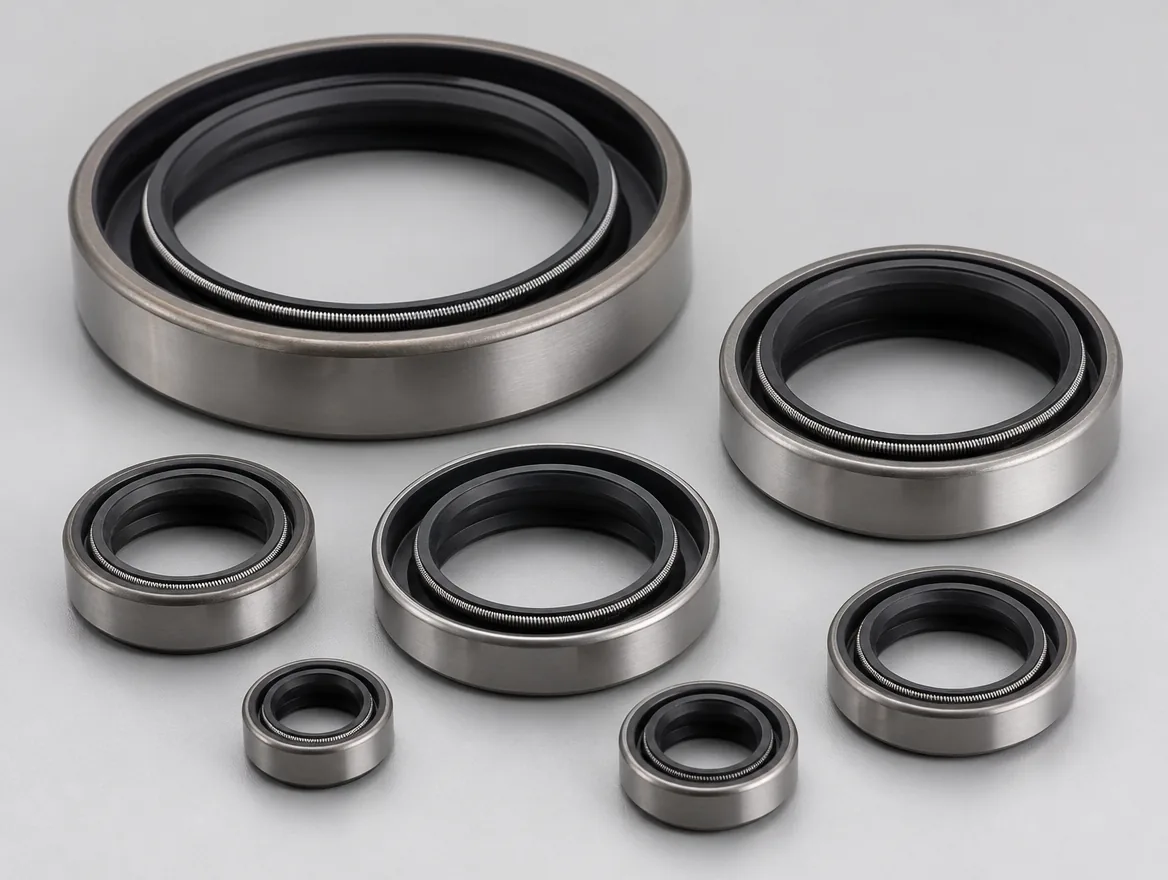 Rotary shaft seals
What they are
Industrial machinery oil seals are rotary shaft sealing components that sit in a housing bore and press a flexible lip against a rotating shaft. That lip holds lubricating oil or grease inside the bearing chamber and keeps dust, coolant, chips and moisture out.
In a machine tool, gearbox or industrial motor, the seal is a small part with a large influence on uptime. It maintains the lubricant film that bearings depend on, and it takes the wear that would otherwise reach the shaft surface. When the lip hardens, wears or loses contact, oil escapes, contamination enters, and a bearing that was running quietly begins to fail.
Selection matters as much as the part itself. A seal that matches the shaft diameter can still fail early if the compound is wrong for the lubricant, if the lip cannot handle the shaft speed, or if the housing bore and seal width are not a correct fit. For CNC machines and precision machine tools, these details are checked against the application rather than assumed from a catalogue number.
Product features
Every point below depends on the material and lip design selected for the machine. These are the characteristics our oil seals are specified against, not blanket claims that apply to every seal in every application.
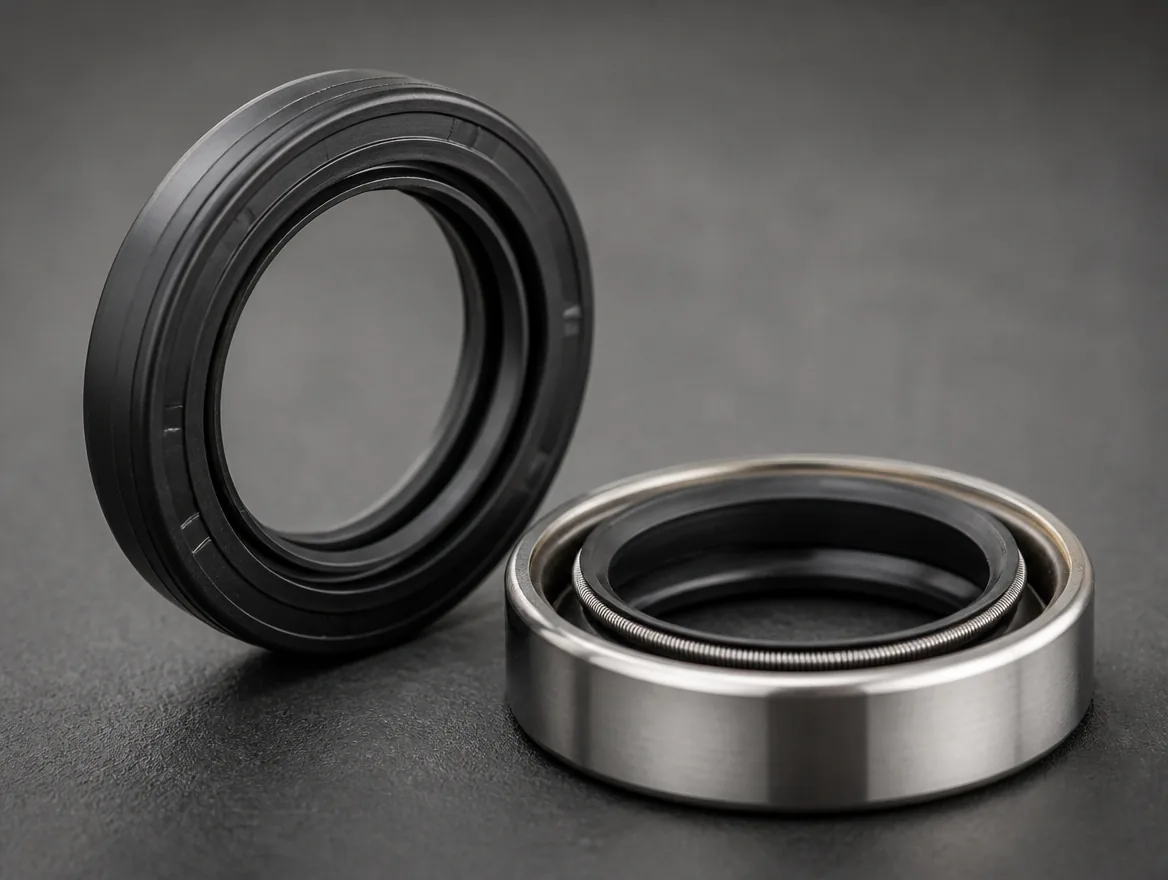
A shaped sealing lip and garter spring maintain contact with the shaft so the lubricant film stays in the housing. The lip geometry is chosen for the shaft diameter and the oil level or splash condition it works in.
Dust lips and double-lip designs help exclude grit, coolant mist and fine chips from the bearing chamber. On machine tools working with flood coolant, the outer lip often does as much work as the main sealing lip.
Compound hardness, lip profile and spring load are matched to the duty so the lip wears gradually rather than scuffing. Shaft surface finish and alignment still decide much of the service life.
Material is selected against the continuous operating temperature of the housing, not a short peak. NBR, FKM, silicone and PTFE each suit different temperature ranges and must also suit the lubricant.
The spring-loaded lip follows minor shaft runout, thermal growth and normal misalignment while keeping radial load low. Radial shaft seals are designed for rotating service, not for holding a pressure difference.
NBR, FKM, silicone, EPDM and PTFE options cover mineral oils, greases, water-based coolants and selected chemical duties. The correct grade is confirmed against the actual working medium.
Shaft diameter, housing bore and width are confirmed before production. A correct outer diameter holds the seal in the bore without spinning, and the right width seats it squarely in the housing.
Single lip, double lip, rubber-covered, metal-cased and special profiles are selected to suit the housing, the contamination level and the installation method — not applied as a single universal part.
Where they work
Oil seals for industrial machinery are used wherever a rotating shaft passes through a lubricated housing. The list below covers the machine types we are most often asked about, with the sealing duty each one presents.
01
Seals sit at spindle housings, ballscrew ends and coolant-facing shafts. Fine chips and flood coolant make the outer lip as important as oil retention.
02
Headstock spindles, feed gearboxes and tailstock quills rely on seals to keep gear oil in and cutting fluid out of the bearing housing.
03
Spindle and arbor drives run at moderate to high speed. The seal must hold lubricant without generating excess lip heat at the shaft surface.
04
Abrasive dust and coolant are constant companions. Double-lip and protected lip designs help keep grinding grit away from precision bearings.
05
Spindle assemblies and gear housings use seals to retain lubricant where vibration and intermittent loading are part of normal operation.
06
Input, output and shaft-extension seals hold gear oil at the shaft exit. Oil level, splash conditions and housing temperature decide the compound.
07
In hydraulic power packs and cylinder-mounted drives, oil seals handle lubricant retention at rotating shafts and keep site dust away from bearings.
08
Ballscrew support bearings, tool turret shafts and indexing units use compact seals where space is tight and dimensional accuracy is critical.
09
Seals at the drive-end and non-drive-end shafts retain bearing grease and stop dust being drawn in by cooling airflow.
10
Conveyor drives, mixers, printing units and packaging lines all depend on shaft seals to keep lubricant where the duty cycle expects it.
11
Shaft seals at pump and compressor housings retain lubricant and keep process dust or moisture away from the bearing chamber.
12
Send the machine type, shaft and bore dimensions or a photo of the old seal. We will help identify a suitable sealing option.
See the selection guideOne specification does not fit every machine. A seal that works in a gearbox shaft may be unsuitable for a grinding spindle running at several times the speed, in coolant mist, at a higher housing temperature. Application details are confirmed before a seal is suggested.
CNC & spindle sealing
A CNC machine oil seal has to do two jobs at once: keep spindle and gearbox lubricant inside the housing, and keep coolant, chips and dust out. The second job is what separates CNC duty from general industrial sealing.
Spindle assemblies run at high shaft speeds, so the lip generates friction heat continuously. At the same time, the seal face is exposed to water-mix coolant, fine cast iron or aluminium chips and compressed air blow-off. Housing temperatures may also rise as the machine works through a shift.
That combination means the seal is specified against speed, temperature and fluid together. A compound that suits the lubricant may still be the wrong choice if the coolant attacks it; a lip profile that holds oil well at low speed can run too hot at high speed.
Choosing the correct CNC machine oil seal means checking shaft speed, temperature, lubricant compatibility and installation dimensions together. A seal confirmed on diameter alone is only partly specified.
Precision machine sealing
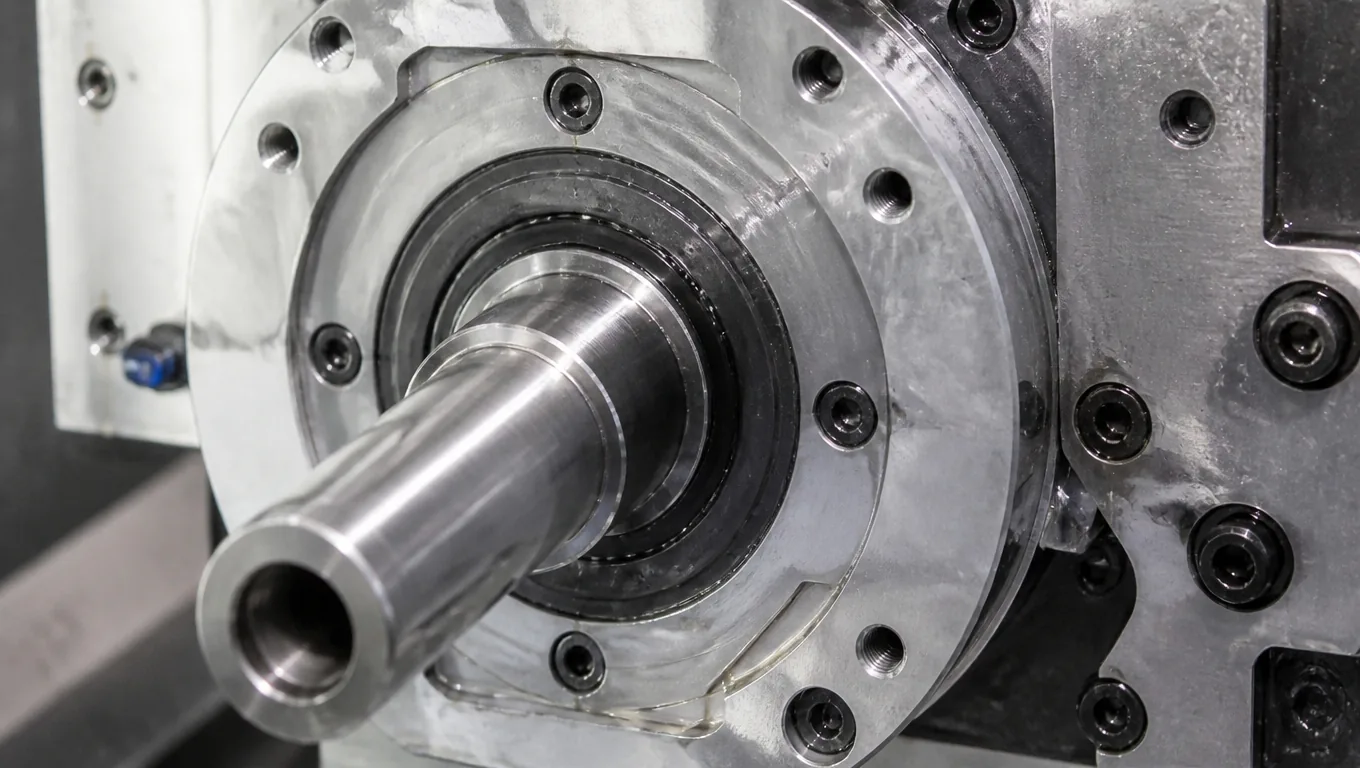
In machine tools, a leaking seal is not only a housekeeping problem. Oil that escapes the headstock can reach the work area, and coolant that enters the bearing housing can shorten spindle life. Machine tool oil seals are therefore selected for dimensional accuracy as much as for oil resistance.
Headstock spindle seals retain gear oil at the front and rear bearing journals, where continuous rotation and warm oil are normal.
Spindle and feed-drive seals hold lubricant at higher speeds, with the lip running close to the cutting zone.
Abrasive particles travel with coolant. Sealing here is judged on how well the lip excludes grit from precision bearings.
Spindle and gearbox seals work under vibration and intermittent load, where lip contact must stay stable.
Ballscrew ends, rotary tables and tool changers need compact seals that fit tight envelopes without altering shaft geometry.
Correct seal dimensions, a sound shaft surface, a clean housing bore and a compound suited to the oil and coolant.
Four checks carry most of the weight: the sealing dimensions, the condition of the shaft under the lip, the working environment around the seal, and the material choice. A worn groove on the shaft, a bore that has been reamed oversize or a seal pressed in at an angle will shorten life regardless of compound quality.
Material selection
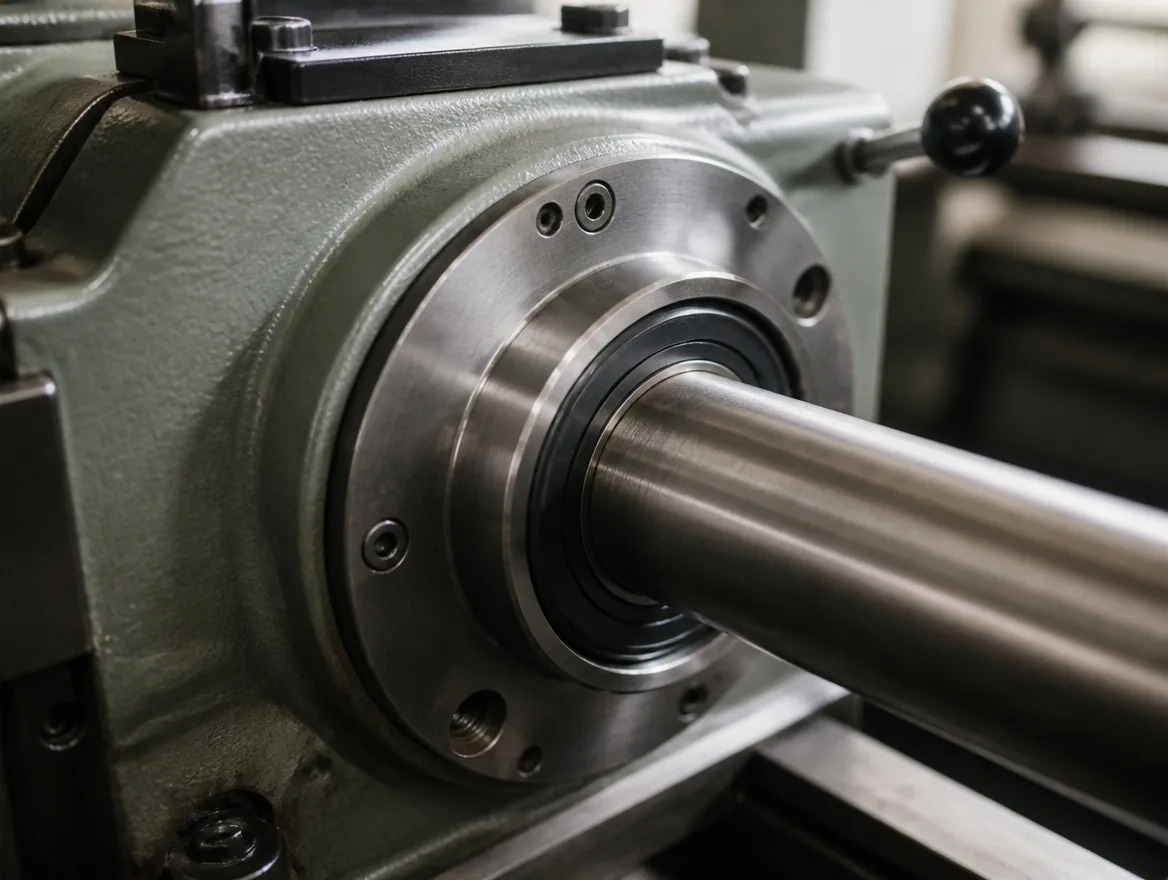
The compound decides how a seal behaves against oil, heat, coolant and chemicals. There is no single best material — only the material that suits the working environment of a particular machine.
| Material | Common industrial use | What to confirm before selection |
|---|---|---|
| NBR Nitrile Butadiene Rubber |
The standard choice for mineral oils, greases and general industrial lubrication in gearboxes, motors, pumps and machine tools. | Continuous temperature, oil additive package and exposure to coolant or solvents. NBR is a broad family, not a single compound. |
| FKM Fluoroelastomer |
Selected where improved heat resistance or resistance to certain oils, fuels and chemicals is needed. | The specific FKM grade and the actual fluid. Chemical resistance varies by grade, and some fluids still require a different material. |
| Silicone Rubber | Used where flexibility across a wide temperature range matters, and in some low-friction or dry-running adjacent duties. | Compatibility with the oil or grease being sealed. Silicone is not a universal oil seal compound and has limited mechanical strength. |
| EPDM Ethylene Propylene Diene Rubber |
Suitable for certain water, steam, weather and brake-fluid related applications where rubber flexibility is needed. | Generally not recommended for petroleum-based oils, greases or fuels. Confirm the medium before considering EPDM. |
| PTFE Polytetrafluoroethylene |
Used in selected low-friction, chemically resistant and demanding sealing applications, often without a garter spring. | Shaft finish, installation care and the pressure condition. PTFE behaves differently from rubber at the lip and needs accurate fitting. |
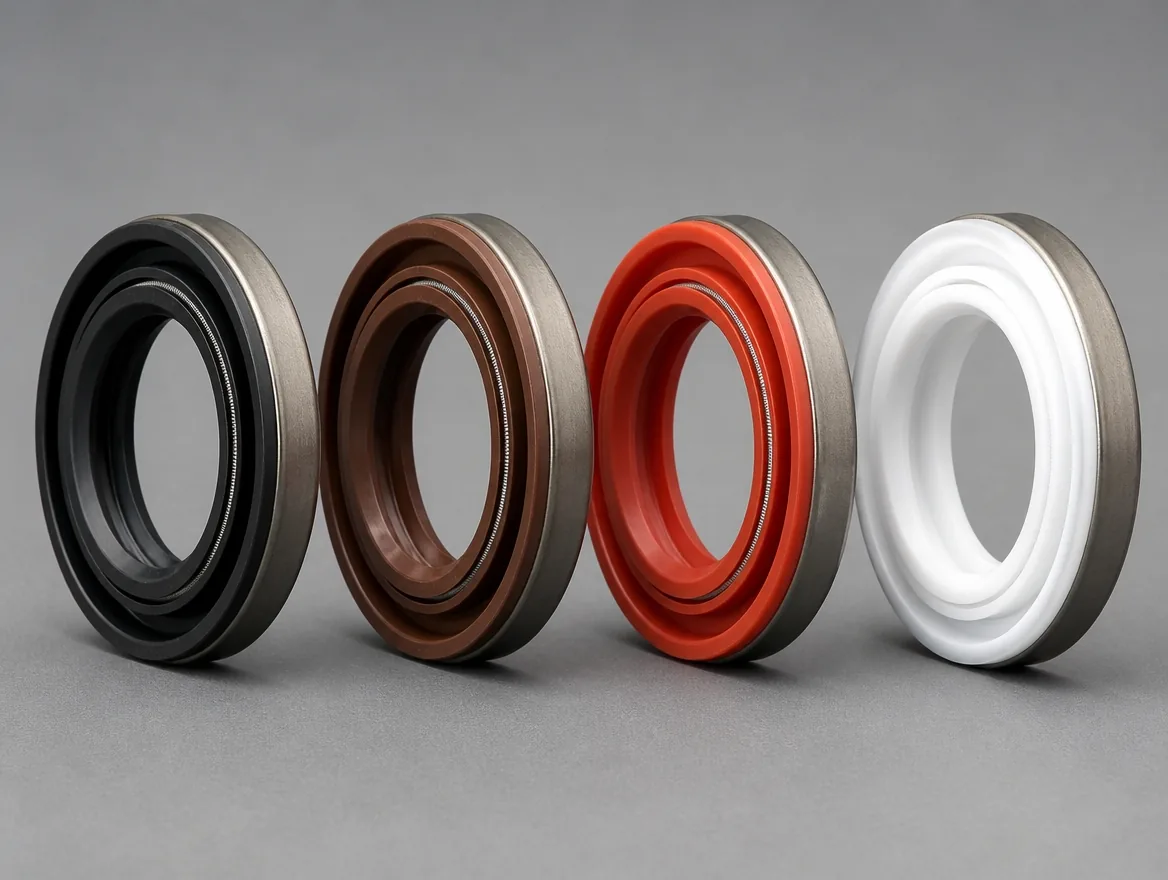
A seal may sit in hot gear oil on one machine and in coolant splash on another. The same dimensions can call for two different compounds. Temperature limits also vary between grades within one material family, so a general figure should never be treated as a specification.
Before recommending a compound, we ask what the machine does, which lubricant it uses, how hot the housing runs in continuous service and what the seal face is exposed to. Where the answer is uncertain, the machine manufacturer's specification is the safest reference.
Material data sheets describe a grade under test conditions. They do not guarantee performance in a specific machine without checking the fluid, temperature and duty together.
Design options
Design follows duty. These are the constructions most often specified for industrial machinery, described by how they are built and where they tend to be used.
One sealing lip with a garter spring, held in a metal case. The usual choice for clean lubricated housings running at moderate speed where contamination is limited.
A main lip for oil retention plus a secondary dust lip on the air side. Common on machine tools, agricultural equipment and any housing exposed to grit or coolant.
A garter spring behind the lip maintains steady radial pressure as the rubber relaxes with age. Helps hold contact on shafts with minor runout or thermal movement.
A rubber outer body moulded over the case. The flexible outside conforms to the bore, seals against minor housing imperfections and suits split housings or thinner wall sections.
A pressed steel case gives rigid dimensional support and a firm press fit in a machined bore. Widely used in gearboxes, motors and machine tool housings.
Application-specific lip shapes, multiple lips, flanged or extended cases. Considered where standard profiles cannot meet the space, speed or contamination condition.
Oil seals are lip-type rotary shaft seals. They are not mechanical face seals, O-rings, packings or hydraulic cylinder seal kits, and they should not be substituted for those products.
Technical reference
Use this table as a checklist for the information a supplier needs. Final specifications must be confirmed against the machine manufacturer's requirements and the actual operating conditions.
| Parameter | Details |
|---|---|
| Shaft Diameter | Application-specific. Measured at the sealing point, with any wear groove noted. |
| Housing Bore Diameter | Application-specific. Confirmed from the machined bore, not from the old seal's outer edge alone. |
| Seal Width | Application-specific. Must suit the housing depth and the space available for installation. |
| Seal Material | NBR, FKM, silicone, PTFE and other suitable materials, chosen for the fluid and temperature. |
| Operating Temperature | Depends on material and design. Continuous temperature is the deciding figure. |
| Shaft Speed | Depends on seal construction and application. High speed affects lip heat and material choice. |
| Working Medium | Oil, grease or other compatible fluids, including coolant or water exposure at the outer side. |
| Seal Design | Single lip, double lip, spring-loaded and others, selected for the housing and contamination level. |
No standard ratings are published here. Dimensions, tolerances and performance depend on the individual seal and the machine it serves. Please confirm the specification against the OEM requirement before ordering.
Selection guide
Work through these eight checks in order. Most incorrect seal choices trace back to one of them being skipped or estimated.
Measure across the shaft at the point where the lip will run, using a caliper. Check for a wear groove or step from the previous seal.
Measure the bore diameter and inspect the surface. A bore that is scored, oval or oversize will not hold the seal firmly.
The seal must sit square in the housing without standing proud or bottoming out. Housing depth sets the maximum width.
Use the continuous working temperature of the housing, not the highest short-term peak, when judging material suitability.
Higher surface speed increases lip friction and heat. Tell us the rpm and shaft diameter so the duty can be assessed.
Mineral oil, gear oil, grease, synthetic lubricant and water-mix coolant each affect rubber compounds differently.
If the air side sees grit, chips or coolant, a dust lip or double-lip design may be more suitable than a single lip.
With the previous answers established, choose the case type, lip configuration and compound that fit the housing and duty.
Before ordering replacement seals, check the OEM specification. Where the machine is under warranty, or the manual lists a seal part number, that specification should take priority over a generic size match.
Working with us
Ananta Venture is a Delhi-based manufacturer of rubber oil seals and V belts, supplying industrial, automotive, agricultural and heavy machinery applications. Our approach to oil seals is application-first: the machine and its working conditions are established before a product is suggested.
Oil seals are a core product line, not an add-on. Enquiries are handled by people who work with shaft sealing requirements every day.
We ask what the machine does, where it runs and what failed last time, then suggest a seal for that duty rather than the nearest catalogue item.
NBR, FKM, silicone, EPDM and PTFE compounds, with single-lip, double-lip, rubber-covered and metal-cased constructions to choose from.
Where a machine builder specifies dimensions, compound or packaging, those requirements are captured and confirmed before production.
Send a photo of the old seal, the housing or the machine plate. We help work back to the dimensions when markings are worn or missing.
From a single machine tool to a production line, seal requirements are matched to the equipment rather than a fixed one-size list.
Reachable by phone and WhatsApp during working hours, with plain-language answers on sizes, materials and suitability before you order.
Standard and non-standard sizes can both be discussed. Dimensions are confirmed against your drawing, sample or old seal before production.
Based in Burari, Delhi, and supplying industrial customers across Delhi NCR and the rest of India through one point of contact.
Common questions
Short, practical answers to the questions buyers and maintenance teams ask most often. If your application is not covered, send the details and we will respond to the specific case.
Industrial machinery oil seals are rotary shaft seals fitted in a housing bore, with a flexible lip that presses against a rotating shaft. They retain lubricating oil or grease inside the bearing chamber and keep dust, coolant and other contaminants out. They are also called radial shaft seals, rotary shaft seals or lip seals.
An industrial machine oil seal holds lubricant in the bearing housing so bearings stay lubricated, and blocks dust, grit, water and coolant from entering. In doing so it reduces oil loss, protects the shaft and bearing surfaces from wear, and helps avoid unplanned breakdowns caused by a dry or contaminated bearing.
They are used wherever a shaft passes through a housing that contains oil or grease: CNC machining centres, lathes, milling and grinding machines, drilling machines, gearboxes, hydraulic equipment, industrial motors, pumps, compressors and general manufacturing machinery.
The basic construction is the same, but a seal for a CNC machine is specified against higher shaft speeds, tighter dimensional tolerance and exposure to coolant and fine chips. That usually means a different lip profile, spring load, shaft surface finish requirement and compound than a general-purpose seal of the same diameter.
NBR is the common choice for mineral oils and general industrial duty. FKM is selected where heat or chemical resistance is the deciding factor. Silicone suits some high-temperature, low-friction duties but must be checked against the oil. EPDM is used for water, steam and weather exposure rather than petroleum oils, and PTFE appears in selected low-friction or chemically aggressive applications. The right compound depends on the actual fluid, continuous temperature and duty cycle.
Start with the shaft diameter, housing bore diameter and seal width, then confirm the lubricant, continuous operating temperature, shaft speed, shaft surface finish and the level of dust or coolant exposure. The seal design follows from those answers. Where a machine is under warranty or the OEM manual is available, its specified seal should be used as the reference.
That depends on the compound, the grade and the design, not on the seal type alone. NBR, FKM, silicone and PTFE each behave differently, and continuous temperature matters more than short peaks. Share the working temperature range with your enquiry so a suitable material can be suggested for that duty.
Measure the shaft diameter, the housing bore and the seal width with a caliper, and note any markings on the old seal. A photograph of the seal, the housing and the shaft, or the machine make and model, also helps. Where the dimensions are worn or unclear, sending the old seal as a sample is the most reliable route.
We need the shaft diameter, housing bore, seal width or housing depth, the fluid being sealed, the continuous operating temperature, the shaft speed and the environment the machine works in. Details of the lip design, any pressure condition and the quantity required help confirm feasibility.
There is no fixed interval that applies to every machine. Replacement is normally driven by the OEM maintenance schedule, visible weeping at the seal, lubricant loss, contamination of the oil, or a seal that has hardened, cracked or worn its lip. Seals are also replaced as a matter of course during bearing or spindle overhauls.
Talk to our team
Find suitable oil sealing solutions for CNC machines, machine tools and industrial equipment. Contact AnantaVenture to discuss your application requirements and identify an appropriate sealing solution.