Oil Seals · Rotary Shaft Sealing

Rotary Shaft Oil Seals

Rotary shaft oil seals close the gap where a rotating shaft passes through a housing bore — holding lubricating oil or grease in and keeping dust, moisture and grit out of the bearing chamber. Ananta Venture supplies shaft oil seals for industrial machinery, gearboxes, electric motors, pumps and rotating equipment, matched to your shaft, bore and operating conditions.

  • Single lip, double lip, spring-loaded, rubber-covered and metal-cased designs
  • Sizes confirmed against your shaft diameter, housing bore and width
  • Standard and application-specific enquiries — drawings and samples welcome
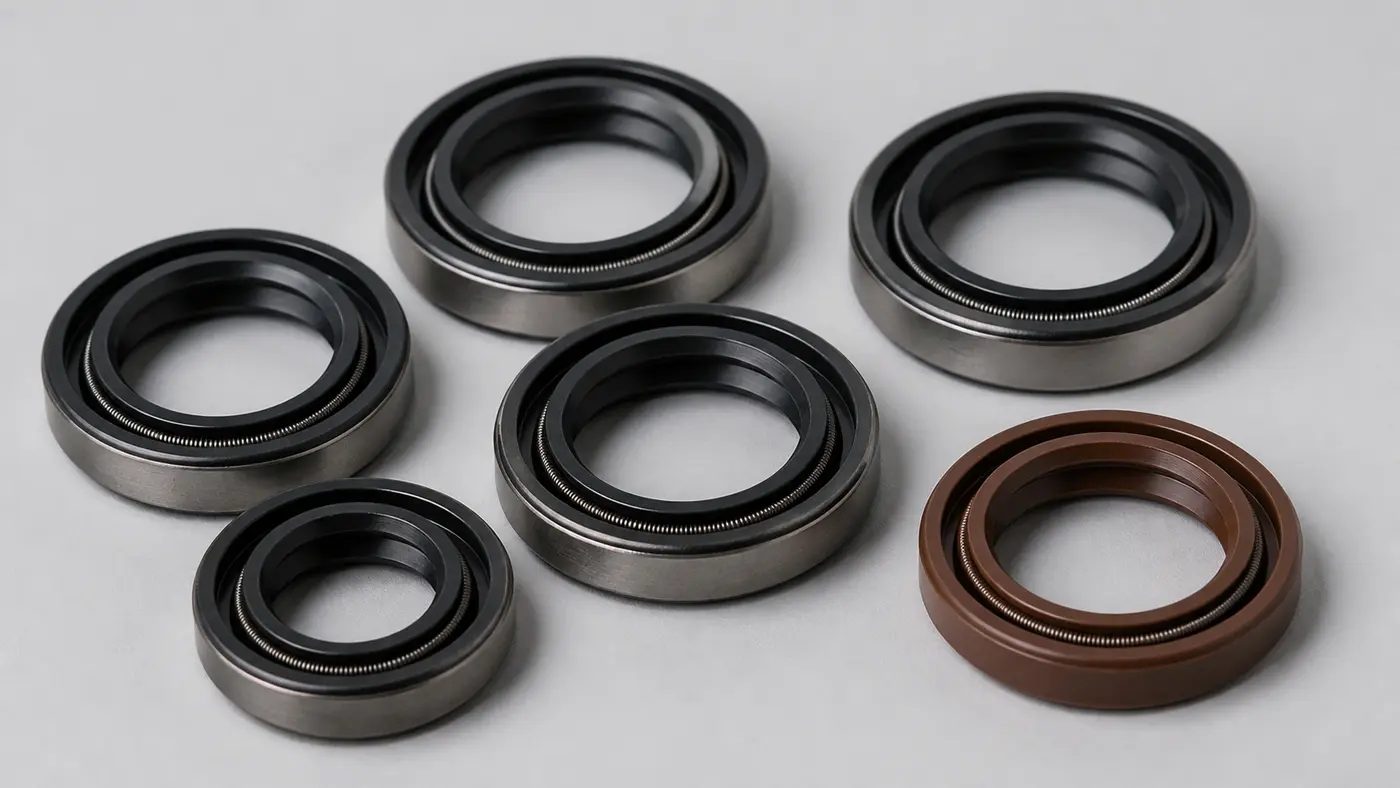
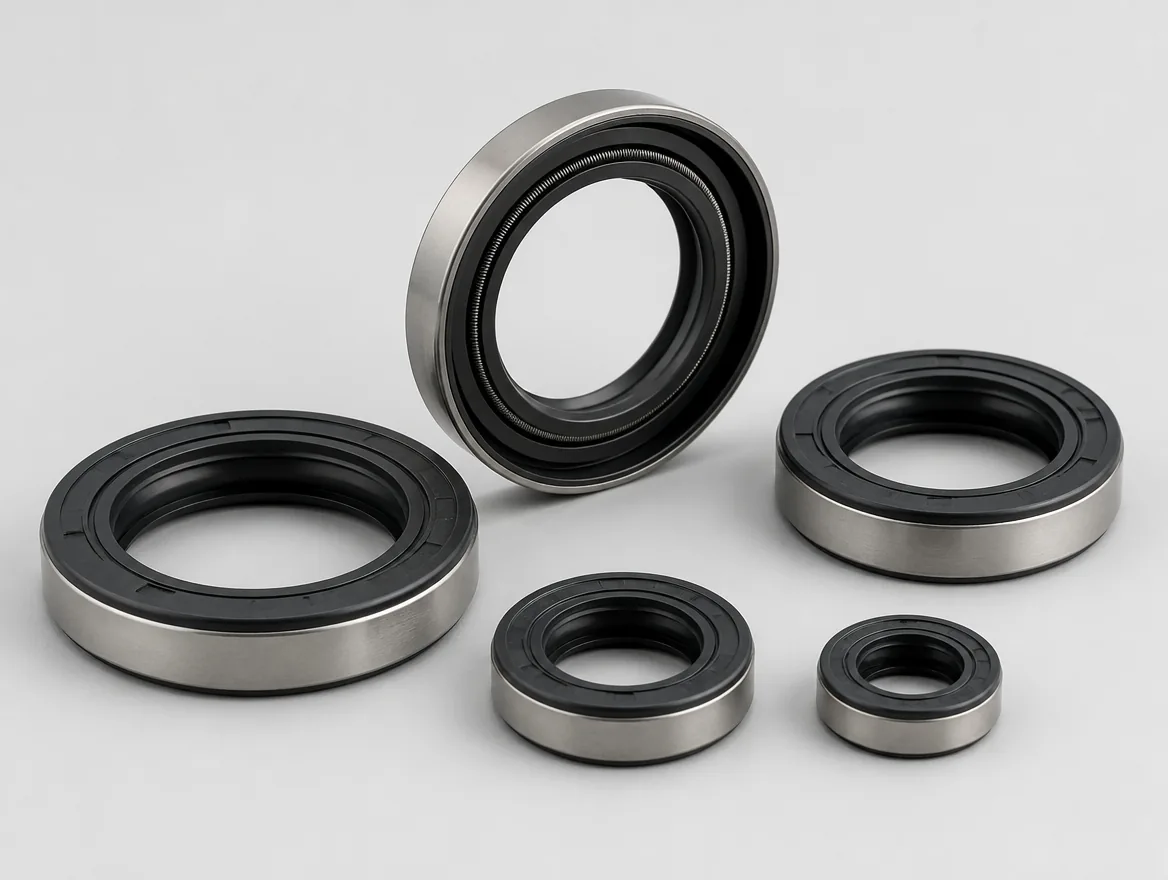
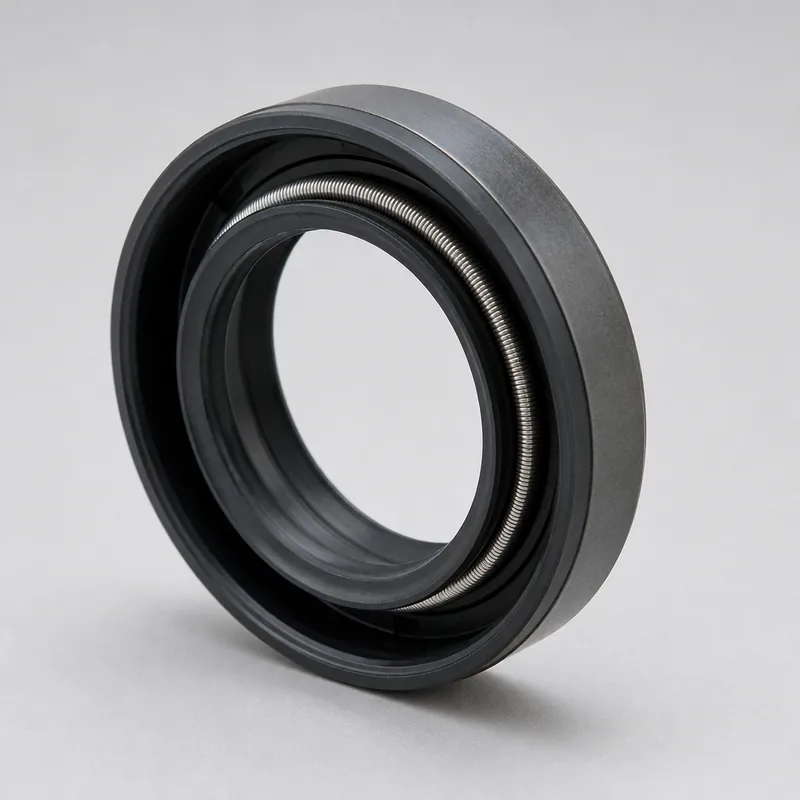
Rotary shaft oil seals with rubber sealing lips, metal cases and garter springs arranged on a studio surface
Rotary shaft oil seals — rubber sealing lip, metal case and garter spring. Illustrative image, not a photograph of Ananta Venture stock.
Delhi-based manufacturerOil seals and V belts from Burari, Delhi NCR
Made to requirementSeals matched to your dimensions and duty
Specification supportHelp with sizes, materials and lip options

The basics

What Are Rotary Shaft Oil Seals?

A rotary shaft oil seal — also called a radial shaft seal or radial lip seal — is the ring-shaped component that closes the point where a rotating shaft leaves a lubricated housing. Its flexible sealing lip runs lightly against the turning shaft, while its outer diameter sits firmly in the housing bore. That simple arrangement performs two jobs at once, and machines depend on both.

The first job is lubricant retention. Bearings, gears and shafts inside a gearbox, motor or pump chamber stay healthy only while they stay fed with oil or grease. The seal holds that lubricant where it belongs, so oil levels stay stable between service intervals instead of weeping away onto floors and machine frames.

The second job is contaminant exclusion. Dust, water, crop residue and metal particles in the wrong place act like grinding paste on bearings and journals. By closing the shaft exit, an oil seal for rotating shafts keeps the abrasive world outside the housing — which matters most on farm, site and factory machinery that works in dirty air.

Because the lip runs directly on the shaft, selection matters more than the part's small size suggests. The wrong size, an incompatible elastomer or a worn shaft surface can shorten sealing life well before its time. Matching dimensions, material and lip design to the actual duty is what keeps a machine dry, quiet and predictable between maintenance stops.

  • Retains lubricant at the shaft–housing interface while the shaft turns
  • Limits ingress of dust, water and process contamination
  • Selected by shaft diameter, bore, width, speed, temperature and lubricant
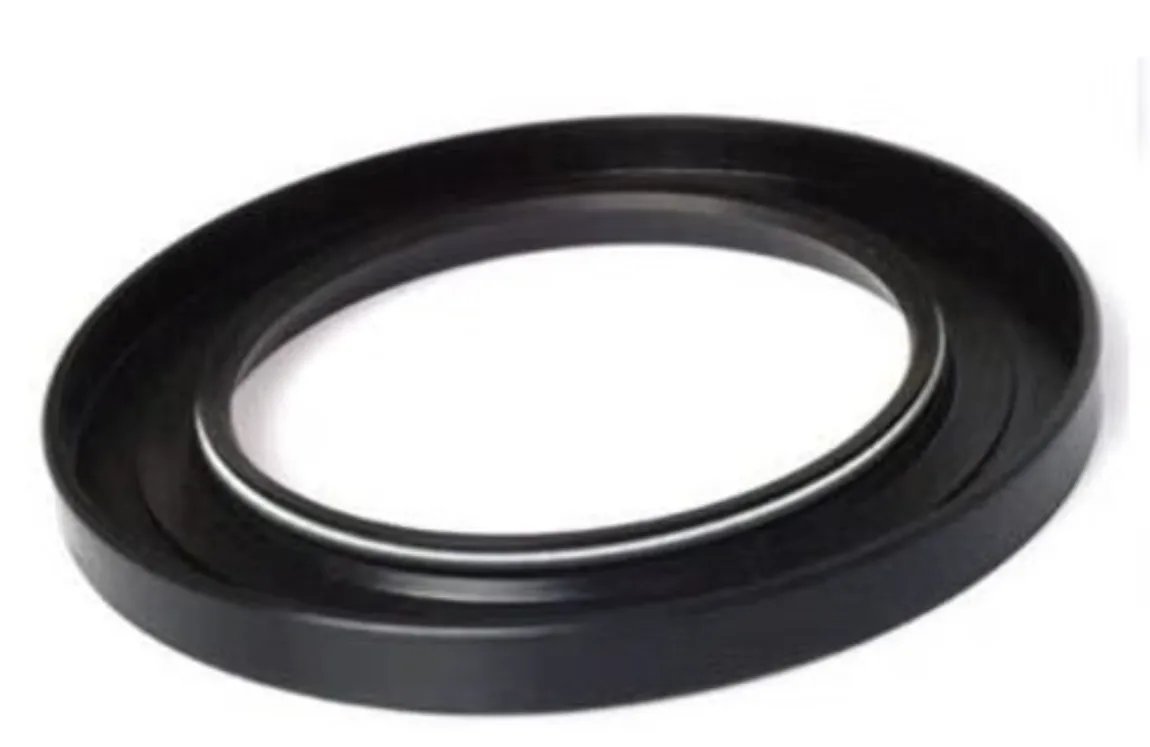
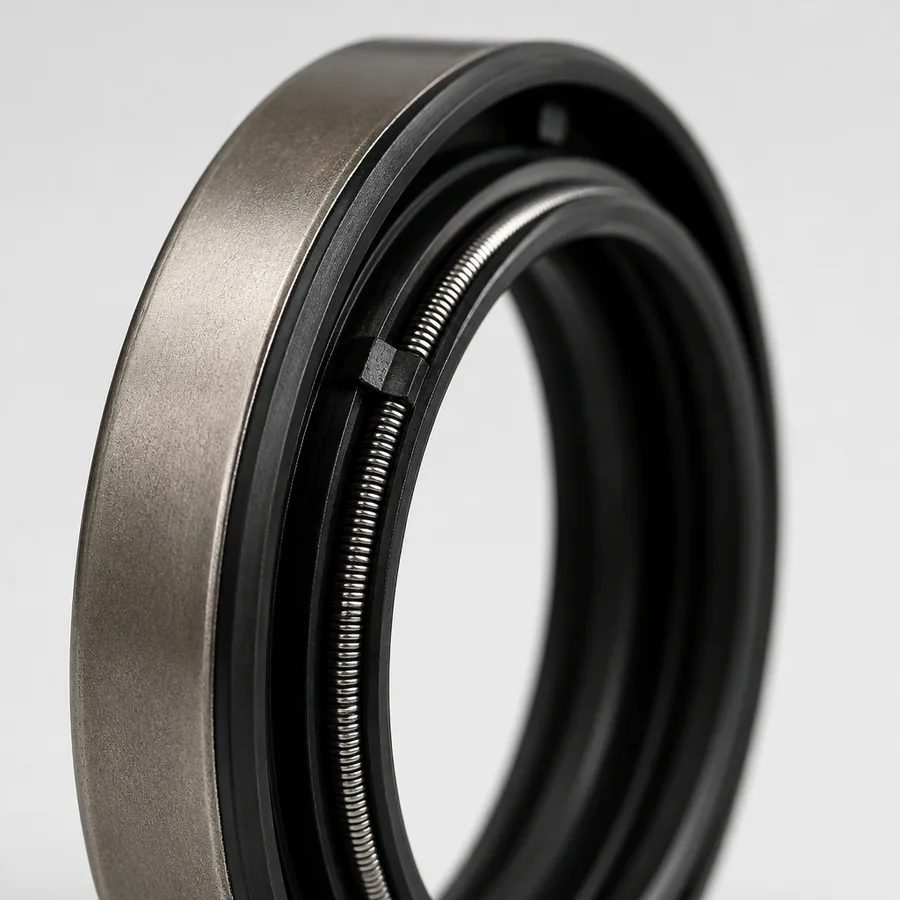
Close-up of a rotary shaft oil seal showing the moulded sealing lip, garter spring and metal case
Close-up of a spring-loaded radial shaft seal — the sealing lip, garter spring and case are visible. Illustrative image.

Product overview

Construction of a Rotary Shaft Oil Seal

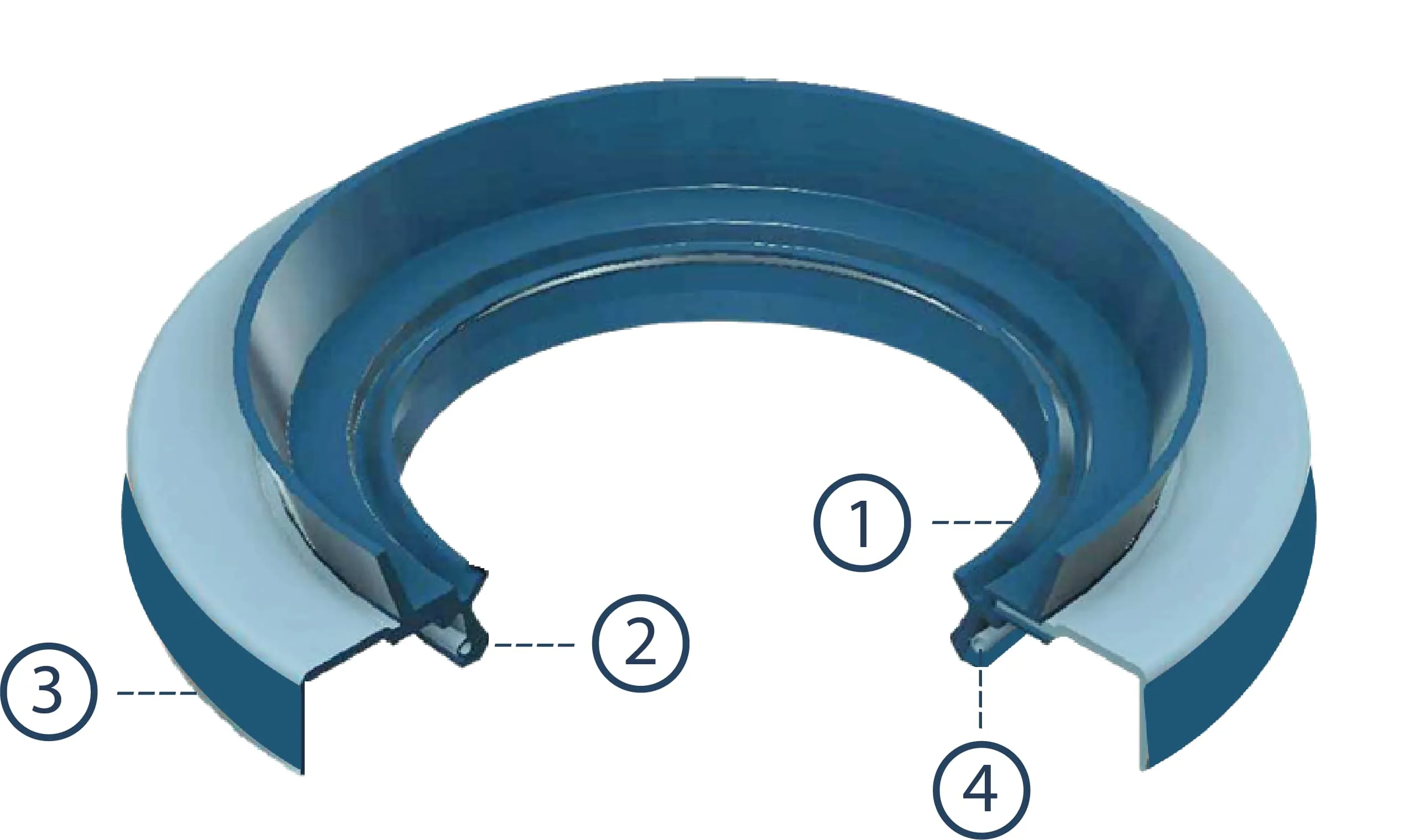
Most shaft oil seals share the same working anatomy, even though the exact construction varies depending on the seal design and the application. Understanding each element makes sizing, material and lip conversations with a supplier far easier.

01Sealing lip

The flexible inner edge that contacts the rotating shaft. Its profile, contact width and radial load determine how well the seal retains lubricant at operating speed.

02Garter spring

A small coil spring seated behind the lip that maintains radial pressure as the elastomer relaxes with age and heat. Many, but not all, rotary shaft seal designs use one.

03Elastomer body

The rubber compound — nitrile, FKM, silicone or another elastomer — that forms the lip and provides the static seal between the seal's outer face and the housing.

04Metal reinforcement

Where the design calls for it, a steel case gives the seal rigidity, holds it squarely in the bore and anchors the rubber body. Some designs are fully rubber-covered instead.

05Shaft contact area

The band where lip meets shaft. Surface finish, hardness and runout here decide how the contact film behaves — which is why shaft condition matters as much as seal size.

06Housing installation area

The bore and shoulder the seal presses into. Bore diameter, depth and squareness set the static seal and keep the lip aligned square to the shaft axis.

Construction is not identical across every seal. Some designs rely on the elastomer alone without a spring, some are fully rubber-covered, and some add dust lips or other features — the actual construction should be confirmed against the seal being replaced or the drawing for the application.

Features & benefits

Key Features and Benefits of Our Shaft Oil Seals

A shaft oil seal is a small, low-cost part with an outsized effect on machine reliability. These are the jobs it performs and why each one matters on a working machine.

Effective lubricant retention

Holds oil and grease in the housing so bearings and gears stay fed between service intervals — and floors stay dry.

Protection against dust and contaminants

Keeps dust, moisture and abrasive particles out of the bearing chamber — the difference on farm, mine and site machinery.

Reliable sealing performance

A correctly selected lip, spring and compound combination holds steady contact on the shaft through continuous rotation.

Reduced lubricant leakage

Less oil loss means cleaner machines, lower top-up costs and a smaller risk of a starved bearing failing mid-shift.

Support for rotating machinery

Built for continuous rotation on motors, gearboxes, pumps and drive shafts — the everyday workhorses of industry.

Multiple material and design options

NBR, FKM and other elastomers, single or double lip, metal-cased or rubber-covered — options matched to the duty.

Application-specific customization

Dimensions, compounds and lip configurations can be discussed against drawings, samples or application details.

Compatibility with suitable equipment

Selected for the machine they serve — from a workshop motor to a crusher gearbox — not sold as a one-size guess.

Product categories

Types of Rotary Shaft Oil Seals

The configurations below describe the shaft seal designs commonly used across rotating machinery. Suitability for a specific machine is confirmed against the shaft and bore dimensions, lubricant, temperature and speed of that application.

Images are illustrative — actual construction varies by design and application.

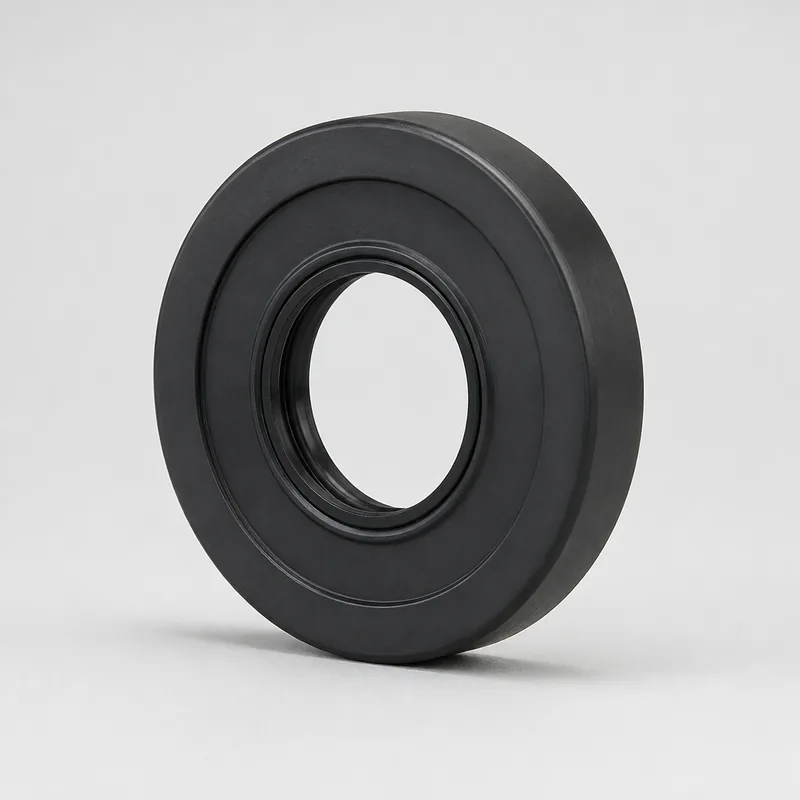
01Single lip rotary shaft oil seal with exposed metal case and moulded sealing lip

Single Lip Rotary Shaft Oil Seals

The most common rotary shaft seal configuration: one moulded sealing lip, usually assisted by a garter spring, running on the shaft to retain lubricant. Compact, simple to fit and the usual starting point for clean, moderate-duty applications.

Typical applications: electric motors, gearboxes, general industrial machinery and equipment running in relatively clean conditions.
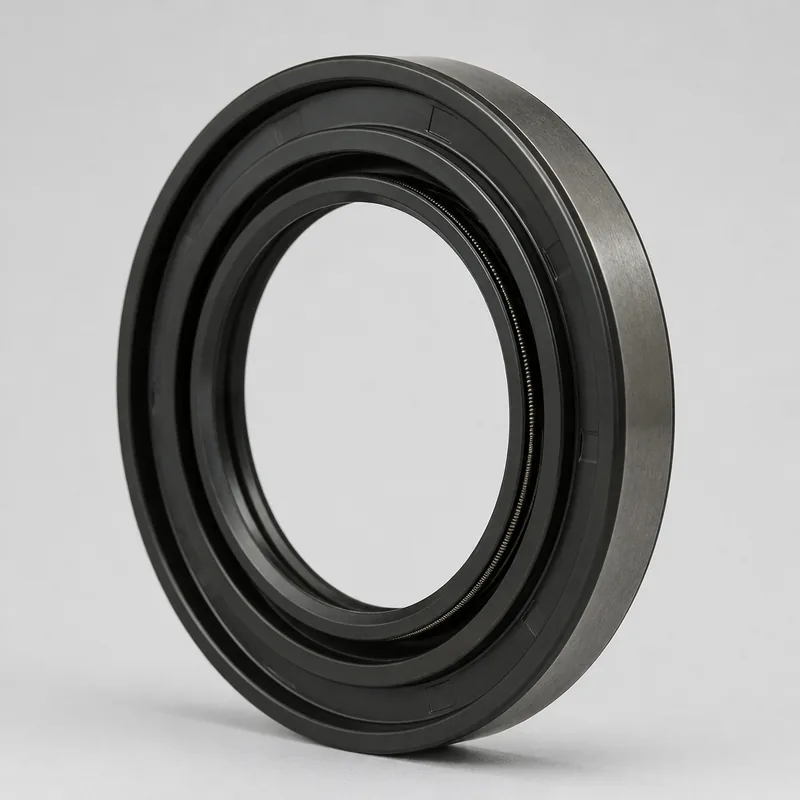
02Double lip rotary shaft oil seal showing main sealing lip and secondary dust lip

Double Lip Rotary Shaft Oil Seals

A primary sealing lip plus a secondary dust lip ahead of it. The extra lip helps where grit, splash or wash-down water reaches the shaft exit. The dust lip excludes contaminants — it is not a second pressure-sealing lip.

Typical applications: agricultural machinery, construction equipment, conveyors and machines working in dusty or wet surroundings.

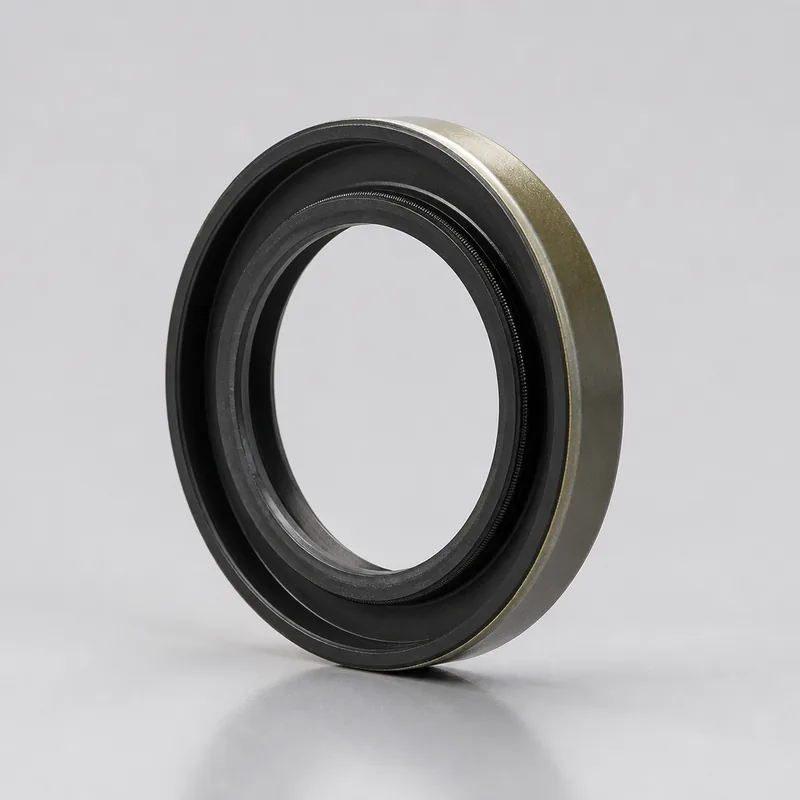
03Spring-loaded rotary shaft seal with stainless steel garter spring around the sealing lip

Spring-Loaded Rotary Shaft Seals

A garter spring keeps a consistent radial load on the lip as the elastomer takes a set over time and temperature. This maintains lip contact on the shaft through long duty cycles — the standard approach for most continuously rotating equipment.

Typical applications: pumps, electric motors, gearboxes, compressors and shafts that run for long hours without stops.

04Fully rubber-covered rotary shaft seal with complete black rubber outer casing

Rubber-Covered Rotary Shaft Seals

The outer case is fully covered in rubber, so the seal's outer diameter seats against the bore with a compliant, corrosion-free interface. This helps in housings with slight bore imperfections or where a metal case could corrode or squeal.

Typical applications: equipment with aluminium or treated housings, humid or corrosive environments, and machines exposed to wash-down.

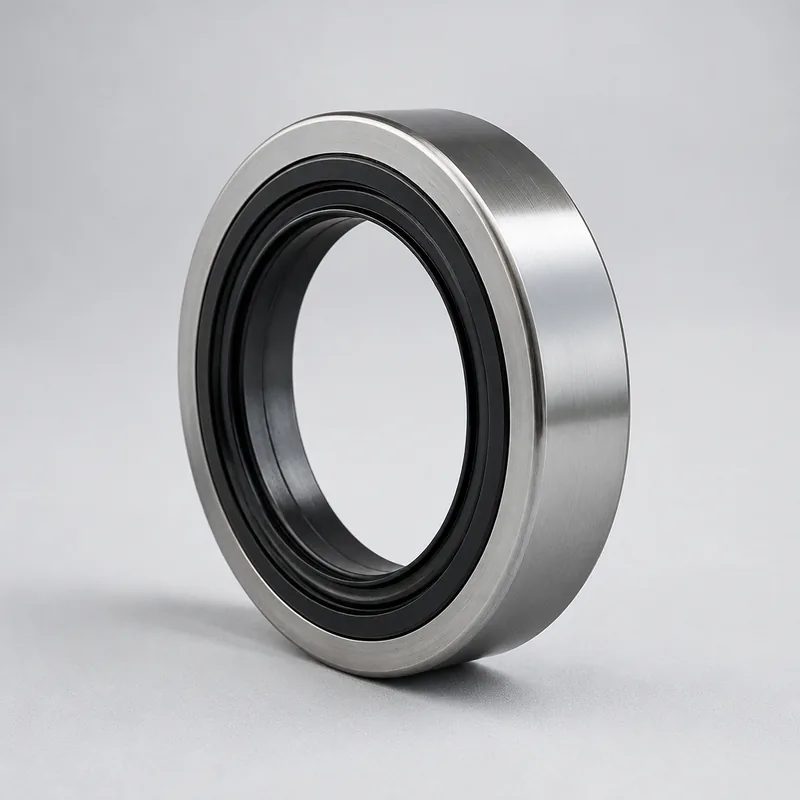
05Metal-cased rotary shaft seal with exposed polished steel outer shell

Metal-Cased Rotary Shaft Seals

An exposed steel case gives the seal a rigid, dimensionally precise outer diameter that presses squarely into the bore and holds its shape during fitting. Often chosen where housing bores are machined to close tolerances.

Typical applications: rigid housings, high-volume assemblies and installations where precise press-fit seating is preferred.

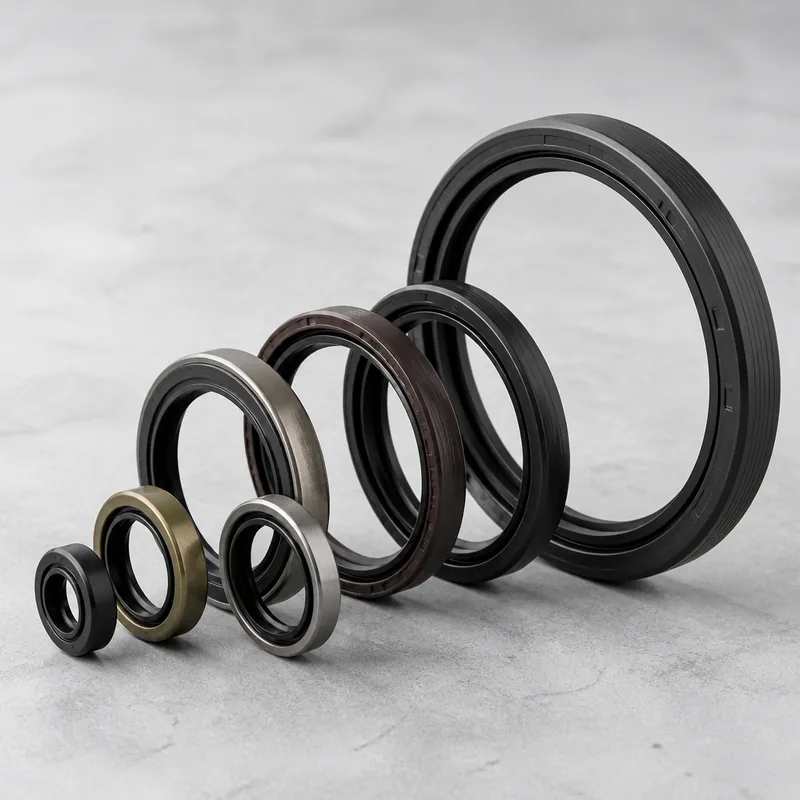
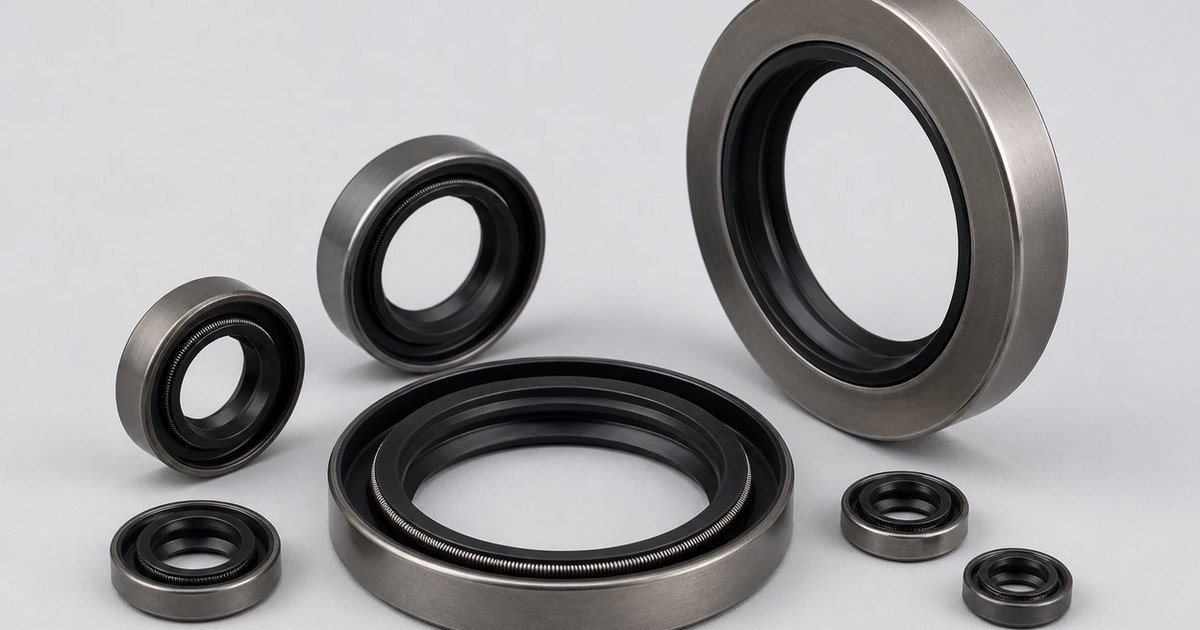
06Assortment of custom rotary shaft oil seals in different diameters and designs

Custom Rotary Shaft Oil Seals

When a standard catalogue size does not fit, dimensions, materials and lip configurations can be discussed against customer drawings, samples or application details — subject to confirmation. Share what the machine does and the sizes involved, and a suitable configuration can be worked out from there.

Typical applications: OEM equipment, maintenance replacements and non-standard shaft or bore sizes.

Material options

Materials Used in Rotary Shaft Oil Seals

The elastomer decides how a seal behaves against heat, oil and contamination. These are the compounds commonly specified for shaft sealing duties — final material selection depends on temperature, lubricant compatibility, operating speed and environmental conditions, and is confirmed against the application.

Nitrile Rubber NBR

The most widely used oil seal elastomer. Good resistance to mineral oils, greases and many general industrial fluids, with practical cost and fitting behaviour. A sensible starting point for moderate temperature duties on gearboxes, motors and machinery.

Fluoroelastomer FKM

Chosen where temperatures run higher or fluids are more aggressive than nitrile comfortably handles. Commonly specified for hot gear chambers, engine-adjacent locations and applications where oil additives or synthetic lubricants challenge standard compounds.

Silicone Rubber VMQ

Handles wide temperature extremes and keeps flexibility in cold conditions. Its mechanical wear resistance is lower than other compounds, so it suits lower-load, higher-temperature sealing duties rather than rough, abrasive locations.

Polyacrylate ACM

An oil-and-heat-resistant compound often used in automotive and gearbox applications with hot lubricating oil. Sits between NBR and FKM in fluid and temperature resistance, and is selected where NBR runs close to its limit.

Application-Specific Elastomers ON ENQUIRY

Other compounds — such as EPDM for non-mineral, glycol-based fluids — come into play for particular fluids and environments. Suitability is checked against the actual lubricant and duty before a material is recommended.

How the choice is made SELECTION BASIS

Continuous temperature, the additives in the lubricant, shaft speed and surface, and dust or moisture exposure all narrow the field. Describe the application honestly at enquiry stage — it is the fastest route to a compound that lasts.

Technical information

Technical Specifications and Customization

Shaft oil seals are not selected from a single specification sheet — they are confirmed from the machine they serve. The parameters below are what Ananta Venture works through with every enquiry. Where a value depends on your machine rather than a catalogue, it is confirmed against your drawing, sample or application details.

Selection parameters — values are application-specific and confirmed per enquiry
ParameterWhat you confirmWhy it matters
Inner diameter (ID)Shaft diameter at the sealing point, measured with a caliperSets the seal's inner dimension and lip contact on the shaft
Outer diameter (OD)Housing bore diameterSets the press-fit that holds the seal squarely in the housing
WidthAvailable housing width or shoulder depthDetermines the seal width that fits without fouling adjacent parts
Shaft surface conditionSurface finish, hardness and any wear grooves at the contact bandDecides how the lip and lubricant film behave in service
Operating temperatureContinuous temperature, plus peaks the location seesGoverns which elastomer compound will hold up over time
Rotational speedShaft speed at the sealing pointLip friction and heat build-up guide lip profile and material choice
Lubricant compatibilityOil or grease type, including additive packagesThe elastomer must be compatible with the fluid it lives in
Seal materialNBR, FKM, silicone, ACM or another suitable compoundConfirmed against temperature, fluid and duty
Lip configurationSingle lip or double lip (sealing lip plus dust lip)Balances lubricant retention against contamination exclusion
Spring configurationGarter-spring loaded or spring-free designMaintains radial lip load as the elastomer relaxes with age

Scroll the table sideways on smaller screens.

Custom sizes and configurations

Dimensions and configurations can be discussed based on customer drawings or application requirements, subject to confirmation. If you have the old seal in hand, its stamped markings, a sample or a photograph of the housing are often enough to get started — the team will confirm what can be supplied before anything is quoted.

Standard and non-standard sizes are handled the same way: the machine, the duty and the numbers are agreed first, so the seal that arrives fits the job it was chosen for.

Custom rotary shaft oil seals in various diameters and designs made to requirement

Where they work

Industrial Applications of Rotary Shaft Oil Seals

Wherever a rotating shaft exits a lubricated housing, there is a sealing job to do. Oil seals for rotating shafts are used across machinery that turns, drives, pumps, digs, harvests and manufactures — in conditions that punish the seal differently every time.

Industrial machinery

General-purpose sealing for driven equipment running oil or grease under steady conditions.

Electric motors

Bearing lubricant retention where the rotor shaft passes through the end shield.

Gearboxes & gear drives

Input and output shaft sealing that keeps gear oil in and grit out.

Pumps

Shaft sealing on water, process and agricultural pump sets in continuous duty.

Compressors

Crankcase and shaft sealing where oil loss is noticed the hard way.

Agricultural machinery

Tractors, rotavators and harvesters working in dust, mud and field moisture.

Automotive components

Engine, gearbox, axle and wheel hub locations where oil loss shows on the ground.

Construction equipment

Sealing that holds its lip under grit, shock loads and site conditions.

Manufacturing equipment

Production line machinery where unplanned stops cost the most.

Power transmission systems

Mechanical drives, pulley assemblies and rotating power transfer points.

The working relationship

Why Choose Ananta Venture for Rotary Shaft Oil Seals?

No slogans — just the way we prefer to work with every buyer, whether the requirement is one box of seals or a running supply for a production line.

Application-based product selection

We ask what the machine does, where it runs and what broke last time — then recommend from there, instead of selling whatever is on the shelf.

Practical technical assistance

Help identifying a failed seal, reading old markings or choosing between lip options — in plain language, from people who know machines.

Attention to dimensional requirements

Shaft, bore and width are confirmed before supply, because a tenth of a millimetre decides whether the seal fits the housing first time.

Seals and belts from one source

As a manufacturer of rubber oil seals and V belts, Ananta Venture covers both sides of a rotating machine — sealing and power transmission.

Responsive communication

Reachable on WhatsApp and phone during working hours, with replies that arrive in hours rather than days.

Delhi NCR base, supply across India

Based at West Sant Nagar, Burari, Delhi — serving workshops and plants across Delhi NCR and the rest of India.

Buyer's guide

How to Select the Right Rotary Shaft Oil Seal?

Eight factors decide whether a seal lasts one season or several. Work through them before you order — they are the same details our team will ask you for.

Shaft dimensions

Measure the shaft diameter at the sealing point with a caliper, not by eye — and check for wear grooves where the old lip ran.

Housing dimensions

The bore diameter and housing depth set the seal's outer diameter and width. A loose outer fit lets the seal spin; an oversize one will not enter.

Operating speed

Faster rotation builds lip friction and heat. Higher-speed shafts need lip profiles and materials matched to the rpm.

Temperature

Continuous temperature — not just peaks — decides which elastomer compound will keep its lip contact over time.

Lubricant type

Mineral oils, synthetic fluids and greases each swell different rubbers differently. The compound must suit the fluid it lives in.

Environmental conditions

Indoor cleanliness and outdoor dust ask different things of the lip. Dusty sites may call for a double-lip design that also excludes grit.

Shaft surface finish

The contact band needs the right surface condition to hold a lubricant film. A worn or scored shaft shortens the life of any new seal.

Sealing configuration

Single lip for clean duty, double lip for contamination, spring-loaded for continuous rotation — the duty picks the design.

Not sure about a value? Share your technical drawing, the old seal, or simply the machine name and application details when you request product information — the team will work the details out with you.

Common questions

Rotary Shaft Oil Seals: Frequently Asked Questions

Short answers to the questions buyers ask us most often about rotary shaft oil seals.

What are rotary shaft oil seals?

Rotary shaft oil seals are ring-shaped sealing components fitted where a rotating shaft passes through a housing bore. They retain lubricating oil or grease inside the housing, limit the entry of dust, moisture and other contaminants, and help protect the shaft and the bearings behind the seal. They are also known as radial shaft seals or radial lip seals.

How do rotary shaft oil seals work?

A flexible elastomer lip runs against the rotating shaft surface, held in light radial contact by the elasticity of the rubber and, in most designs, by a garter spring behind the lip. The aim is a controlled contact band with a thin film of lubricant between lip and shaft — so the seal retains oil without running dry — while the outer case seats firmly in the housing bore to block contamination.

What is the difference between rotary shaft seals and radial shaft seals?

The two terms describe the same family of components from different angles. "Radial" refers to the direction in which the lip seals — radially inward against the shaft — while "rotary" refers to the duty the seal performs on a rotating shaft. In practice, rotary shaft oil seals and radial shaft seals are used interchangeably for shaft lip seals.

Which materials are used in rotary shaft oil seals?

Commonly used elastomers include nitrile rubber (NBR) for general oil and grease duties, fluoroelastomer (FKM) where temperatures or fluids are more demanding, silicone (VMQ) for higher-temperature, lower-load applications, and polyacrylate (ACM) for hot oil environments. The right compound depends on temperature, lubricant compatibility, shaft speed and environmental conditions, and availability for a specific application is confirmed at the enquiry stage.

Where are rotary shaft oil seals commonly used?

They are used wherever a rotating shaft exits a lubricated housing: electric motors, gearboxes and gear drives, pumps, compressors, agricultural machinery, automotive components, construction equipment, manufacturing equipment and mechanical power transmission systems.

How do I select the correct rotary shaft oil seal size?

Start with three dimensions: the shaft diameter, the housing bore diameter and the available seal width. Then consider shaft surface condition, operating temperature, rotational speed, lubricant type and environmental exposure. Sharing these details — or the old seal, a sample or a drawing — with Ananta Venture allows the team to confirm a suitable configuration.

Can rotary shaft oil seals be customized?

Yes. Dimensions, materials and lip configurations can be discussed based on customer drawings, samples or application requirements, subject to confirmation. Non-standard sizes and application-specific designs are handled the same way as standard requirements — by confirming the duty before recommending a seal.

How can I source rotary shaft oil seals for industrial applications?

Contact Ananta Venture with your shaft, bore and width dimensions, the machine or application details, and the quantity required. You can reach the team by phone or WhatsApp at +91 9211305366, by email, or through the contact page. Enquiries with drawings or samples are welcome, and the team responds with product options and quotation support.

Get product details

Looking for Reliable Rotary Shaft Oil Seals for Your Industrial Applications?

Industrial buyers, distributors, OEMs and maintenance professionals — send Ananta Venture your shaft, bore and width dimensions, the machine details or a drawing, and the team will come back with suitable configurations, product options and quotation support.

+91 9211305366 [email protected] West Sant Nagar, Burari, Delhi, India