Oil leakage control
A close-fitting, spring-loaded lip holds the lubricant or hydraulic fluid inside the housing and keeps the working area clean.

Oil seals for the point where a rotating shaft leaves an oil-filled or pressurised housing — holding lubricant in, keeping dust and grit out, and holding the lip against the conditions the machine actually runs in. 70 outside-diameter bands from 10 mm to 510 mm, with indicative per-piece rates and seal type confirmed against your application.
For hydraulic pumps, pump shafts, motors, gearboxes and the drive assemblies of construction, agricultural and industrial machinery.
Listed rates are indicative per piece, exclusive of GST and freight, and apply by outside-diameter band. Pressure capability is confirmed per seal design and application — a catalogue size alone does not make a seal pressure-rated.
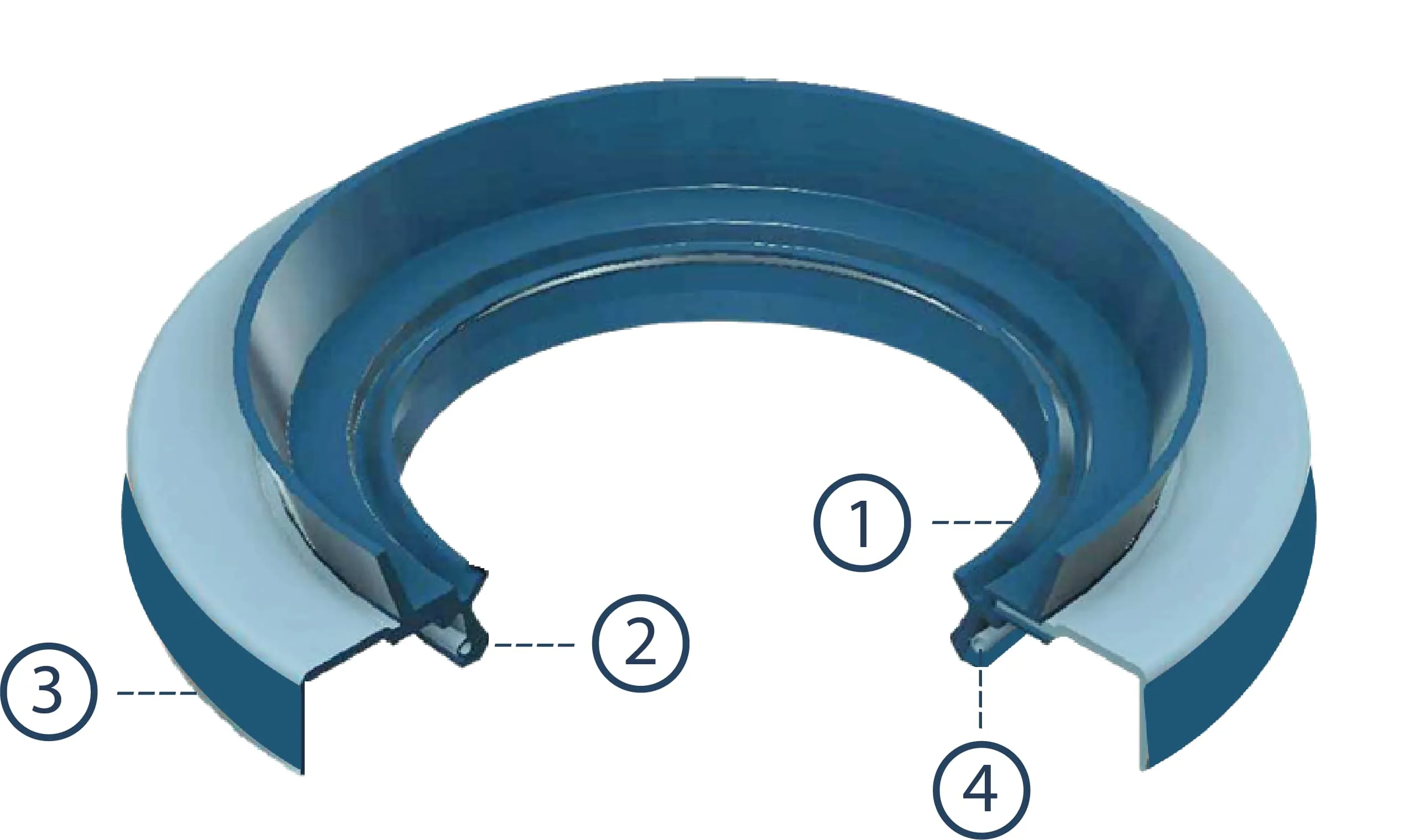
In a hydraulic pump, motor or power unit, the shaft has to leave the housing without taking the oil with it. That is the job of the rotary shaft seal: a flexible lip loaded against the shaft, held in a rigid case that presses into the housing bore. The lip runs on a thin film of oil rather than on dry metal, and that film is what keeps friction, heat and wear within limits.
What separates a seal that survives from one that weeps within weeks is rarely the headline size. It is whether the compound suits the hydraulic fluid, whether the lip geometry suits the pressure the housing sees, whether the shaft surface and runout are within what the lip can follow, and whether the seal was fitted square and to the right depth. A tenth of a millimetre and the wrong compound both decide service life.
Ananta Venture manufactures rubber oil seals at Burari, Delhi, and supplies plants, dealers and OEMs across Delhi NCR and the rest of India. This page sets out the size bands and published rates, the seal types we make, the materials we work in, and the questions to settle before you order a seal for a hydraulic application.
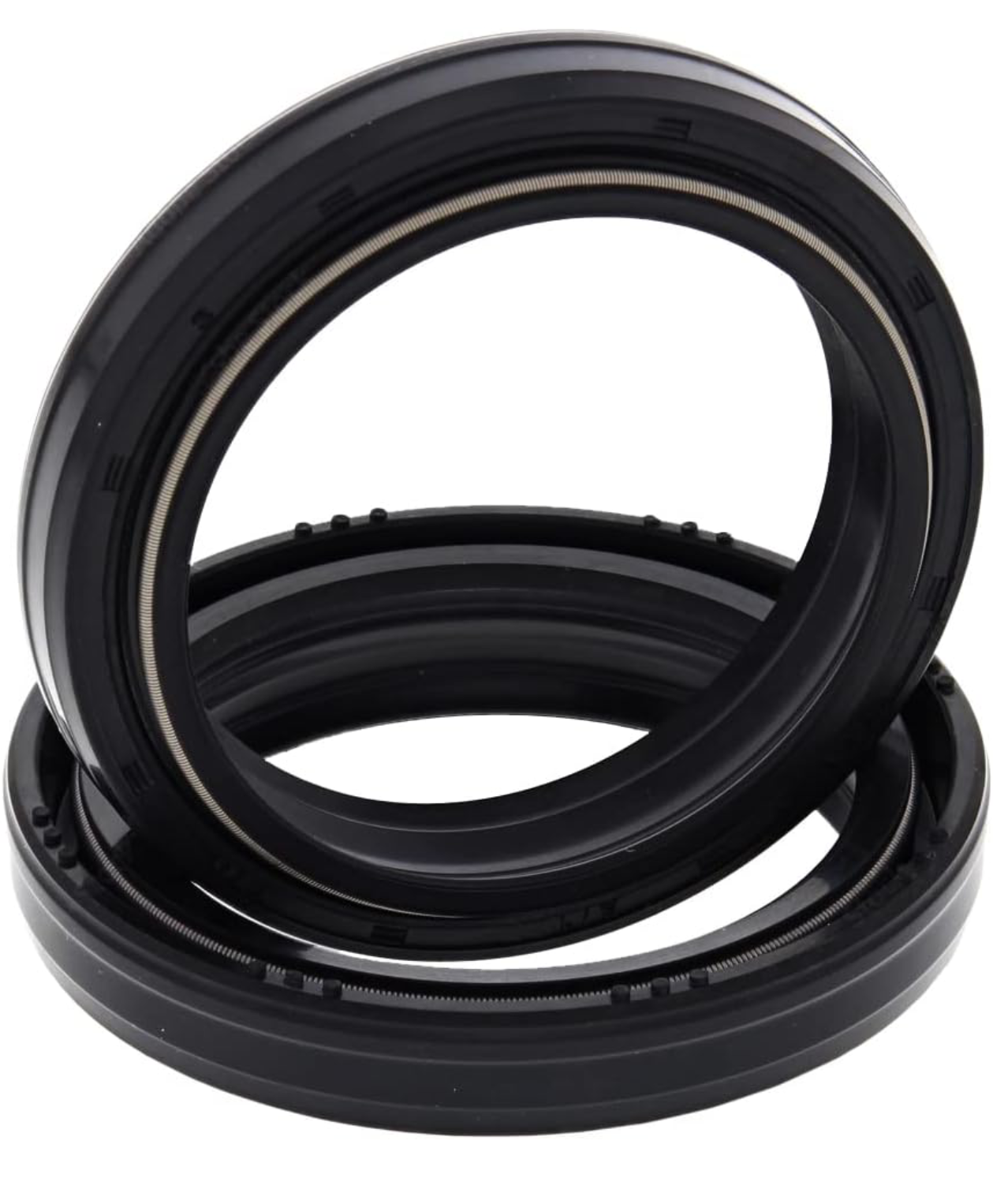 Hydraulic shaft seal · double lip
High pressure hydraulic oil seals are radial shaft seals used where a rotating shaft passes through a housing that holds oil under pressure, or where the seal has to work close to a pressurised chamber. In construction they are a rubber lip bonded to a metal case, usually with a garter spring around the lip to keep contact pressure even around the shaft.
Their function in a hydraulic system is straightforward and critical: retain the hydraulic fluid inside the housing, exclude dust, water and abrasive particles from the bearing side, and protect the shaft and bearing from the wear that follows when either job fails. A leaking shaft seal drops oil level, starves the bearing, and turns a low-cost part into a rebuild.
The lip does not squeeze the shaft dry. Under rotation it rides a microscopic oil film, and the spring and lip geometry keep that film stable — thick enough to lubricate, thin enough not to leak. Pressure acting on the lip changes that balance, which is why lip profile, compound hardness and case support matter more as pressure rises.
Four operating conditions decide whether the design holds: pressure across the seal, temperature in the housing, the movement of the shaft (speed, runout, eccentricity) and the fluid itself, because different hydraulic oils swell, soften or harden different rubbers.
Practical benefits, stated the way they actually behave in service — no zero-leak promises, because no lip seal can make one.
A close-fitting, spring-loaded lip holds the lubricant or hydraulic fluid inside the housing and keeps the working area clean.
Lip profile, spring tension and case stiffness are discussed against the pressure your housing actually sees — not assumed.
Abrasion and lip wear depend on the rubber chosen and the shaft finish. NBR, FKM and polyurethane behave very differently in grit.
Mineral hydraulic oil, biodegradable fluid, water-glycol or ester-based fluid each ask for a different compound decision.
Seventy published OD bands plus made-to-requirement sizes, so a replacement does not have to be a compromise fit.
Correct fit and compound reduce unplanned stoppages, lubricant loss and the bearing damage that follows a failed lip.
Different sealing points ask for different construction. These are the families Ananta Venture makes and supplies for hydraulic and rotating-shaft duty.
Radial shaft seals specified for hydraulic housings where oil is retained under working pressure. Lip profile, spring load and case support are matched to the pressure, fluid and shaft speed of the application, and the fit is confirmed against the housing bore before supply.
See hydraulic oil seals →Seals for the drive shaft where it leaves a hydraulic pump body or power unit. Pump chambers are exactly where pressure matters: the seal must retain fluid without the lip being pushed away from the shaft, so pressure, shaft condition and fluid compatibility are settled before a compound is chosen.
Pump and water-pump seals →The sealing element around a rotating shaft passing through a housing — the interface where speed, surface finish, hardness and runout decide how long the lip lasts. A polished, correctly sized shaft under a matched lip is what makes a shaft seal reliable.
Rotary shaft oil seals →For construction, mining and heavy machinery where shock loads, dust and heat are part of the duty cycle. Tougher compounds and sturdier case construction are specified where a light seal would be punished by the environment rather than by pressure alone.
Excavator and heavy equipment seals →A metal case gives a precise press fit into a sound bore. A rubber-covered outside grips the housing and tolerates slight bore damage or corrosion. The choice is a housing-condition decision as much as a sealing one.
Metal cased oil seals →Inside a hydraulic cylinder the motion is sliding, not rotating, and the sealing elements are rod and piston seals — different profiles, different materials, different design intent. Do not substitute a rotary oil seal for a rod seal; describe the cylinder and we will tell you honestly whether it is a part we make.
Discuss a cylinder seal requirement →Rates below are the published Blowsom oil seal list carried on our oil seals price page, effective 1 January 2023. They are indicative per-piece rates in INR, exclusive of GST and freight, and apply by outside-diameter band. Size is read as ID × OD × Width (mm) — share your seal number or dimensions and we confirm the exact size, compound and current rate.
| Product group | OD range (mm) | ID × OD × Width | Indicative rate / pc | Compound options | Next step |
|---|---|---|---|---|---|
| Hydraulic oil seals — compactGroup A | 10 – 50 | ID & width confirmed per seal | ₹16.00 – ₹35.00 | NBR · FKM · silicone · EPDM · PU | Confirm seal number |
| Hydraulic oil seals — smallGroup B | 51 – 100 | ID & width confirmed per seal | ₹38.00 – ₹80.00 | NBR · FKM · silicone · EPDM · PU | Confirm seal number |
| Hydraulic oil seals — general dutyGroup C | 101 – 150 | ID & width confirmed per seal | ₹86.00 – ₹150.00 | NBR · FKM · silicone · EPDM · PU | Confirm seal number |
| Hydraulic oil seals — mediumGroup D | 151 – 200 | ID & width confirmed per seal | ₹160.00 – ₹300.00 | NBR · FKM · silicone · EPDM · PU | Confirm seal number |
| Hydraulic oil seals — heavy dutyGroup E | 201 – 250 | ID & width confirmed per seal | ₹315.00 – ₹420.00 | NBR · FKM · PU on request | Confirm seal number |
| Hydraulic oil seals — largeGroup F | 251 – 300 | ID & width confirmed per seal | ₹450.00 – ₹560.00 | NBR · FKM · PU on request | Confirm seal number |
| Hydraulic oil seals — industrialGroup G | 301 – 400 | ID & width confirmed per seal | ₹590.00 – ₹920.00 | NBR · FKM · PU on request | Confirm seal number |
| Hydraulic oil seals — extra largeGroup H | 401 – 510 | ID & width confirmed per seal | ₹960.00 – ₹2,500.00 | NBR · FKM · PU on request | Confirm seal number |
How to read this table: the rate is set by the outside diameter band of the seal, so a group showing ₹16.00 – ₹35.00 contains several individual bands priced within that range. Inner diameter and width are not printed per band because they change with the seal number; both are confirmed from your seal, drawing or housing measurement.
Digitised from the Blowsom oil seal and V-belt printed price list effective 1 January 2023. Prices may change without notice and the printed list prevails in case of discrepancy — please confirm the current rate for your exact seal number before ordering. GST and freight are extra. Rates are listed for standard sizes; non-listed and custom sizes are quoted on request.
Per-piece cost in this list follows the outside diameter of the seal. Inner diameter and width vary seal by seal, so two seals in the same band can differ in ID and width while sharing a rate.
Compound, lip design, quantity, current list revision and freight all affect the final invoice. Custom and non-listed sizes are quoted individually against your drawing or sample.
A seal appearing in this list is a standard rotary shaft oil seal. High-pressure suitability depends on lip design, compound, housing support and the working pressure — confirm it with our team before use in a pressurised housing.
Each type is made to your dimensions and compound. Sizes shown are the published OD coverage; the exact ID, OD and width are confirmed from your seal number, drawing or sample.
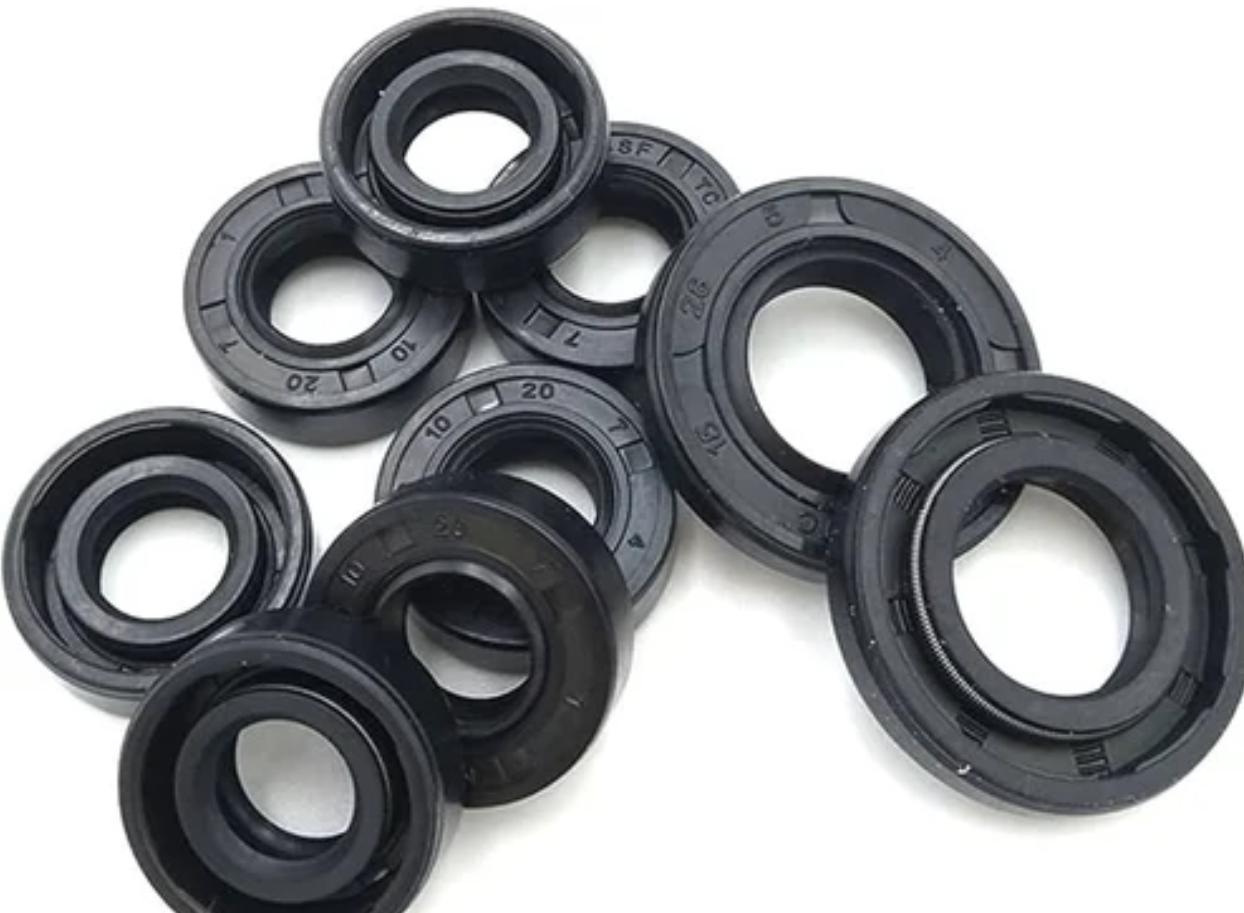
ID × OD × Width to requirement
ID × OD × Width to requirement
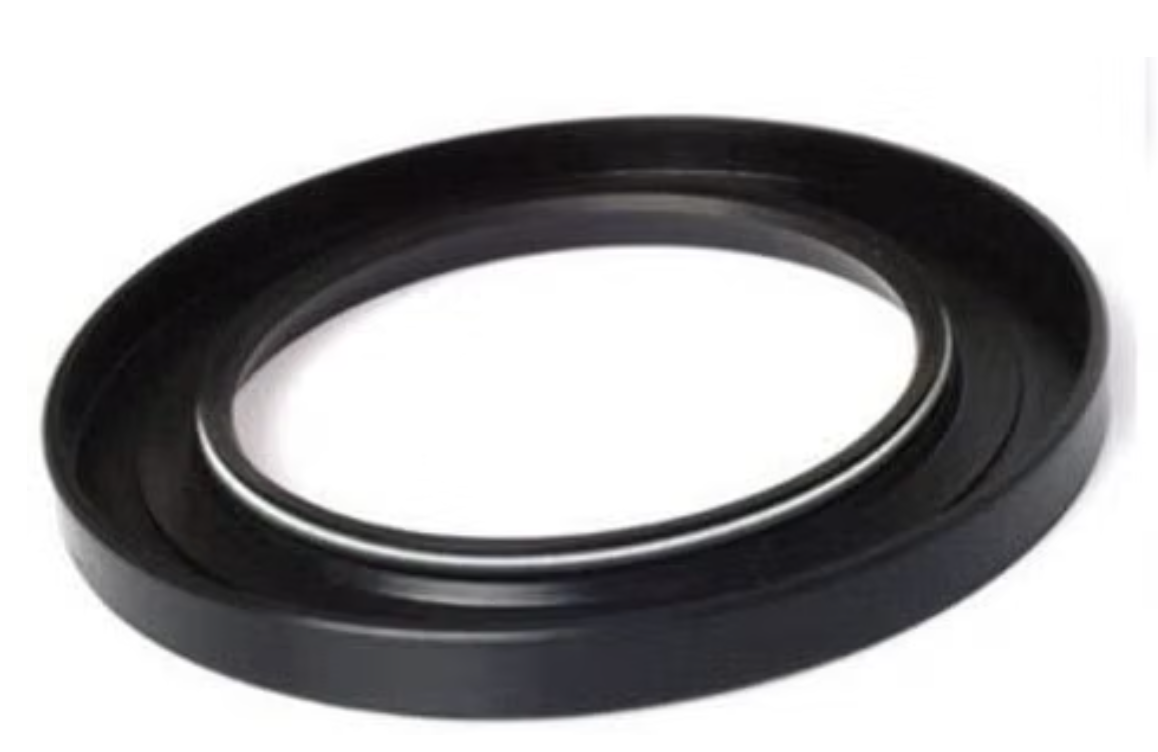
ID × OD × Width to requirement
ID × OD × Width to requirement
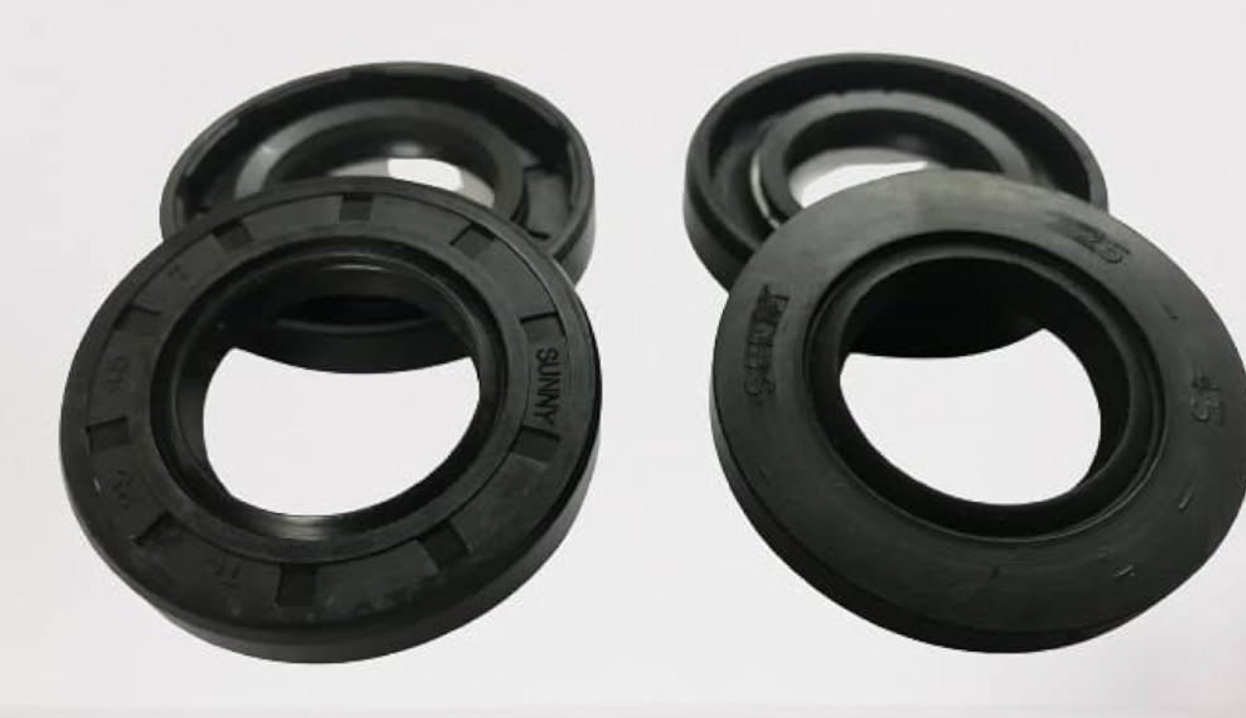
Drive-shaft seal, made to requirement
ID × OD × Width to requirement
Wherever a shaft turns out of an oil-filled housing, a rotary shaft seal has a job. These are the equipment categories our oil seals are supplied into, with the sealing requirement each one brings.
The drive shaft leaves the pump body where oil is under working pressure. The seal must retain fluid without the lip lifting off, so pressure, shaft condition and fluid compatibility are confirmed before a compound is chosen.
Continuous rotation at the output shaft, often in a compact housing with limited space for the seal. Lip profile and width have to suit the housing depth as much as the shaft.
Input and output shafts pass through oil-filled housings at speed. Heat build-up at the lip and gear-oil compatibility decide the compound; a wear groove on the shaft shortens life regardless of seal quality.
Sealing at the drive end protects the bearing from dust ingress and keeps grease or oil in place. Double lip designs are useful where the motor runs in a dirty plant environment.
The shaft seal holds crankcase oil while the machine runs hot and continuously. Temperature resistance and oil compatibility matter more here than peak pressure.
Excavators, loaders, cranes and earth-moving drives work in grit, shock load and weather. Tougher compounds and sturdier cases are specified where a light seal would be punished by the environment.
Tractors, power take-offs, rotavators, threshers and harvesters run season after season in dust and mud. Sealing quality decides how long the bearings behind the seal survive.
Crushers, mills, conveyor drives and hoists run in abrasive dust with heavy starting loads. Seal construction and fit have to hold up where maintenance windows are short.
Higher speeds and tighter tolerances demand a clean lip, correct spring load and a shaft finish within specification. Friction and heat, not pressure, are usually the limiting factors.
Engines, gearboxes, axles and wheel hubs — hot oil, road dust and long duty cycles. Oil-resistant compounds and correct fit are the difference between a dry floor and a repeat repair.
Applications are listed as equipment categories we supply into. No OEM fitment or model-specific compatibility is implied — confirm the seal number, dimensions and compound against your machine before ordering.
The rubber compound decides how a seal behaves in oil, heat and grit. This is what each family is generally chosen for — the final call is made against your fluid, temperature, pressure and movement.
The workhorse of oil sealing, and the usual starting point for hydraulic and gear-oil duty. Good tensile strength and a wide operating temperature range, with excellent resistance to mineral oils, greases and fuels.
Chosen where heat and aggressive fluids beat NBR. Higher continuous temperature capability and excellent resistance to many industrial oils and chemicals, at a higher material cost.
Stays flexible at very low and high temperatures, and suits some food-contact and general sealing duties. Mechanical wear resistance is lower than other compounds, so it is not the first choice for abrasive service.
Outstanding resistance to ozone, UV and weathering. Best suited to water and steam duties, and to outdoor sealing points where mineral-oil contact is not the deciding factor.
High abrasion resistance and toughness for dusty, gritty applications, with good load-carrying ability on rotating assemblies. Often specified where a rubber lip would be cut up by contamination.
Some duties need a compound outside the standard five — for particular fluids, higher heat or a specific hardness. HNBR and PTFE-based sealing elements are examples discussed for particular applications; availability is confirmed against the requirement, not assumed.
Fourteen checks decide whether a seal lasts a season or several. Most replacement failures trace back to one of the first four.
Replacing an existing seal? Read the number on the old seal, measure ID, OD and width, and note the machine. Those four details settle most of the selection.
Send seal details on WhatsAppEach component solves a different problem. Ordering the right one first time is cheaper than learning the difference on a leaking machine.
| Seal type | Function | Typical application |
|---|---|---|
| High pressure oil seal | Leakage control at suitable sealing interfaces under pressure | Hydraulic systems, pump and motor shafts |
| Hydraulic pump oil seal | Sealing the drive shaft in a pump assembly | Hydraulic pumps and power units |
| Shaft oil seal | Sealing around a rotating shaft | Motors, gearboxes, rotating equipment |
| Rod seal | Sealing a reciprocating rod interface | Hydraulic cylinders — sliding motion |
| Piston seal | Separating pressure zones inside a cylinder | Hydraulic cylinders — sliding motion |
A rotary oil seal is not a substitute for a rod or piston seal. If your requirement is inside a cylinder, describe the bore, rod diameter and pressure — we will tell you whether it is a part we supply or point you elsewhere.
No slogans — just how we work with buyers who have a machine down and need the right seal, not a catalogue guess.
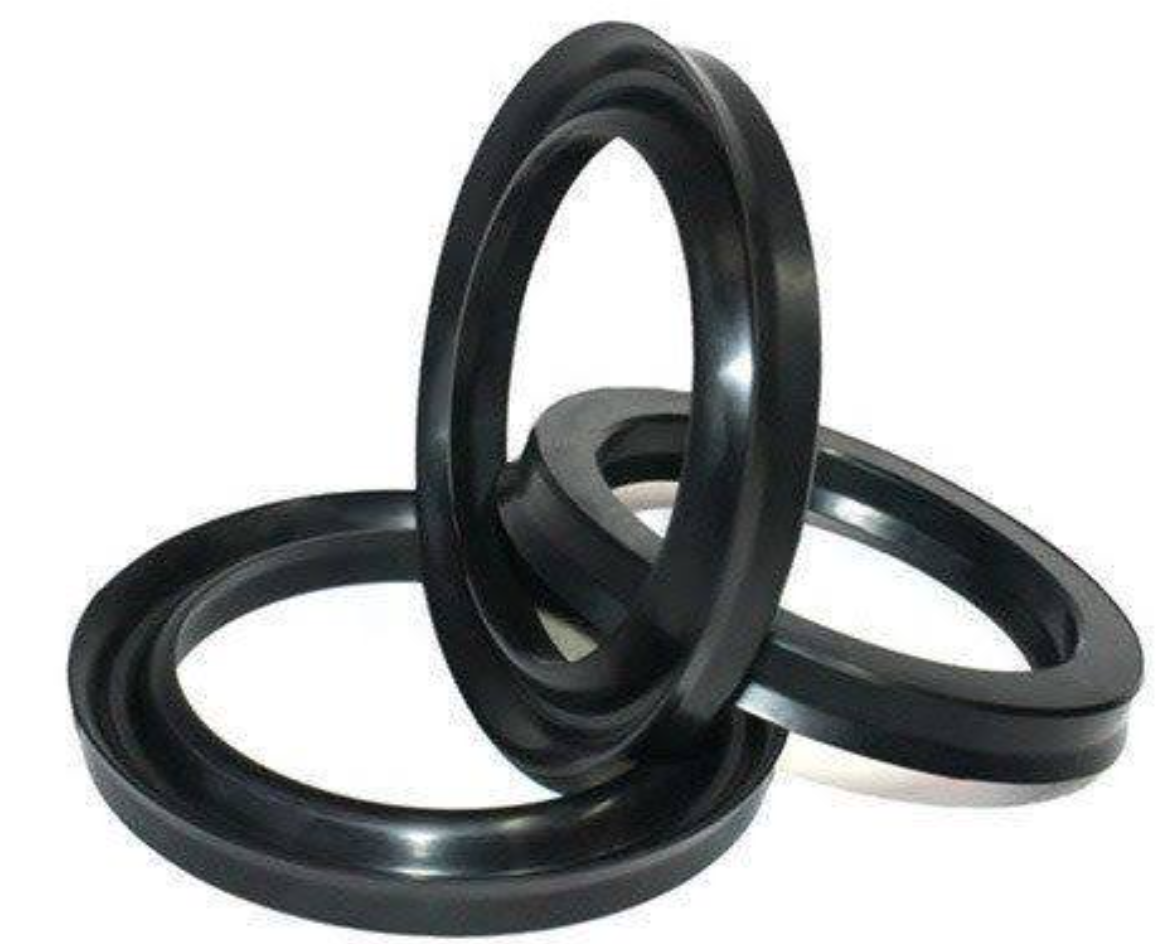 Checked before dispatch
Ananta Venture supplies high pressure hydraulic oil seals, hydraulic pump oil seals and high pressure shaft seals from Delhi to plants, OEMs, maintenance departments, dealers and machine repair professionals across India.
Every enquiry is handled against the actual requirement: seal number or dimensions, the machine it fits, the fluid, the working pressure and the quantity. We confirm availability, compound and the current hydraulic oil seal price before anything is dispatched — no assumptions from a size that looks close enough.
Related product pages for buyers who already know the duty. If the requirement is still open, start with the full oil seals range or send us the details.
Short, direct answers to what buyers ask most often before ordering a hydraulic shaft seal.
They are rotary shaft seals used where a shaft passes through a housing that holds oil under pressure, or close to a pressurised chamber. A rubber lip, usually spring-loaded, is bonded into a metal or rubber-covered case that presses into the bore.
The seal retains hydraulic fluid, excludes dust and water, and protects the shaft and bearing from wear. Pressure capability is a design property confirmed per application — not something a size alone guarantees.
Our published rate list covers 70 outside-diameter bands from 10 mm to 510 mm, and seals are made against requirement beyond the listed bands.
Size is written as ID × OD × Width (mm). Send the seal number, the three measurements, or the old seal itself and the team confirms what can be supplied.
Published indicative rates run from ₹16.00 per piece for a 10–20 mm OD seal to ₹2,500.00 per piece for a 501–510 mm OD seal, exclusive of GST and freight.
The rate follows the outside-diameter band, from the Blowsom list effective 1 January 2023. Custom compounds, non-listed sizes and current list revisions are quoted individually — confirm the rate for your seal number before ordering.
Hydraulic pumps and power units, hydraulic motors, gearboxes, electric motors, compressors, machine tools, and the drive and axle assemblies of construction, agricultural and mining machinery.
No OEM-specific fitment is implied. The seal is confirmed against your machine, shaft dimensions and operating conditions.
A standard rotary shaft seal is designed mainly to retain lubricant where there is little or no pressure difference across it. Where the housing is pressurised, lip geometry, compound hardness, case support and retention have to account for that pressure.
The difference is in design and confirmation, not in the label. Share the working pressure at the seal and the seal is selected for it.
Measure the shaft for the inner diameter, the housing bore for the outer diameter, and the housing depth or old seal for the width. Then confirm pressure, fluid, temperature and shaft speed.
Check for a wear groove where the lip runs — a new seal on a grooved shaft will leak again quickly. Our selection guide lists all fourteen checks.
NBR for general mineral oil and grease duty, FKM for higher heat and aggressive fluids, silicone for wide temperature flexibility, EPDM for water, steam and weather, and polyurethane where abrasion resistance is the priority.
Specialist compounds are discussed where the duty calls for them. Selection follows the actual fluid, temperature, pressure and movement.
Around rotating shafts that leave an oil-filled or pressurised housing: pump drive shafts, motor shafts, gearbox input and output shafts, compressor shafts, and axle or hub assemblies.
Shaft speed, surface finish and runout matter as much as the seal — a good seal on a poor shaft surface will not last.
Read the number moulded or printed on the old seal, then measure inner diameter, outer diameter and width with a caliper. A photo of the seal next to a rule and the machine make and model help confirm it.
If the number is unreadable, send the old seal as a sample — matching from the part is more reliable than matching from a description.
Directly from Ananta Venture in Burari, Delhi, which supplies plants, dealers and OEMs across Delhi NCR and the rest of India.
Call or WhatsApp +91 9211305366, write to [email protected], or use the contact page to confirm size, compound and current price.
Explore the published size bands and rates, then send your seal number or dimensions. We confirm the seal type, compound, availability and current price for your application — including hydraulic pump and shaft requirements.