
Dust Proof Oil Seals
Dust proof oil seals are radial shaft seals designed to hold lubricant in — while an additional dust-exclusion lip helps reduce the entry of external dust and contaminants around the shaft sealing area, depending on seal design and application.
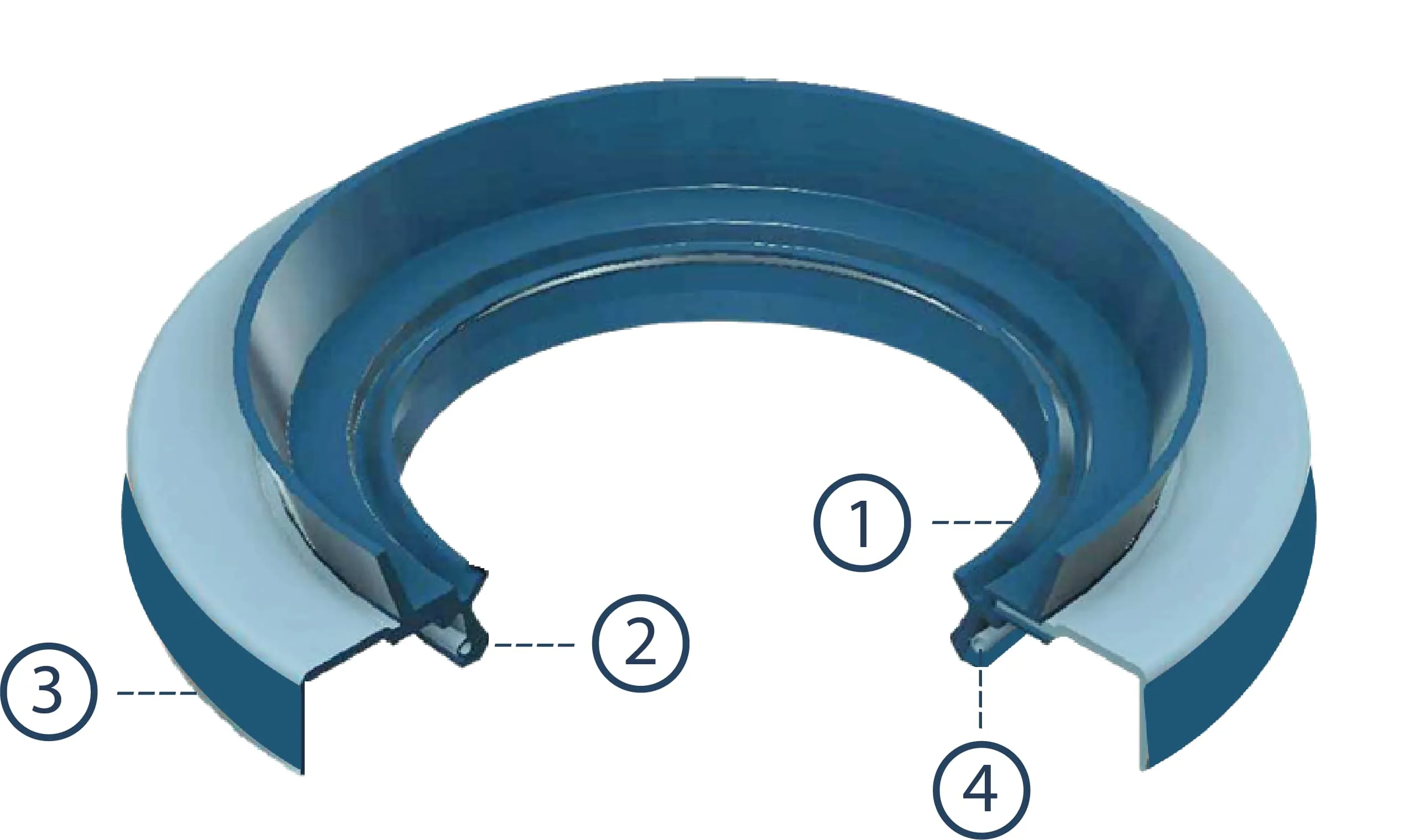
What Are Dust Proof Oil Seals?
A dust proof oil seal closes the gap between a rotating shaft and its housing in machines that work in dusty conditions. Its first job is lubricant retention — keeping oil or grease inside the bearing or gear chamber so the bearing stays fed.
- Primary sealing lip — retains the lubricant, exactly as in any quality oil seal.
- Auxiliary dust lip — a second lip, moulded on the outside, that helps reduce the entry of dust, grit and moisture towards the primary lip.
- Two jobs at once — holds the lubricant in and helps keep abrasives out, protecting bearings, shafts and gears.
- Design-dependent performance — the degree of dust exclusion depends on seal design and application, confirmed before manufacturing.
That combination is what makes a dust proof oil seal for bearings and gear chambers so valuable in machinery that runs in farm fields, mines, construction sites and other dust-heavy environments.
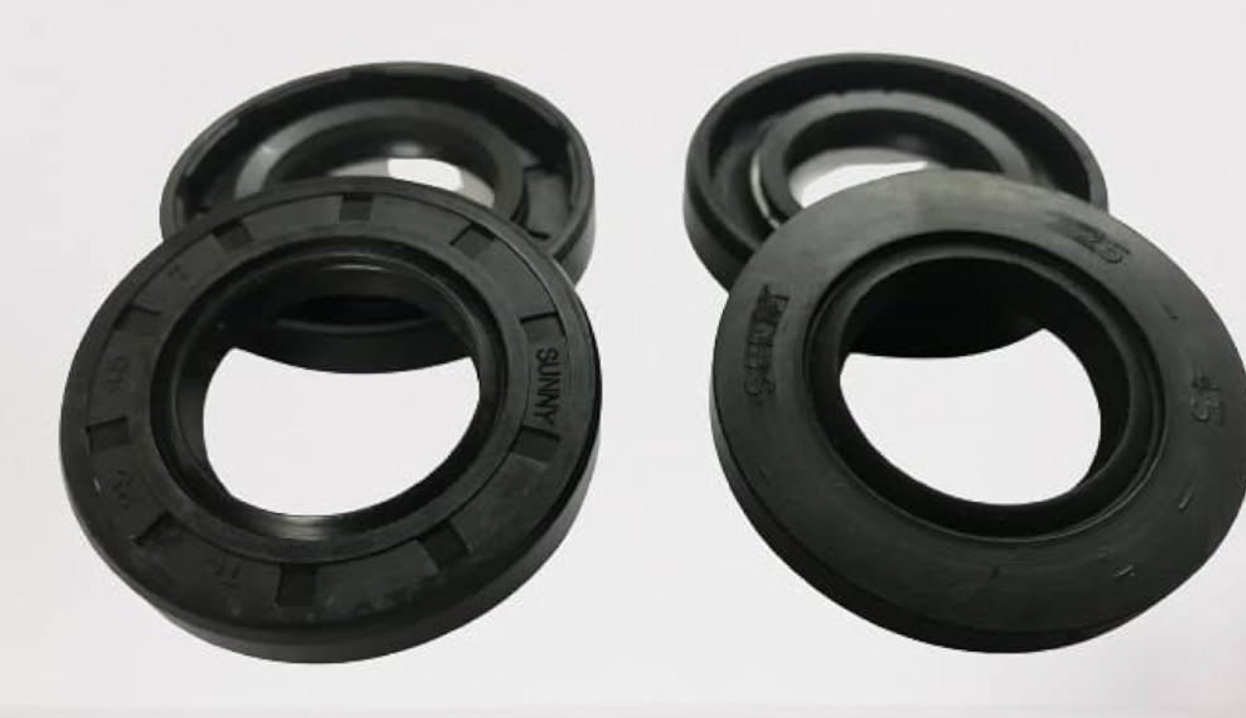
How Oil Seals with a Dust Lip Work?
Two lips, two separate jobs — on the same shaft.
Primary sealing lip
The main lip, usually spring-loaded, presses against the shaft surface with a controlled oil film between them. Its design purpose is to retain lubricant — the primary defence against oil leakage.
Secondary dust lip
The auxiliary lip sits on the outward-facing side and is the first contact for the environment. It helps exclude dust, grit and moisture before they reach the primary lip contact area.
Shaft contact & lubrication
Both lips ride on the shaft's surface finish. The primary lip needs a thin lubricating film to run cool; the dust lip runs drier, blocking contaminants at the machine's boundary.
Dust exclusion in practice
On a dusty site, abrasive particles attack the shaft–lip interface. A dust lip intercepts much of that abrasion first, helping the primary lip keep its edge — subject to shaft condition, speed and duty.
Machinery protection
By holding oil in and keeping much of the dust out, the seal protects the bearing and gear surfaces behind it. The seal takes the wear — a cheap replacement — instead of the shaft and bearing.
What a dust lip cannot do
A dust lip helps reduce contaminant entry — it does not make the sealing area completely impervious to every dust, particle or moisture condition. Very abrasive or submerged duties need a design confirmed for the application.
Why Buyers Choose Industrial Dust Proof Oil Seals?
Added dust exclusion
The auxiliary dust lip is designed to reject dust and grit before they reach the main sealing edge — the core benefit over a single-lip seal.
Reduced contaminant ingress
Less abrasive material reaching the primary lip and the bearing chamber means less abrasive wear inside the machine.
Supports lubricant retention
The primary sealing lip continues to do the fundamental job — holding oil and grease where the bearing needs them.
Helps protect the sealing area
By absorbing the first contact with the environment, the dust lip helps protect the shaft sealing area from abrasive attack.
Suitable for selected dusty applications
Agriculture, mining, construction and material handling — environments where the outside air is part of the machine's load.
Manufactured to your size & design
Shaft diameter, housing bore, width, compound and lip design are confirmed against your requirement before production — not picked from a guess.
Inside a Double Lip Oil Seal
Not every design contains every component — but double lip oil seals built for dust exclusion typically combine these elements:
- Primary oil sealing lip — the spring-loaded lip that retains lubricant against the shaft surface.
- Auxiliary dust lip — the outward-facing lip that helps exclude dust, grit and moisture.
- Elastomer body — the rubber compound (commonly NBR) that forms both lips and bonds the seal together.
- Metal reinforcement case — a pressed steel case that gives the seal rigidity and a precise press fit in the housing bore.
- Garter spring — where the design calls for it, a spring that maintains consistent lip contact on the shaft as the lip wears.
- Shaft contact area — the finished shaft surface both lips ride on; its smoothness directly affects sealing performance.
Dust Proof Oil Seal Sizes & Dimensions
Oil seals are specified in the standard format ID × OD × Width (mm):
IDInner Diameter
The shaft diameter the seal fits on. Measure the worn shaft with a caliper and check for wear grooves at the sealing point.
ODOuter Diameter
The housing bore the seal presses into. A loose outer fit lets the seal spin; an over-tight one distorts the lip.
WWidth
The seal's axial thickness, set by the housing depth available and the lip arrangement of the design.
Popular shaft sizes — manufactured against requirement
These are common shaft diameters for which buyers ask for dust proof shaft oil seals. Each is manufactured to your confirmed ID, OD and width — the dimensions below are completed on enquiry, not guessed.
| Shaft Size (ID) | Inner Diameter (mm) | Outer Diameter (mm) | Width (mm) | Dust Lip Availability | Price |
|---|---|---|---|---|---|
| 20 mm dust proof oil seal | 20 | Confirmed per housing bore | Confirmed per design | Confirm design on enquiry | Confirm price |
| 25 mm dust proof oil seal | 25 | Confirmed per housing bore | Confirmed per design | Confirm design on enquiry | Confirm price |
| 30 mm dust proof oil seal | 30 | Confirmed per housing bore | Confirmed per design | Confirm design on enquiry | Confirm price |
| 35 mm dust proof oil seal | 35 | Confirmed per housing bore | Confirmed per design | Confirm design on enquiry | Confirm price |
| 40 mm dust proof oil seal | 40 | Confirmed per housing bore | Confirmed per design | Confirm design on enquiry | Confirm price |
| 45 mm dust proof oil seal | 45 | Confirmed per housing bore | Confirmed per design | Confirm design on enquiry | Confirm price |
| 50 mm dust proof oil seal | 50 | Confirmed per housing bore | Confirmed per design | Confirm design on enquiry | Confirm price |
| 60 mm dust proof oil seal | 60 | Confirmed per housing bore | Confirmed per design | Confirm design on enquiry | Confirm price |
Other shaft diameters — smaller than 20 mm or larger than 60 mm, and non-standard sizes — are discussed and quoted on request. Sharing the old seal's number, a drawing or a sample is the fastest route to a confirmed size.
Dust Proof Oil Seal Price List & Cost
Dust proof oil seal price — confirm according to size & design. The final price depends on its ID, OD, width, material, dust lip design, seal construction, order quantity and application requirements. We quote against your confirmed requirement rather than publishing a single misleading rate.
Reference oil seal price by outside diameter (OD)
Our published price list gives general oil seal rates by the seal's outside diameter band. For a seal whose OD falls between the listed limits, the rate shown applies. This is the pricing structure used across the range.
| OD Range (mm) | Reference Rate | OD Range (mm) | Reference Rate |
|---|---|---|---|
| 10 – 20 | ₹16.00 | 106 – 110 | ₹92.00 |
| 21 – 25 | ₹22.00 | 111 – 115 | ₹95.00 |
| 26 – 30 | ₹24.00 | 116 – 120 | ₹105.00 |
| 31 – 35 | ₹26.00 | 121 – 125 | ₹110.00 |
| 36 – 40 | ₹28.00 | 126 – 130 | ₹115.00 |
| 41 – 45 | ₹30.00 | 131 – 135 | ₹120.00 |
| 46 – 50 | ₹35.00 | 136 – 140 | ₹130.00 |
| 51 – 55 | ₹38.00 | 141 – 145 | ₹140.00 |
| 56 – 60 | ₹42.00 | 146 – 150 | ₹150.00 |
| 61 – 65 | ₹46.00 | 151 – 155 | ₹160.00 |
| 66 – 70 | ₹50.00 | 156 – 160 | ₹170.00 |
| 71 – 75 | ₹55.00 | 161 – 165 | ₹185.00 |
| 76 – 80 | ₹60.00 | 166 – 170 | ₹200.00 |
| 81 – 85 | ₹65.00 | 171 – 175 | ₹215.00 |
| 86 – 90 | ₹70.00 | 176 – 180 | ₹230.00 |
| 91 – 95 | ₹75.00 | 181 – 185 | ₹250.00 |
| 96 – 100 | ₹80.00 | 186 – 190 | ₹260.00 |
| 101 – 105 | ₹86.00 | 191 – 195 | ₹280.00 |
How Dust Proof Oil Seal Cost Is Worked Out
When you enquire, the team confirms each of these before quoting:
Dimensions
ID, OD and width — the larger the outside diameter, the higher the rate band.
Material
NBR, FKM, silicone or another compound, chosen for temperature and lubricant.
Dust lip design
Lip arrangement, spring and case construction for your shaft speed and dust exposure.
Order quantity
Single replacement pieces and production quantities are quoted on their own merits.
Application
Machine type, environment and duty — the details that decide the design.
Confirmation
Current rate, stock position and design availability are confirmed in writing before you order.
Dust Proof Oil Seals for Industrial Machines
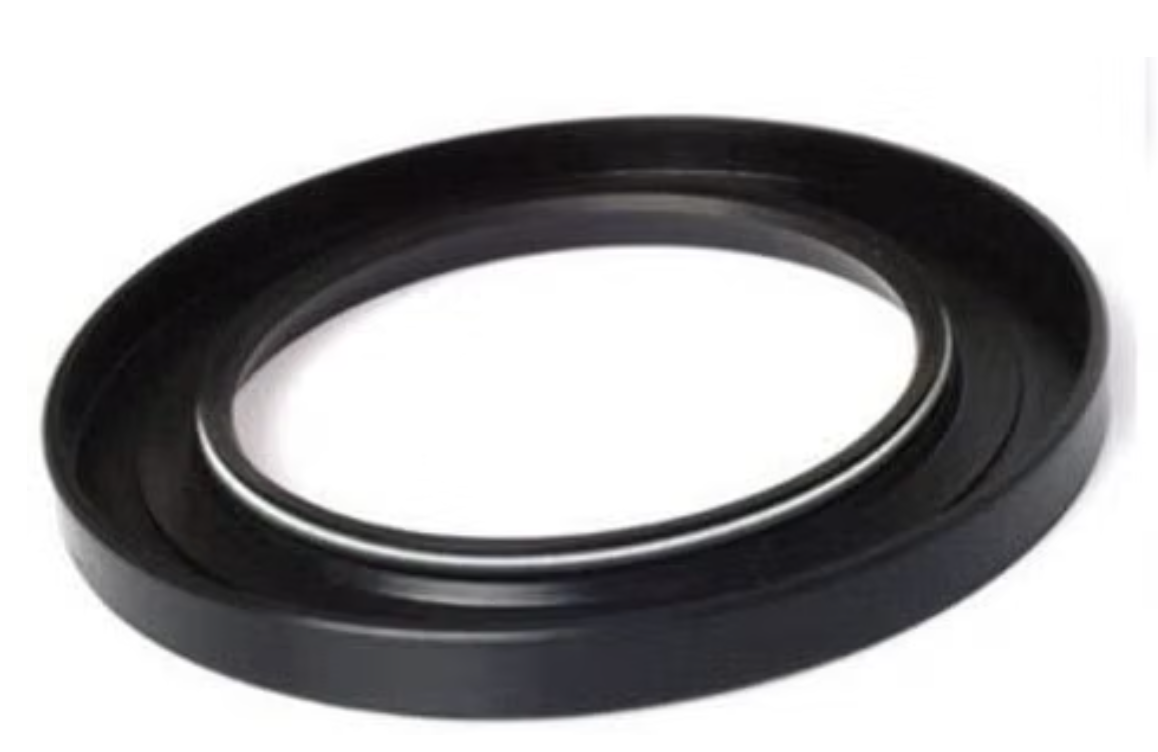
As oil seals for dusty environments, dust exclusion shaft seals earn their keep wherever a rotating shaft works in dust, grit or crop residue. Typical sealing locations include:
| Machine / Equipment | Typical Location | Dust Exclusion Requirement | Seal Selection Notes |
|---|---|---|---|
| Industrial gearboxes | Input and output shafts at the housing wall | Site dust and worn surrounding air attacking the shaft exit | Lip design and compound matched to gear oil, shaft speed and temperature |
| Electric motors | Shaft extension at the drive-end cover | Ambient dust in workshops, plants and outdoor installations | Seal chosen for shaft speed and bearing-lubricant compatibility |
| Agricultural machinery | Tractor axles, PTO drives, rotavator and thresher gearboxes | Heavy crop residue, soil dust and field moisture | Dust lip strongly advisable; compound matched to gear oil and seasonal duty |
| Crushers & conveyor drives | Drive shafts and head/tail pulley shafts | Continuous abrasive mineral dust | Heavy duty construction; abrasion-resistant compound considered |
| Pumps on dusty sites | Shaft entry at the pump casing | Dust drawn towards the shaft by air movement and rotation | Seal confirmed against fluid, pressure conditions and shaft speed |
| Construction equipment | Rotating assemblies on mixers, loaders and site machinery | Grit, site dust, mud and wash-down moisture | Rugged compound and case; dust exclusion combined with shock-load tolerance |
Every machine seals differently. Whether you need a dust proof oil seal for gearboxes, a dust proof oil seal for motors, or a seal for an agricultural or construction shaft, Ananta Venture does not claim universal compatibility with specific OEM models — share your machine type and operating conditions, and we confirm what can be supplied before you order.
Choosing the Rubber Compound
The compound decides how the seal behaves in heat, oil and dust. Temperature range, lubricant compatibility, dust type, shaft speed and chemical exposure are all weighed together — we do not assume one material fits every shaft.
NBR / Nitrile — general purpose
The workhorse for dust proof shaft oil seals. Excellent resistance to mineral oils and greases with good mechanical strength — the default choice for most industrial and agricultural duties.
FKM — high temperature
Where heat and aggressive fluids beat NBR, FKM holds up. Selected for hot gear chambers and demanding industrial oils — suitability confirmed against the application.
Silicone — wide temperature range
Stays flexible at very low and high temperatures. Lower mechanical wear resistance than other compounds, so chosen where temperature, not abrasion, is the deciding factor.
Polyurethane — abrasion resistance
High toughness for dusty, gritty applications with good load-carrying ability — a candidate for heavy duty dust proof oil seals where abrasion dominates.
EPDM — weather resistance
Outstanding ozone, UV and weathering resistance, suited to water and steam duties where oil compatibility is not the deciding factor.
Application-specific elastomers
Other compounds are considered for specialist fluids, temperatures or regulations. Tell us the application and we confirm a suitable material.
Standard Oil Seal vs Dust Proof Oil Seal
| Feature | Standard Oil Seal | Dust Proof Oil Seal |
|---|---|---|
| Main function | Lubricant retention and sealing | Lubricant retention with added dust exclusion design |
| Lip configuration | Depends on design | Often includes an additional dust lip |
| Dust exclusion | Depends on seal construction | Designed to provide added dust exclusion |
| Typical use | General shaft sealing | Applications with external dust exposure |
| Selection | Based on sealing conditions | Based on sealing plus contamination conditions |
Neither design is universally better. A dust lip earns its place where the environment is dirty; on a clean indoor shaft, the simpler design may run with less friction. Selection is made against the machine's actual conditions.
How to Select the Right Dust Proof Oil Seal
Accurate dimensions are everything — a tenth of a millimetre is the difference between fitting and failing. Have these details ready before you enquire:
- Shaft diameter — sets the seal's ID; measure with a caliper, check for wear grooves
- Housing bore — sets the seal's OD and its press fit
- Seal width — set by the housing depth available
- Shaft speed — decides lip profile and surface finish requirements
- Temperature — continuous operating temperature, not just peaks
- Lubricant — the fluid the compound must live in
- Dust type — soil, stone dust, crop residue, mineral grit
- Environmental conditions — moisture, wash-down, weather, chemicals
- Material & lip design — compound plus single/double lip arrangement
- Installation conditions — space, tooling and handling on site
- Replacement seal number — the marking on the old seal's metal face, if readable
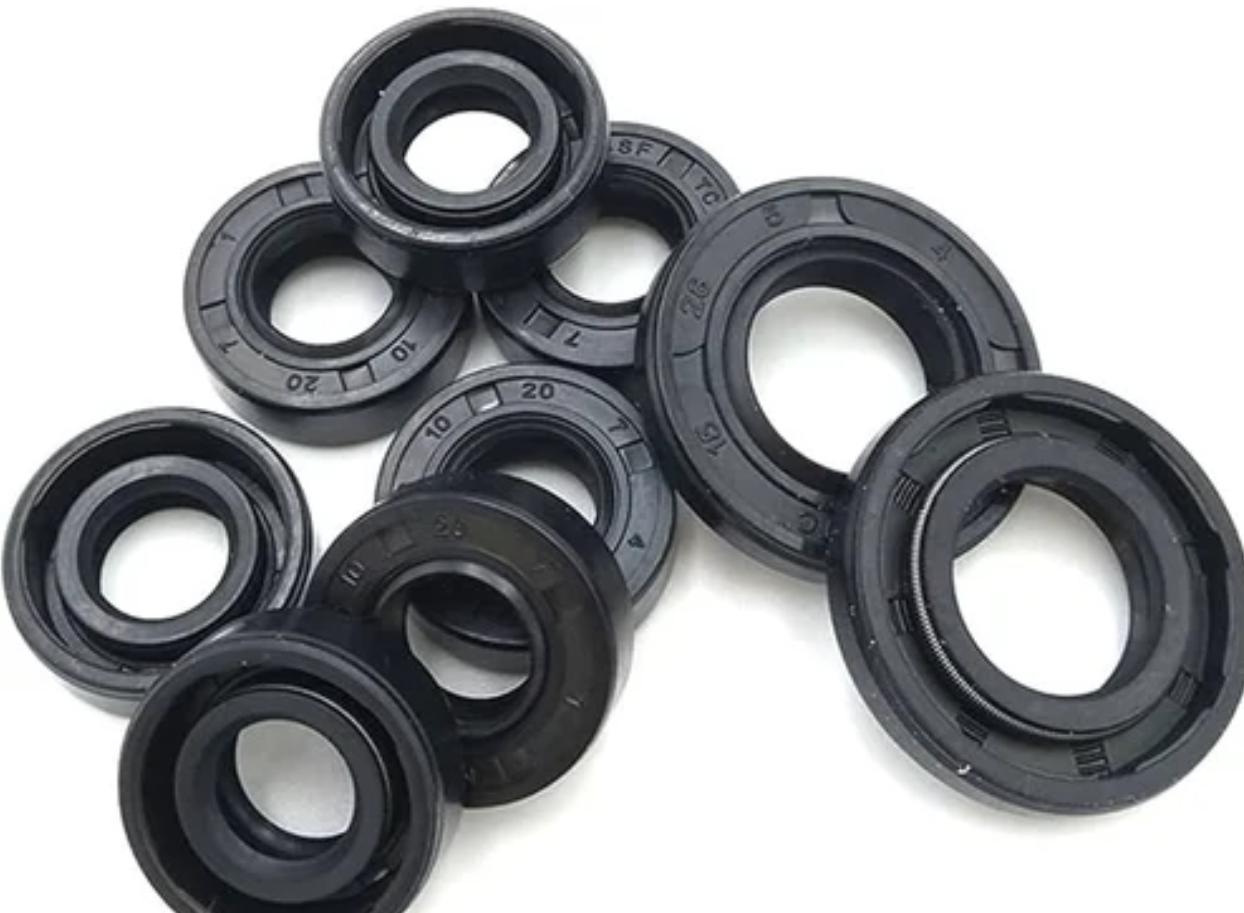
The fastest enquiry
Share the existing seal number, a sample of the old seal, a drawing, or simply the dimensions and machine name with Ananta Venture. Our team works out the ID, OD, width, dust-lip configuration and compound with you, and confirms availability before production or dispatch.
Why Buy Dust Proof Oil Seals from Ananta Venture?
No slogans — just the way we prefer to work with every buyer.
Delhi-based manufacturer
A machinery components manufacturer based at West Sant Nagar, Burari, Delhi — reachable, accountable, and close to the industrial belts of Delhi NCR.
Industrial product focus
A deliberate focus: rubber oil seals that protect rotating shafts, and V belts that move power reliably. Focus, not a general trader's catalogue.
Application-first approach
We ask what the machine does, where it runs and what broke last time — then recommend from there, instead of selling whatever is on the shelf.
Dimensional attention
Shaft, bore, width, lip profile and compound are confirmed before production or dispatch — because in seals, a tenth of a millimetre matters.
Custom & requirement-built supply
Non-standard sizes, lip arrangements and compounds are discussed against your requirement — share your drawing, dimensions or a sample.
Responsive customer support
Reachable on WhatsApp and phone during working hours, with replies that arrive in hours rather than days — and straight answers on sizes and materials.
Dust Proof Oil Seal FAQs
What are dust proof oil seals?
Dust proof oil seals are radial shaft seals designed to retain lubricant while an additional dust-exclusion lip helps reduce the entry of dust and abrasive particles into the shaft sealing area. They are used on rotating shafts operating in dusty environments such as agriculture, mining and construction.
What is the difference between standard and dust proof oil seals?
A standard oil seal primarily retains lubricant with its main sealing lip. A dust proof oil seal adds a secondary dust lip ahead of the main lip, so dust and grit are rejected before they reach the primary sealing edge. Dust proof designs are selected where the environment, not just the fluid, is a major factor.
How do oil seals with a dust lip work?
The primary lip, usually spring-loaded, rides on the shaft surface and retains lubricant. The auxiliary dust lip sits on the outside and acts as a first barrier that helps fling or exclude dust, moisture and grit away from the primary lip contact area. The dust lip helps reduce contaminant entry — it does not make the seal impervious to every contamination condition.
Which dust proof oil seal sizes are available?
Ananta Venture manufactures oil seals against requirement across a wide range of shaft sizes, including popular shaft diameters of 20 mm, 25 mm, 30 mm, 35 mm, 40 mm, 45 mm, 50 mm and 60 mm, with other sizes discussed on enquiry. The exact ID, OD, width and dust-lip configuration for your size are confirmed before ordering.
What is the price of dust proof oil seals?
The price list on this page gives reference oil seal rates by outside diameter band — for example, ₹16 for seals with a 10–20 mm OD, ₹22 for a 21–25 mm OD and ₹80 for a 96–100 mm OD. These are general oil seal reference rates, not confirmed dust proof seal prices. The final price depends on size, material, dust-lip design and quantity, and is confirmed by the team before you order.
How is dust proof oil seal pricing calculated?
Pricing is worked out from the seal's outer diameter, inner diameter and width, the rubber compound (NBR, FKM, silicone or another elastomer), the lip construction including the dust lip, the order quantity and the application requirements. Larger outside diameters cost more because they use more material and tooling.
Which machines use dust exclusion shaft seals?
Dust exclusion shaft seals are typically specified for industrial gearboxes, electric motors, agricultural machinery such as tractors, rotavators and threshers, crushers and conveyor drives, pumps on dusty sites, and construction equipment — wherever a rotating shaft runs in an environment with dust, grit or crop residue.
Which material should I choose for a dust proof oil seal?
NBR nitrile rubber suits most mineral oils and greases at normal temperatures and is the common general-purpose choice. FKM is selected for higher temperatures and aggressive fluids. Silicone covers wide temperature ranges, while polyurethane offers high abrasion resistance for gritty, dusty duty. The compound is chosen against temperature, lubricant, shaft speed and dust exposure — share your application and the team confirms a suitable material.
How do I identify the correct oil seal dimensions?
Measure the shaft diameter (the seal's inner diameter), the housing bore (the seal's outer diameter) and the housing depth (the seal width) with a caliper. If you have the old seal, read the marking on its metal face — or simply send a photo of the seal or the housing, and the team will work out the dimensions with you.
How can I enquire about a specific dust proof oil seal size?
Send your shaft diameter, housing bore and width — or a photo of the old seal, its seal number, or simply the machine name — by phone, WhatsApp or email, or through the contact page. Ananta Venture confirms sizes, dust-lip configuration, material and current pricing before production or dispatch.
Need a Dust Proof Oil Seal for a Dusty Shaft?
Share your dimensions, the old seal's number, a drawing or simply the machine name. We confirm sizes, dust-lip configuration, material and current pricing before production or dispatch — and we answer enquiries properly.